
About Age of Empires IV: Anniversary Edition
Age of Empires IV is a real-time strategy game set across the Middle Ages, where players build a civilization, gather resources, and command armies through four historical campaigns or skirmish and multiplayer matches. Economic growth, advancing through the Ages, scouting, and battlefield tactics all shape how each contest develops.
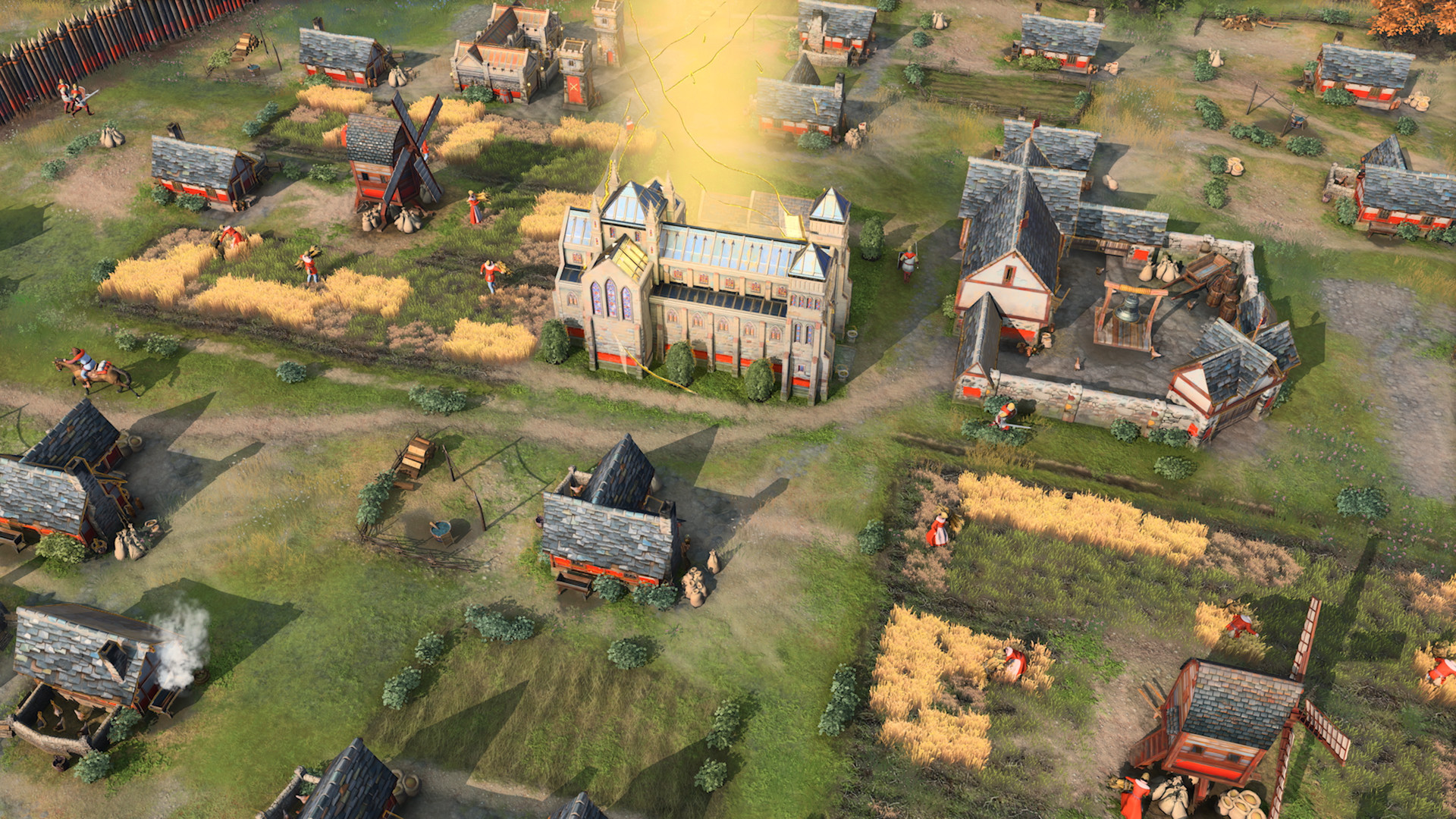
Age of Empires IV places the player in command of a medieval civilization whose settlement, economy, and army develop in real time. Villagers are the workforce: they gather Food, Wood, Gold, and Stone, then use those stores to construct houses, resource drop-off buildings, military facilities, and other structures. The Town Center can continue producing villagers, so economic decisions start immediately and remain important throughout a match. Players explore the surrounding map to find resources and routes, while keeping an eye on rival positions and possible attacks. Each unit and building takes time and resources to produce, so expanding the economy competes directly with raising a defensive force. The historical setting spans several regions and centuries, but moment-to-moment play is about coordinating workers, construction, research, and military orders while events continue to unfold.
A match moves through successive Ages, from the Dark Age onward, with each advance opening additional units, buildings, and upgrades. In most civilizations, a player spends the required resources and directs villagers to construct a Landmark to reach the next Age; the Abbasid Dynasty instead advances by completing wings of its House of Wisdom. This choice is more than a progress bar: the selected Landmark or wing can steer what the civilization can do next, while the resources and workers committed to its construction are temporarily unavailable elsewhere. New options broaden the ways to grow an economy or prepare for conflict. For example, the Market becomes available in the Feudal Age and supports trade with allies or neutral trading posts, while the Castle Age unlocks the Siege Workshop and its engines of war. Scouting helps players judge when to invest in advancement and when immediate defense matters more.
The civilizations share the broad economy-and-army framework but bring distinct tools and emphases to it. The English, Chinese, Delhi Sultanate, French, Holy Roman Empire, Mongols, Rus, Abbasid Dynasty, Malians, and Ottomans are among the core Anniversary Edition choices listed for the base package; later downloadable content adds further options, so this is not a fixed statement about every current roster. Their distinctive units, buildings, bonuses, and advancement choices encourage different plans. The Malians, for instance, are associated with gold-focused mining and investment, while the Ottomans field Great Bombards, powerful gunpowder siege weapons. A player must learn both the common counters and the particular strengths of the selected civilization. Gathering a balanced set of resources supports that identity: spending heavily on one army or technology can leave fewer workers and materials for other needs.
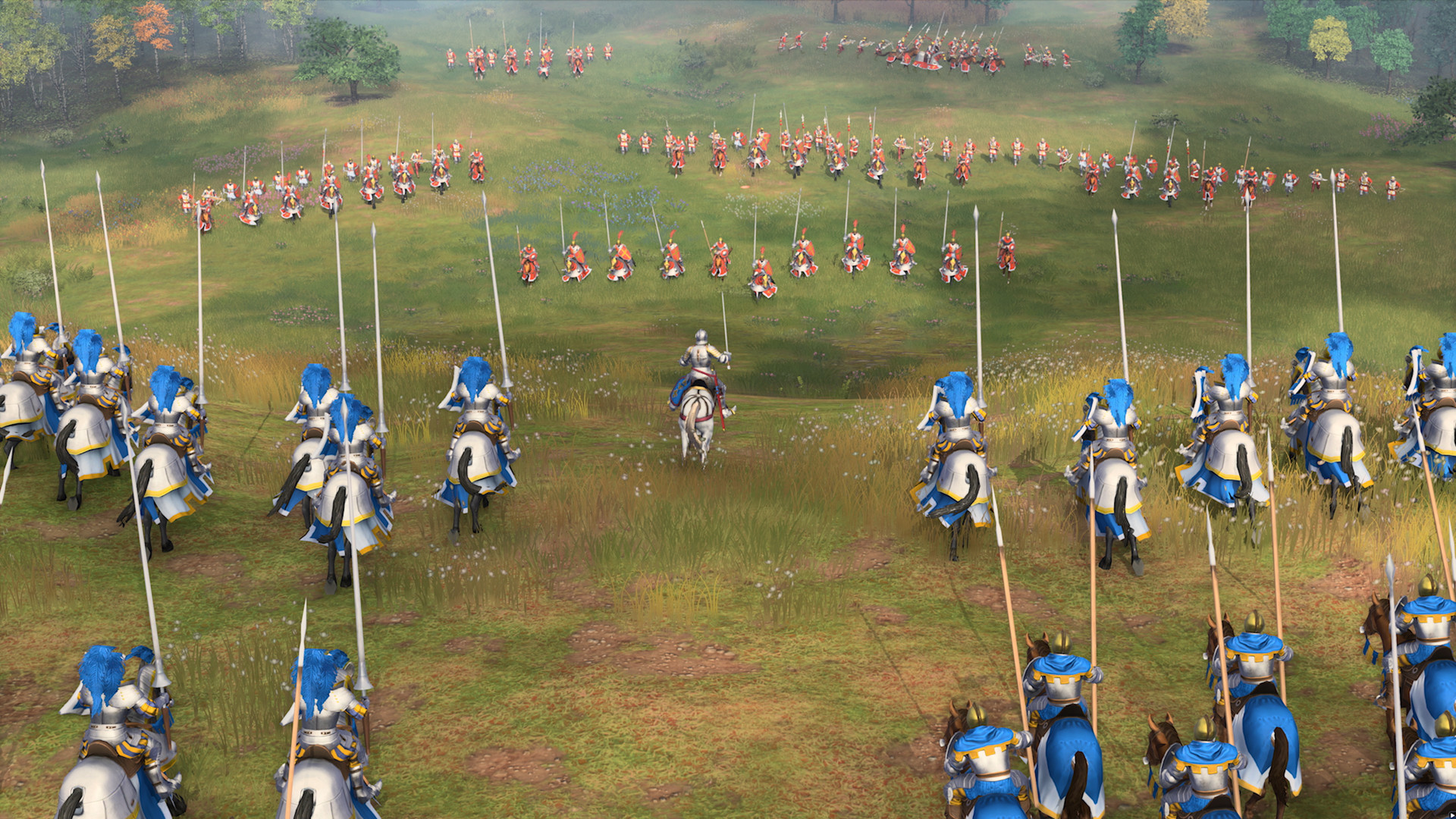
Combat rewards scouting and matching forces to the opponent. The basic land-unit relationships form a counter system: archers threaten spearmen, spearmen can stop cavalry, and cavalry can close on archers. Terrain and the layout of the map also affect where an engagement is useful, while scouting can reveal resource sites, chokepoints, enemy production buildings, and approaching forces. Players queue units at structures such as Barracks, Archery Ranges, and Stables, then move them to defend a settlement, contest a route, or assemble for an attack. Siege weapons serve a different purpose from ordinary troops, particularly when a force needs to break fortified positions. The economy has to keep pace with losses and new production: several military buildings can train reinforcements at once, but only if workers continue to bring in the Food, Wood, and Gold those armies require.
The four single-player campaigns turn historical conflicts into linked missions, with a focus on figures and events rather than one continuous fictional plot. The Norman Campaign follows William of Normandy’s effort to conquer England and the succession conflicts that follow; the Hundred Years War follows France’s struggle against English attacks and includes Joan of Arc. The Rise of Moscow traces the Rus through Mongol invasion and a shift toward independence, while The Mongol Empire follows Genghis Khan’s unification of warring tribes and expansion across Asia. Each campaign presents a sequence of scenarios with its own objectives and battlefield circumstances. Completing missions also unlocks Hands on History mini-documentaries that connect the playable episodes with real-world historical context. Campaign play changes the immediate goal from open-ended empire building to completing a defined mission, while still asking players to manage units, resources, and tactical pressure.
Outside the campaigns, players can face computer opponents, compete or cooperate with others online, or create matches around skirmish rules. The central contest can be won by destroying an opponent’s Landmarks, controlling Sacred Sites long enough for a Sacred Victory, or constructing and defending a Wonder until its timer expires. These conditions make map control and defense relevant alongside direct attacks: an army can protect a vulnerable Landmark, seize a site away from home, or buy time for a Wonder’s countdown. Multiplayer seasons and ranked play add recurring competitive structures, while the game also includes tutorials and Art of War challenges for practicing economic growth, combat, and siege techniques. Across these modes, players repeatedly make connected decisions: which resources to gather, when to advance, what force to field, and which route to victory their current position can support.
- Developer
- World's Edge, Relic Entertainment, Forgotten Empires, Climax Studios (Steam listing)
- Genre
- Real-time strategy