
About Age of Empires II: Definitive Edition
Age of Empires II: Definitive Edition is a real-time strategy game about guiding medieval civilizations from small settlements into developed empires. Villagers gather resources and build, while players research technologies, advance through four Ages, and direct armies in historical campaigns, skirmishes, cooperative scenarios, or multiplayer matches. Each contest links economic planning, exploration, and battlefield decisions.
Across a medieval world of rival kingdoms, migrating peoples, and expanding empires, each match begins with a modest settlement and a small workforce. The player directs the growth of a civilization in real time, balancing the work needed to sustain a population against the buildings and soldiers needed to defend it. Exploration reveals nearby resources, terrain, and rival positions, giving the opening minutes an information problem as well as an economic one. Historical campaigns shift the frame from open-ended competition to a sequence of authored scenarios, with figures such as William Wallace appearing in the introductory campaign and Genghis Khan associated with the wider historical setting. The game’s central activity remains practical and immediate: issue orders, keep the settlement productive, and decide how that strength will be used.
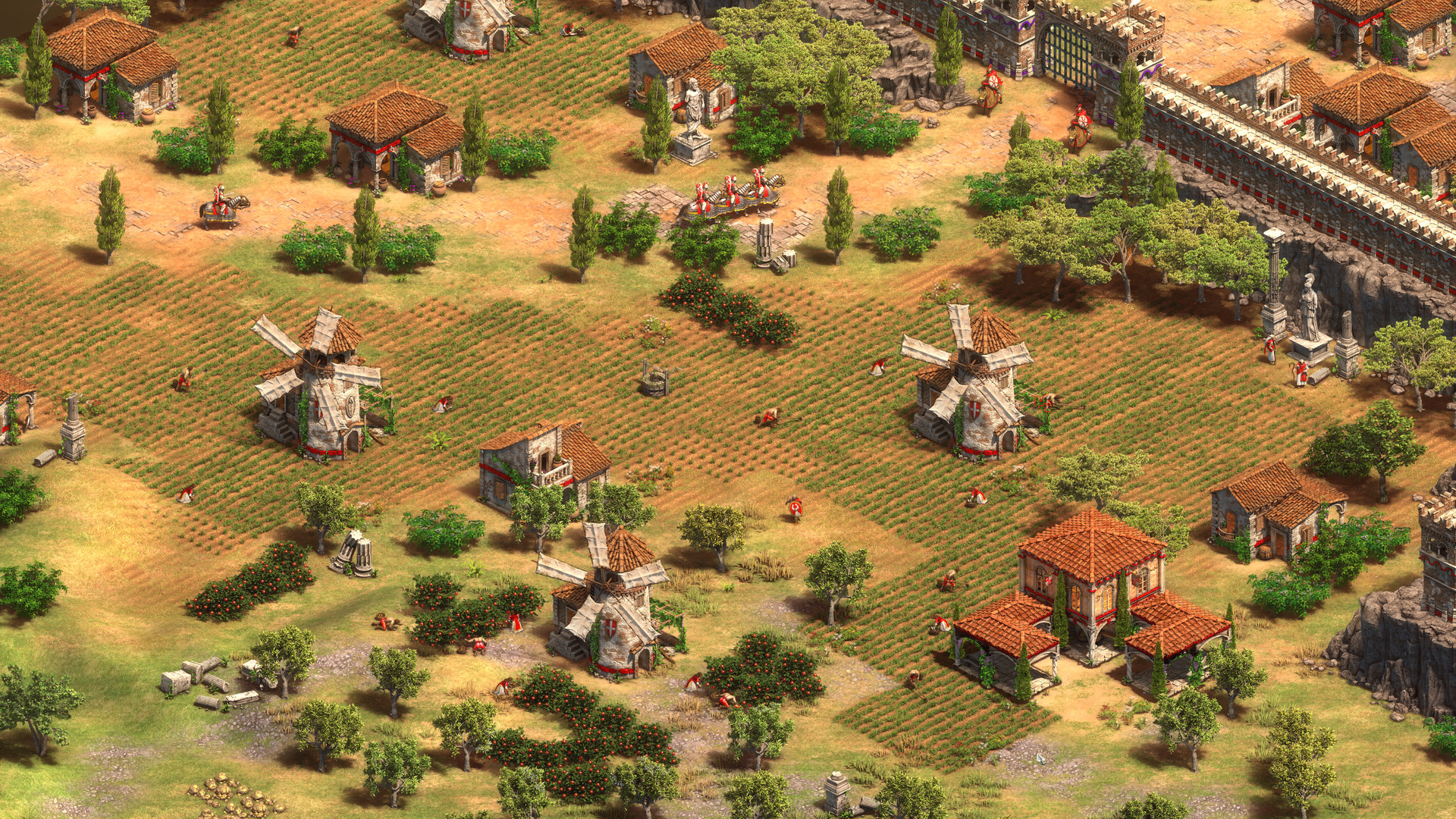
Villagers are the link between the map and the rest of the empire. They collect Food, Wood, Gold, and Stone, construct buildings, repair damaged structures, and can be ordered to fight when necessary. The Town Center produces more villagers, while Houses support a growing population; other buildings train particular units or unlock research. These jobs compete for time and resources. If too many workers gather one material, the stockpile may not match the plan for an army or new structure, so villagers can be reassigned as needs change. The map shapes those choices: scouting can locate food sources, forests, and mineral deposits, while the distance between a resource and a settlement affects how easily workers can keep gathering it under pressure. A Market becomes available in the Feudal Age and lets players buy or sell resources, which can help rebalance a stockpile at a cost. In team matches, Trade Carts sent between allied Markets generate Gold, with longer routes producing more. Monks can also retrieve map relics and place them in a Monastery, where they steadily add Gold to the empire's resources.
The four technological Ages organize the long-term progression of a match. Advancing is a resource investment made at the Town Center after meeting the required building conditions; in return, the civilization gains access to new military options, structures, and technologies. A player deciding whether to advance is also deciding what to delay: the Food and Gold spent on the next Age cannot be used at that moment for another group of units, defenses, or upgrades. Buildings therefore form a progression network as well as a base. A Barracks enables further military construction, while later structures open access to specialist troops and siege weapons. Research improves gathering or combat capabilities, but each technology has a cost, so choosing one means leaving some other development for later.
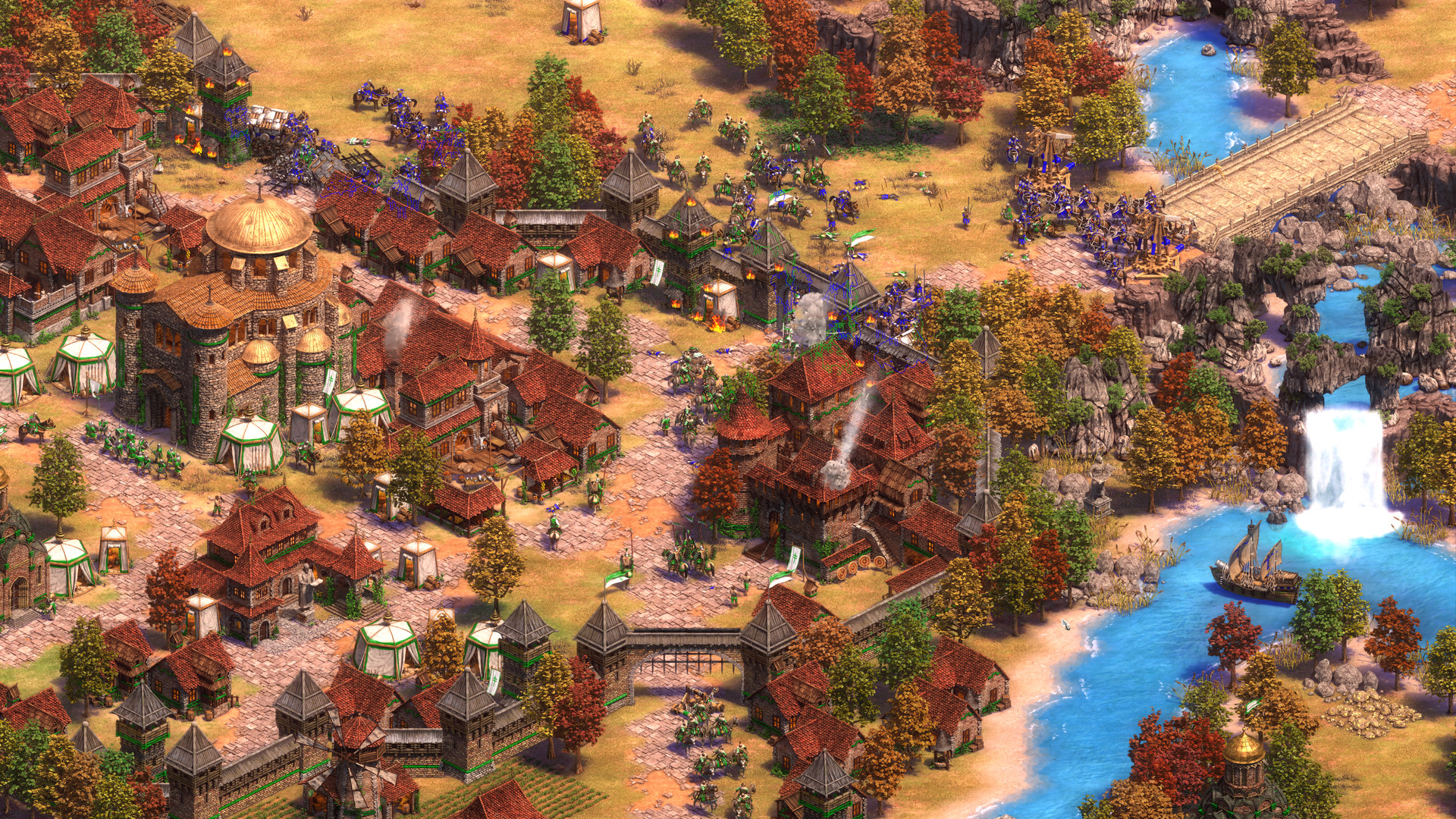
Civilizations share the broad pattern of workers, technology, and armies, but each has its own bonuses, technology tree, and distinctive unit. That gives faction choice a concrete effect on the plan rather than changing only the visual theme. Infantry, archers, cavalry, and siege weapons come from different production buildings and serve different battlefield roles. The basic counter relationships help explain how armies interact: spearmen are useful against cavalry, cavalry can pressure archers, and ranged units can punish exposed infantry. These are broad rules rather than a substitute for checking a civilization’s specific options. Players scout the opposing settlement, read its production choices, and adjust their own unit mix, while keeping enough workers on the resources required to replace losses or exploit an opening.
Campaign missions present historical conflicts through individual scenarios with their own objectives and circumstances. The William Wallace missions introduce basic settlement and combat tasks through the struggle against English rule in Scotland. Elsewhere, campaign storylines follow leaders and peoples across different regions, while the playable goals can move from defending a position to escorting forces, breaking an enemy stronghold, or surviving a difficult battle. The setting supplies names and context, but the scenario determines what the player must accomplish on the map. This structure also changes how the familiar economy works: a mission may begin with a prepared force or limited access to resources, asking the player to use what is available rather than build every part of an empire from the start.
Outside the historical campaigns, players can set up skirmishes against computer opponents, meet human rivals online, or cooperate through historical scenarios. Quick Play and custom match options provide different ways to enter a contest, and the Scenario Editor lets players construct or modify scenarios rather than only select from the built-in set. Most matches revolve around growing an economy while denying the opponent room to do the same, until one side’s empire is defeated or its player resigns. The current base package includes Lords of the West, Dawn of the Dukes, and Dynasties of India, which add campaigns and civilizations; additional downloadable content is sold separately. Across these modes, the recurring decisions are where to explore, which resources to prioritize, when to advance, and what combination of troops can turn preparation into control of the battlefield.
- Developer
- World's Edge, Forgotten Empires, CaptureAge, Tantalus Media, Wicked Witch, and Feral Interactive (Steam listing)
- Genre
- Real-time strategy