
About After Us
After humanity has left Earth stripped of life, Gaia journeys through a surreal wasteland to recover the souls of extinct animals. Run, jump, glide, solve environmental puzzles and confront oil-covered Devourers as you move between ruined biomes and the Ark, a garden where the rescued spirits gather.
After Us begins with life already gone. Mother, a presence associated with life itself, has spent her remaining force preserving the souls of the last animals in their vessels. Gaia is sent into the abandoned world to find those vessels and restore what can be restored. The premise gives the journey a repeated shape: enter a region marked by human damage, cross it through platforming and environmental challenges, and locate the spirit whose fate belongs to that landscape. The game keeps this story largely wordless. Mother communicates through song, while Gaia answers the world with movement, vocal reactions and her own singing. Rather than explain the past through long conversations, the adventure lets ruined structures, discarded objects and animal remains supply context. The environmental subject is therefore part of the route itself: what happened to each creature is tied to the place through which the player must travel, and recovery is expressed as an action rather than an abstract objective.
The journey is organized around the Ark and a sequence of ten distinct biomes, each built around a different view of a post-human Earth. The Ark is a comparatively calm garden where freed animal spirits can wander; the outward regions are larger, damaged spaces assembled from waste, abandoned human forms and traces of former ecosystems. The contrast gives the hub a visible relationship to progress: returning life changes the composition of the garden, while the surrounding world remains a record of what caused its absence. Many optional spirits and small acts of regrowth are not upgrades or currency sources. They are discoveries whose reward is the presence of life itself, so exploration can carry meaning even when it does not unlock a stronger move. The main route and these optional encounters coexist, asking the player to decide how much of each space to inspect. The narrative is intentionally spare, and the creatures' final stories are approached through their vessels and locations rather than through a conventional cast of speaking characters.
Gaia moves through the landscape as a fast, agile platforming character. Her basic vocabulary includes running, jumping, a second jump, a high-speed dash and gliding; together these actions cover gaps, height changes and long falls. The double jump gives her substantial vertical reach, while gliding helps control descent and extend a crossing after the initial leap. Dashing changes the scale of a space because it carries Gaia quickly across open ground, but the same speed means routes need to be read while moving. The game does not build its world from uniform platform measurements. Paths can rise, bend around debris or use large objects as visual landmarks, so the player has to combine momentum with attention to where a surface continues. Movement actions are deliberately simple to chain, and the challenge comes from applying them to changing terrain: jump toward a ledge, adjust in the air, glide over a gap, or dash through a stretch before hazards close in. The control set is introduced as a way of inhabiting an irregular world rather than as a list of isolated tricks.
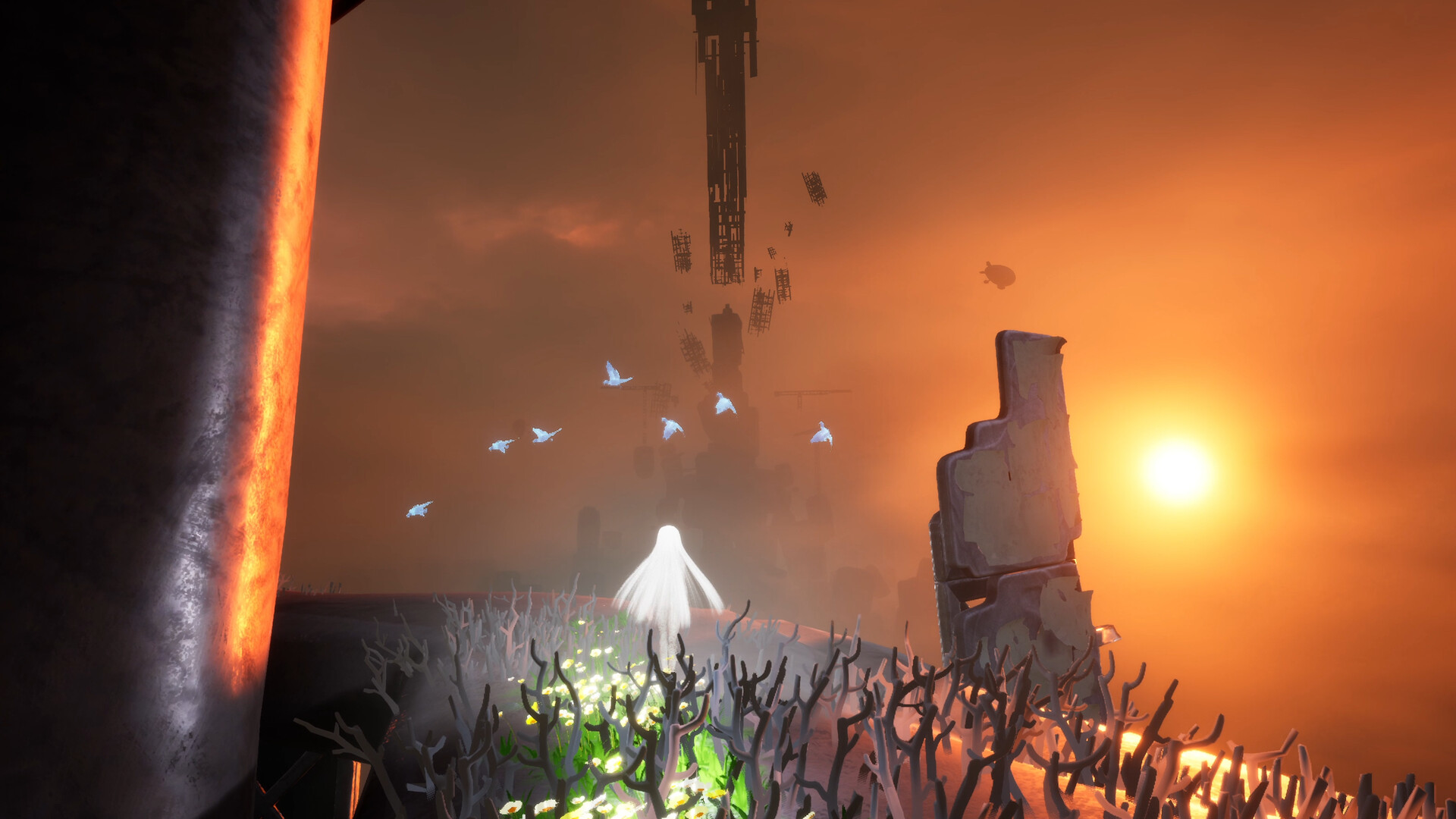
Navigation relies on environmental composition in place of a rigidly gridded platform course. The camera can pull back to show Gaia as a small figure against an expansive scene, then move closer when the immediate path or an interaction needs attention. Lighting, color, architecture, statues and scattered props can all point toward a route. Human statues, for example, form recognizable lines through some spaces, serving both as evidence of the lost population and as directional cues. A distant feature may hint at what lies ahead, while a narrow passage can open suddenly into a wide landscape; the game uses these shifts in scale to keep a route from feeling like a chain of identical jumps. This approach also makes observation part of traversal. The player scans for a change in color, a usable ledge, a gap that can be crossed with a glide, or a landmark that clarifies the direction of travel. Some areas emphasize exploration, others puzzles or combat, and the balance changes between biomes. Spaces are designed to feel connected to a larger place, rather than visibly divided into self-contained challenge rooms.
Puzzles and hazards draw on the same movement toolkit, but change the problem from reaching a destination to understanding the space. A route can be obscured by the clutter of a landfill-like environment, while toxic oil and other dangerous conditions make a seemingly open path unsafe. Gaia must use her jumps, dash and glide in response to the layout, and the camera's changing distance can reveal the scale of an obstacle or bring attention to a nearer interaction. The ten biomes vary the balance of these tasks rather than presenting one repeated puzzle formula: the game's own description identifies regions that foreground exploration, puzzle-solving or combat, with traversal sections also changing as the journey continues. Environmental signs perform two jobs at once. They help show where movement can continue, and their arrangement contributes to the story of a landscape transformed by human activity. The result is a platform adventure in which looking for the route and reading the world overlap; progress often depends on noticing how an object, landmark or opening connects the current space to what can be seen beyond it.
The Devourers are oil-covered hostile creatures that roam the wasteland in search of remaining life. When an encounter turns dangerous, Gaia's powers let her attack and push back these threats; her Burst of Life is a named defensive action associated with the force she carries as the Spirit of Life. Combat is one part of the game's changing mix, alongside traversal and puzzles, and the hostile creatures embody the same ruined environment that shapes the platforming. This means combat takes place within the journey's spaces rather than replacing them with a separate progression loop. The player must respond to enemies while keeping track of terrain and the hazards already present in a region. A confrontation can therefore interrupt movement across a route, while the broader task remains the recovery of animal spirits and passage through the biome. Gaia's movement and life-giving abilities connect encounters to the central theme of restoration. Combat's purpose is tied to surviving the damaged world's remaining dangers so the journey can continue.
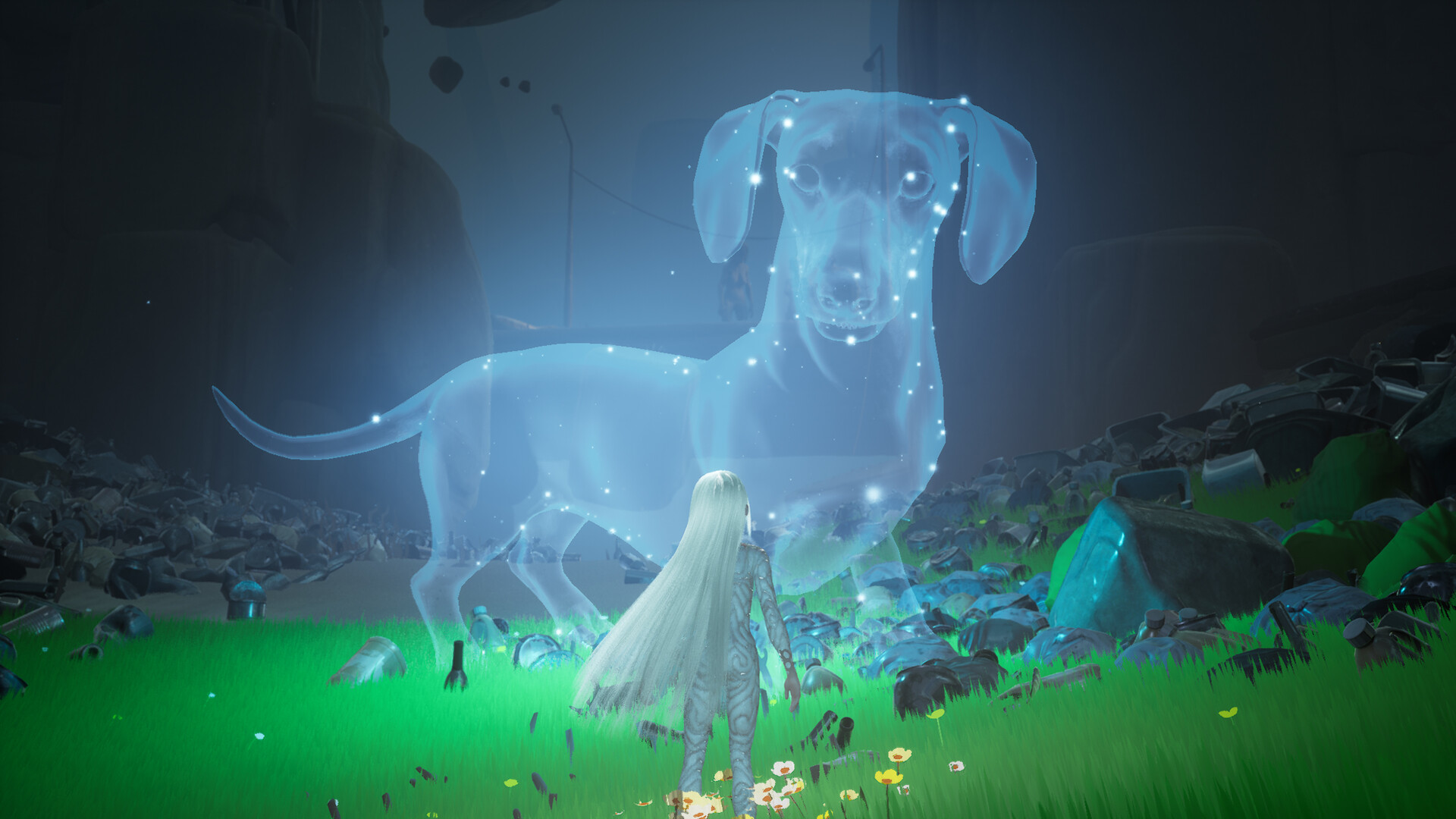
After Us makes sound one of the ways the player senses life beyond what is immediately visible. The world’s low, rusty squeaks and mysterious tones sit within a continuous blend of effects and music; as intensity changes, some layers become more or less audible. Against this dense soundscape, Gaia’s own voice is gentle. She sings to locate nearby spirits, and her reactions mark encounters with them; Mother also communicates through song rather than spoken dialogue. The distinction gives the two figures different roles in the journey: Mother frames the task, while Gaia’s song becomes an active way of sensing what may be nearby. The game’s narrative uses this sparse language alongside symbols embedded in the environment. A spirit’s vessel and the remains around it suggest how that animal met its end, while the landscape carries additional context about human relationships with nature. Once released, the spirits gather in the Ark, where their presence changes the quiet garden into a place populated by recovered life. Optional acts of growing plants likewise leave a visible mark without granting an upgrade. The game connects finding, freeing and welcoming back life through sound, space and visible change.
- Developer
- Piccolo Studio
- Genre
- Adventure platformer