
About Ace Combat 7: Skies Unknown
Ace Combat 7: Skies Unknown is a combat flight action game set during the Second Usean Continental War. As Osean pilot Trigger, you fly campaign missions across land, sea and air, choose aircraft and special weapons for each operation, and navigate changing weather as the conflict escalates around manned and unmanned forces.
Ace Combat 7: Skies Unknown places its campaign in Strangereal, a fictional setting whose continental wars are fought with recognisable modern aircraft alongside experimental technology. The story begins in 2019 during the Second Usean Continental War, as the Osean Federation and the Kingdom of Erusea clash over the Usean continent and the space elevator at its centre. The player flies as Trigger, an Osean Air Defense Force pilot whose assignments change as the conflict develops. The campaign follows military operations through briefings, radio exchanges and missions rather than through a freely explored ground world. It presents rival nations and their personnel as participants in a war with competing aims, while the growing presence of unmanned aircraft gives the conflict a larger technological dimension.
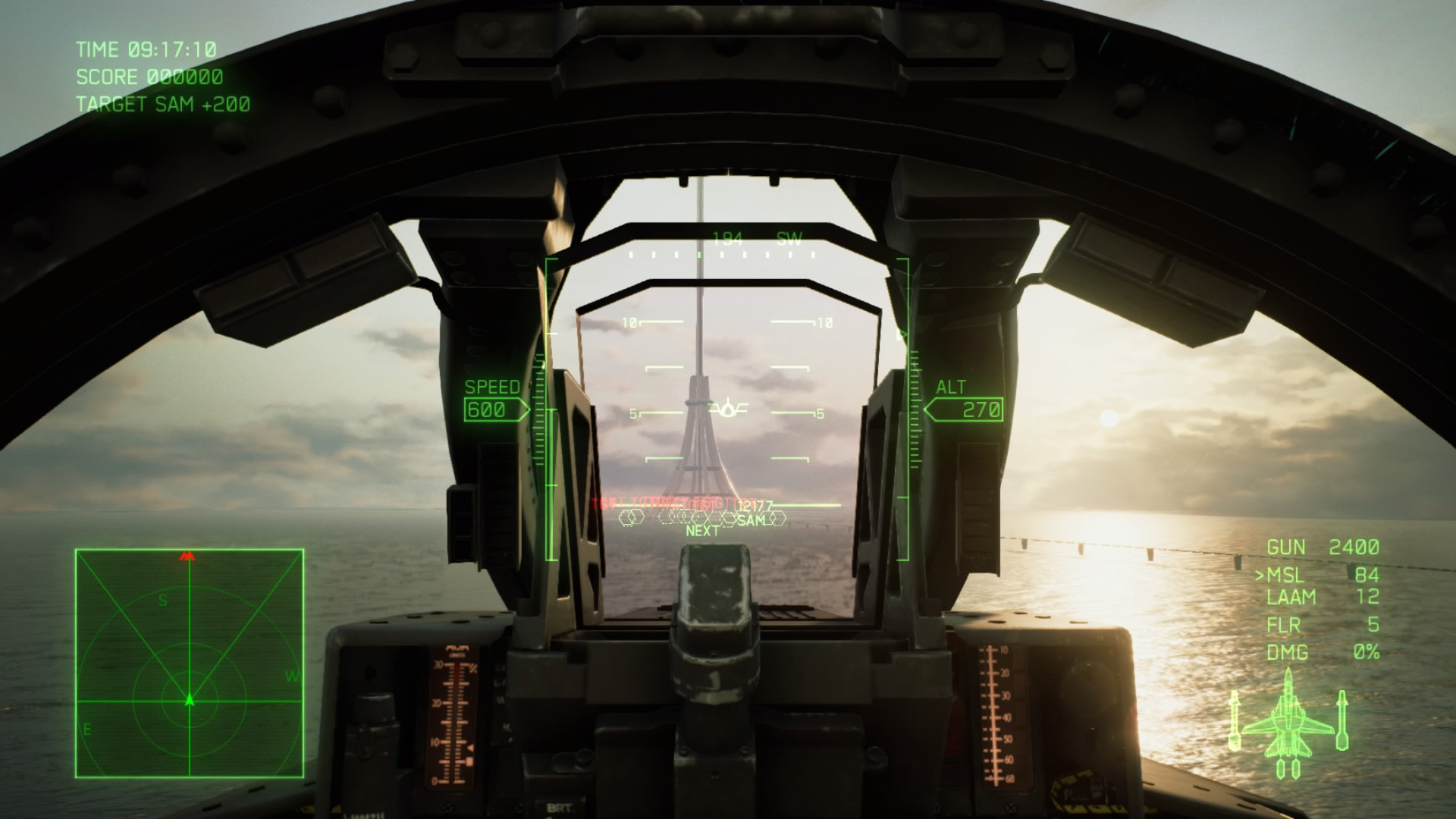
A mission is an aerial operation with objectives that may involve hostile aircraft, ground installations, ships or combinations of targets. Before take-off, the briefing and aircraft selection establish what the sortie asks the pilot to do. During flight, the player steers in three dimensions, tracks targets, locks weapons and decides when to attack. Standard missiles give every aircraft a basic way to engage, while each airframe can also carry a selected special weapon. Those weapons change how a sortie can be approached: an air-to-air option is suited to aircraft engagements, while weapons such as the 8AGM can attack several ground targets in one sequence. The distinction matters because some operations reward clearing a field of surface targets, while others place the emphasis on surviving aerial combat.
The hangar and Aircraft Tree connect mission results to long-term equipment choices. Campaign missions award Military Result Points, or MRP, which can be spent on new aircraft, special weapons and custom parts. Unlocks follow branches: purchasing one item opens access to further items along that route, so early spending determines which options become available next. A newly purchased plane is then selected from the hangar for later missions. The roster includes fighter, attacker and multirole designs, with different strengths in speed, manoeuvrability and the kinds of targets they can attack effectively. Planning therefore happens between sorties as well as in the air: the player can pursue an aircraft path, save for a particular weapon, or spend points on improvements for a plane already in use.
Custom parts let the player adjust an aircraft’s performance within the limits of its available slots and part-category budgets. Body, Arms and Miscellaneous parts improve different aspects of the aircraft, and stronger parts use more of the permitted cost. Special weapons are chosen separately from those upgrades, so the aircraft’s basic role, its selected weapon and its fitted parts work together as a mission loadout. A briefing can inform that choice, but the campaign’s operations do not always unfold exactly as expected; the player still has to respond to the targets and threats that appear. Unlocking equipment through MRP makes these decisions cumulative, gradually widening the set of aircraft and configurations available for the remaining campaign.
Weather is an active part of the flight environment rather than scenery alone. Clouds can obscure vision and provide cover, and flying through a thundercloud can expose an aircraft to lightning or icing that affects its systems and visibility. The player can account for those conditions while pursuing targets or evading incoming missiles, but the same cloud bank that hides a fighter can also make it harder to keep track of the surrounding fight. Sun glare can further complicate visibility. These effects turn the sky into a changing tactical space: pilots must manage speed, orientation and target awareness while deciding whether to pass through hazardous weather or route around it. The campaign’s aerial encounters consequently include environmental pressures in addition to enemy aircraft and weapons.
Between those operations, briefings and radio dialogue give context to the war and to the people caught within it. The Osean and Erusean conflict is not framed as a simple division between heroes and villains; the narrative follows military perspectives and human consequences as technology alters the balance of power. Trigger’s role shifts with the circumstances of the campaign, while other pilots and command personnel shape how each operation is understood. The space elevator acts as a strategic focal point in the wider conflict, connecting the war’s immediate air battles to the political and technological stakes surrounding Usea. Story developments are delivered through the sequence of missions and their surrounding scenes, keeping the player’s view close to a pilot receiving orders and acting under pressure.
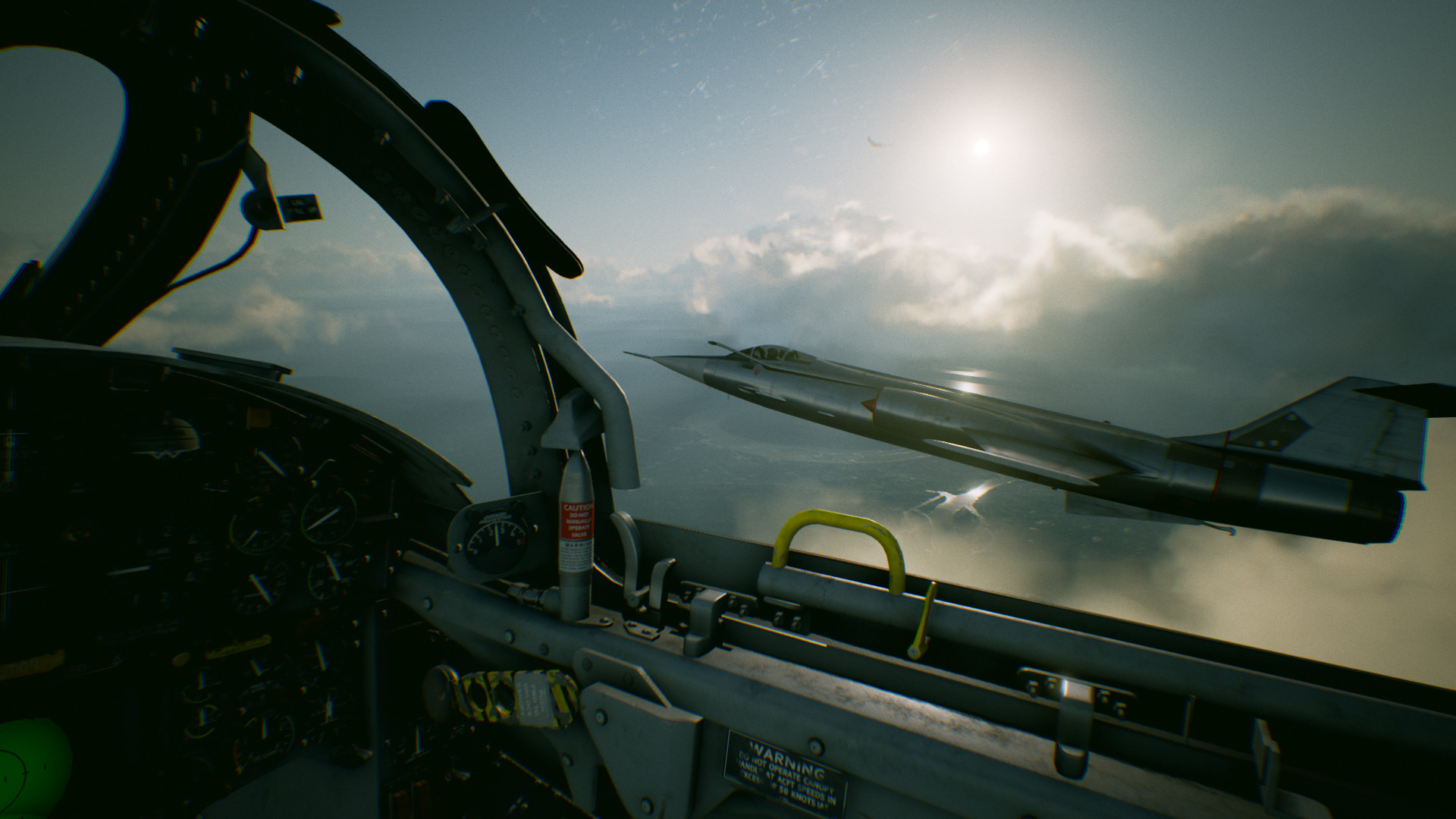
Some aircraft also support a post-stall maneuver, a specialised flight technique available only on particular types. Bandai Namco Studios describes it as an operation performed after an aircraft has stalled and identifies it as a high-level technique for experienced players. This gives aircraft selection a handling dimension alongside the differences in roles and weapons: the available airframes do not all offer the same advanced flight options. The detail belongs to flying itself, where players control their aircraft through changing speed and orientation while tracking the mission. It is a specific capability within the flight model, not a universal manoeuvre available to every plane. The campaign remains focused on its single-player story operations.
- Developer
- Bandai Namco Studios / Project Aces
- Genre
- Combat flight action