
About ABZU
ABZÛ follows a lone diver through a colorful ocean of reefs, kelp forests, ruins and open water. Swim freely, interact with schools of marine life, ride larger creatures, and pause at meditation sites to observe the ecosystem. Environmental mechanisms and wordless imagery guide the descent toward the ocean’s hidden history.
ABZÛ begins with a diver alone at the surface and follows her descent into connected underwater environments. The journey moves through open water, kelp forests, reefs, caverns and ancient structures, with the changing scenery carrying much of the story. The Diver has no spoken lines, and there is no named party or conventional dialogue system. Instead, murals, monuments and the arrangement of abandoned places provide visual clues about the world and the reason for the journey. The game keeps those clues indirect, so the player reads them alongside the changing ocean rather than receiving a sequence of explanations. Its central activity is exploration: swim toward new spaces, meet the sea life living there, and follow the passages and mechanisms that lead farther below.
Swimming is designed around continuous motion in three dimensions. The Diver can steer in any direction, turn the camera independently, and use timed kicks for short bursts of speed. A grab interaction lets her hold onto larger creatures and ride with them for a time, adding a faster way to cross open water and a different view of the habitat. The controls allow loops and turns rather than restricting the character to a flat horizontal plane. There is no air meter, and the player can remain underwater without surfacing to replenish oxygen. That removes a survival timer from the exploration loop: the basic concerns are orientation, observing the surroundings, and finding the passage that continues the chapter.
Marine life is part of both the scenery and the interaction system. The player can reach toward fish, move among schools, and ride larger animals such as manta rays or whales. Schools respond to the diver and to other creatures in the water, giving the ocean movement beyond the player’s own route. Predators also interact with prey as part of the ecosystem. Hidden fish pools offer another form of discovery: activating one releases species into the nearby waters, changing the life visible in that area. The player is not collecting fish into an inventory or completing a creature-catching system; the interaction is about encountering them in their habitat. The game bases its species on real animals, while its stylized environments and occasional ancient forms keep the ocean’s history mysterious.
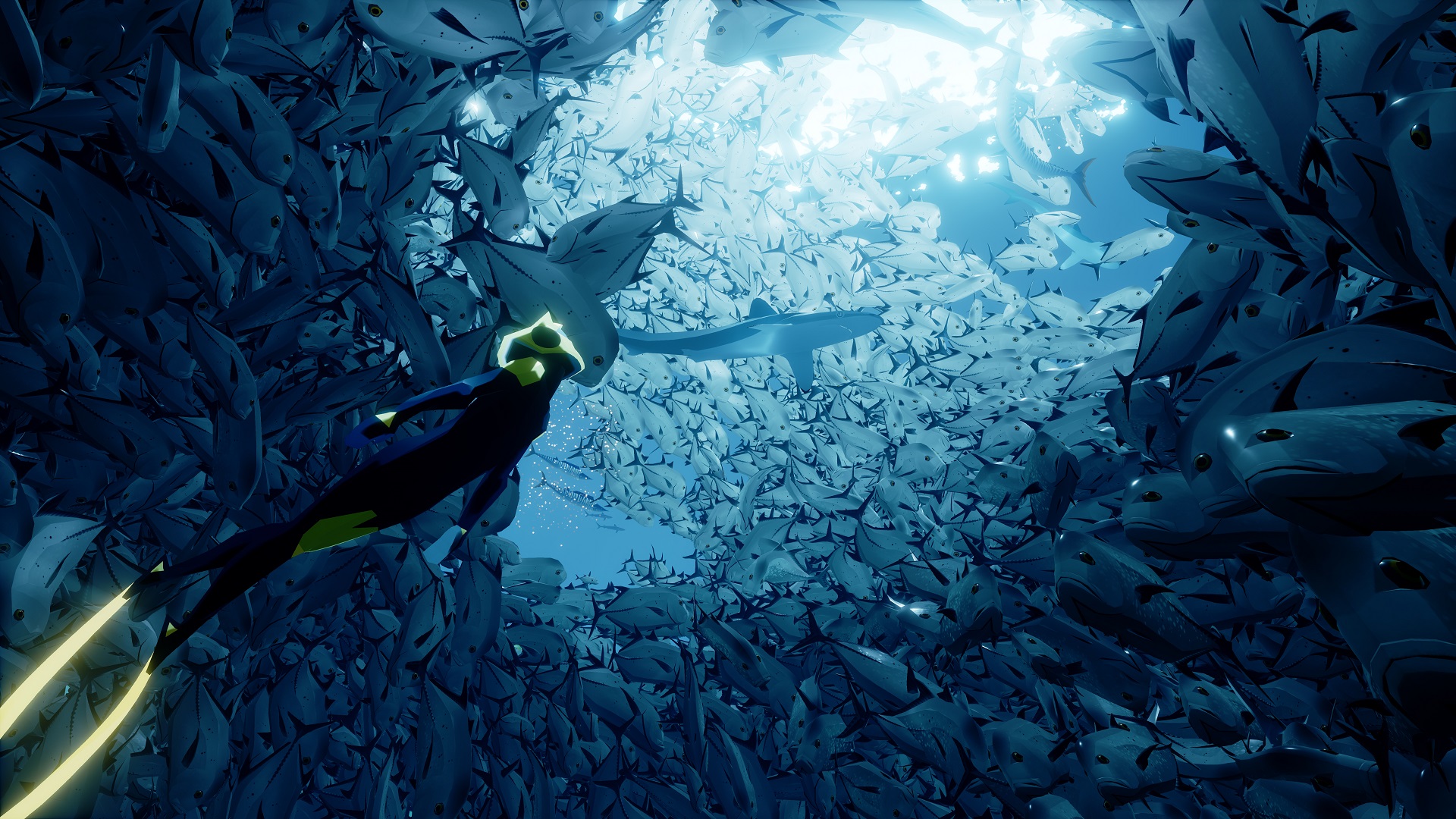
Progress through each region comes from recognizing environmental cues and activating mechanisms. Small mechanical drones appear in early areas; when the Diver activates and guides one to a gate mechanism, it can connect with the structure and open a route onward. Later spaces use comparable interactable devices, glowing panels, gates and passages to link one habitat to the next. The challenge is mainly observation and navigation: inspect the area, find the active object or route, then move through the opening it creates. Some kelp walls or blocked passages conceal the way forward, so circling through nearby water and noticing light, architecture or movement can reveal the route. These systems create a clear progression without turning the ocean into a sequence of timed survival tests.
Meditation statues provide optional pauses within the movement between regions. Near a statue shaped like a shark-headed figure, the Diver can settle into a seated pose while the camera surveys the surrounding ecosystem. The player can shift attention among fish and observe what is happening in that part of the ocean, including relationships between species. This mode is distinct from swimming through an area: it holds the Diver in place and turns the camera into a way to examine the habitat. The statues also serve as optional discoveries scattered through the environments. After completion, the game allows chapters to be replayed, and unlocked meditation locations provide a way to return to particular ecosystems without repeating the full descent.
The environment becomes less welcoming as the journey reaches older and more damaged places. Some areas contain dangerous pyramid-shaped objects; touching them briefly stuns the Diver and interrupts movement, but does not create a conventional death-and-restart loop. The game has no combat system, weapons or health management, so hazards change the route and pace rather than asking the player to defeat enemies. Encounters with large creatures and the remains of machines gradually add context to the murals and ruins. The story stays spoiler-light in how it presents those connections: players see changes in the ocean and recurring images, then infer how they relate to the Diver and the forgotten structures. Progress remains a forward swim through linked spaces, punctuated by opportunities to explore around the main path.
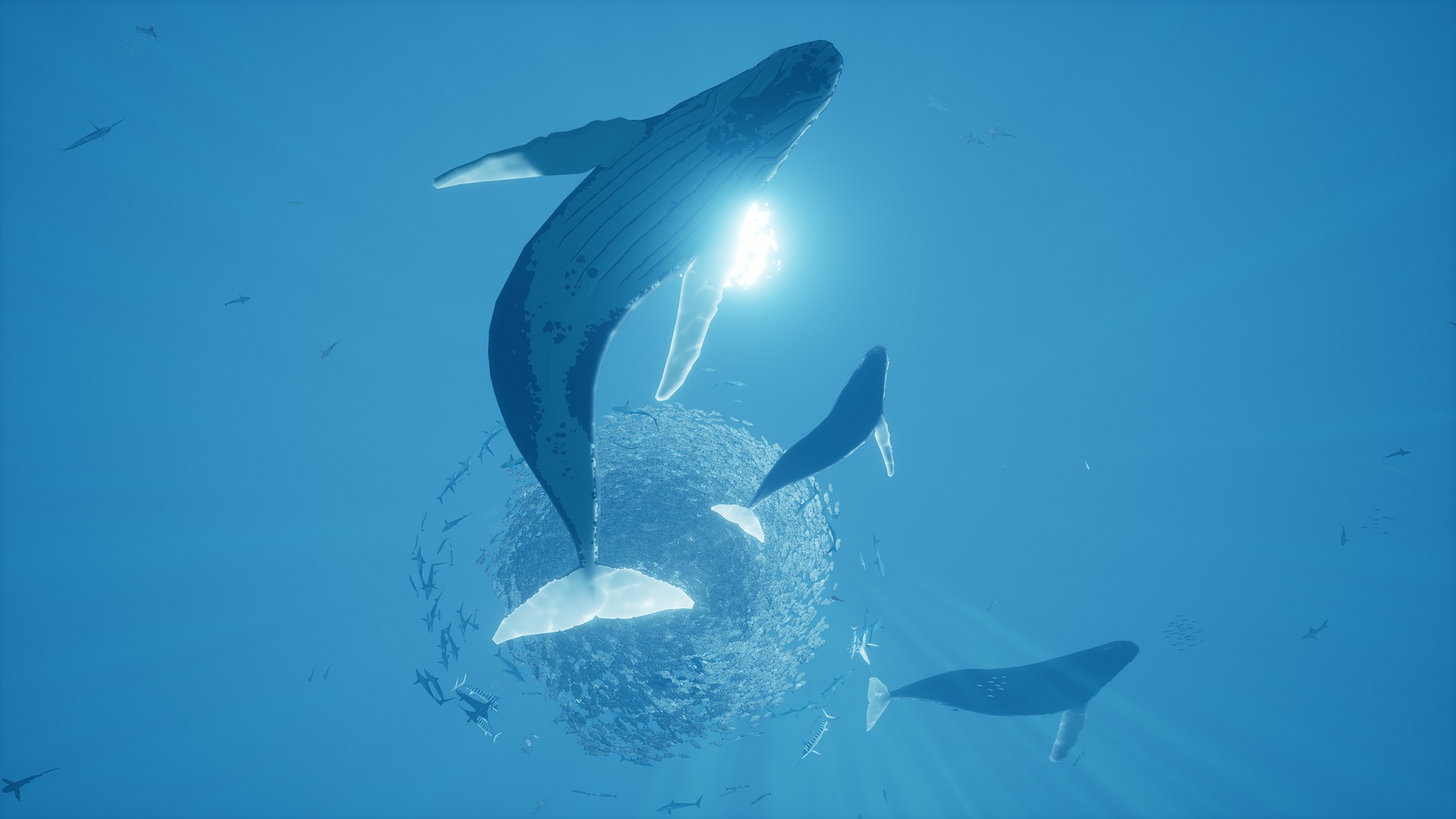
ABZÛ also uses changes in water flow to vary the pace of traversal. Strong currents carry the Diver rapidly through tunnels, ruins and narrow stretches, contrasting with the slower movement available in wider habitats. The player can guide her through these passages and interact with nearby schools as the environment rushes past. Returning to open water restores the freedom to choose direction, linger with wildlife, search for a hidden pool or visit a meditation statue. The soundtrack develops alongside that movement, while color and density shift from one habitat to another. Together, the currents, gates, creatures and visual story markers form the game’s progression: the player follows the ocean deeper, restores passage through its structures, and discovers what the changing environments reveal.
- Developer
- Giant Squid
- Genre
- Adventure