
About Abiotic Factor
Abiotic Factor is a survival crafting game about scientists trapped beneath the surface after a breach at GATE, a secret research organisation. Explore its underground complex and connected worlds, gather supplies, build a base, and use improvised technology to survive. Character backgrounds, skills, crafting and cooperative play shape the route toward escape.
GATE is a network of secret research laboratories devoted to scientific fields that reach beyond ordinary explanation. Its workers study anomalies, paranormal entities and artifacts with unusual properties, keeping their work hidden behind procedures for safety and containment. When those procedures fail, the facility becomes a place of competing dangers: strange beings move through its corridors, forces from other dimensions arrive through portals, and the Order enters with its own mission. The player character is one of the scientists caught inside this crisis. The immediate problem is practical: remain alive, understand enough of the facility to move through it, and find a way to make the complex habitable while planning an escape.
The setting makes the laboratory both a workplace and a landscape. Offices, laboratories and deeper sectors form a large subterranean space to explore, while portals connect the facility to worlds beyond it. Rooms built for ordinary research sit beside evidence of experiments that have exceeded their intended boundaries. Different hazards call for different responses: paranormal creatures may be driven by instinct, soldiers bring organised force, and robotic security systems treat personnel as intruders. Moving through the facility is therefore a matter of reading its spaces, learning where useful resources can be found, and preparing for threats that do not all behave alike. The sci-fi framework draws on a 1990s sensibility, mixing research infrastructure with interdimensional disruption.
Survival depends on gathering and making things rather than relying on a conventional soldier's arsenal. Scientists scavenge materials from vacant offices and laboratories, and even vending machines become potential supply points. Those resources feed crafting, allowing the group to turn found objects into tools, weapons, equipment and traps. The range runs from straightforward improvised implements to elaborate devices, including advanced technology. Since the characters are researchers rather than trained combat specialists, preparation and ingenuity are central to dealing with hostile encounters. A piece of equipment can help create distance, control an approach or provide a way to handle an obstacle. The workshop-like loop links exploration to survival: learn the environment, collect what it contains, then make something suited to the next problem.
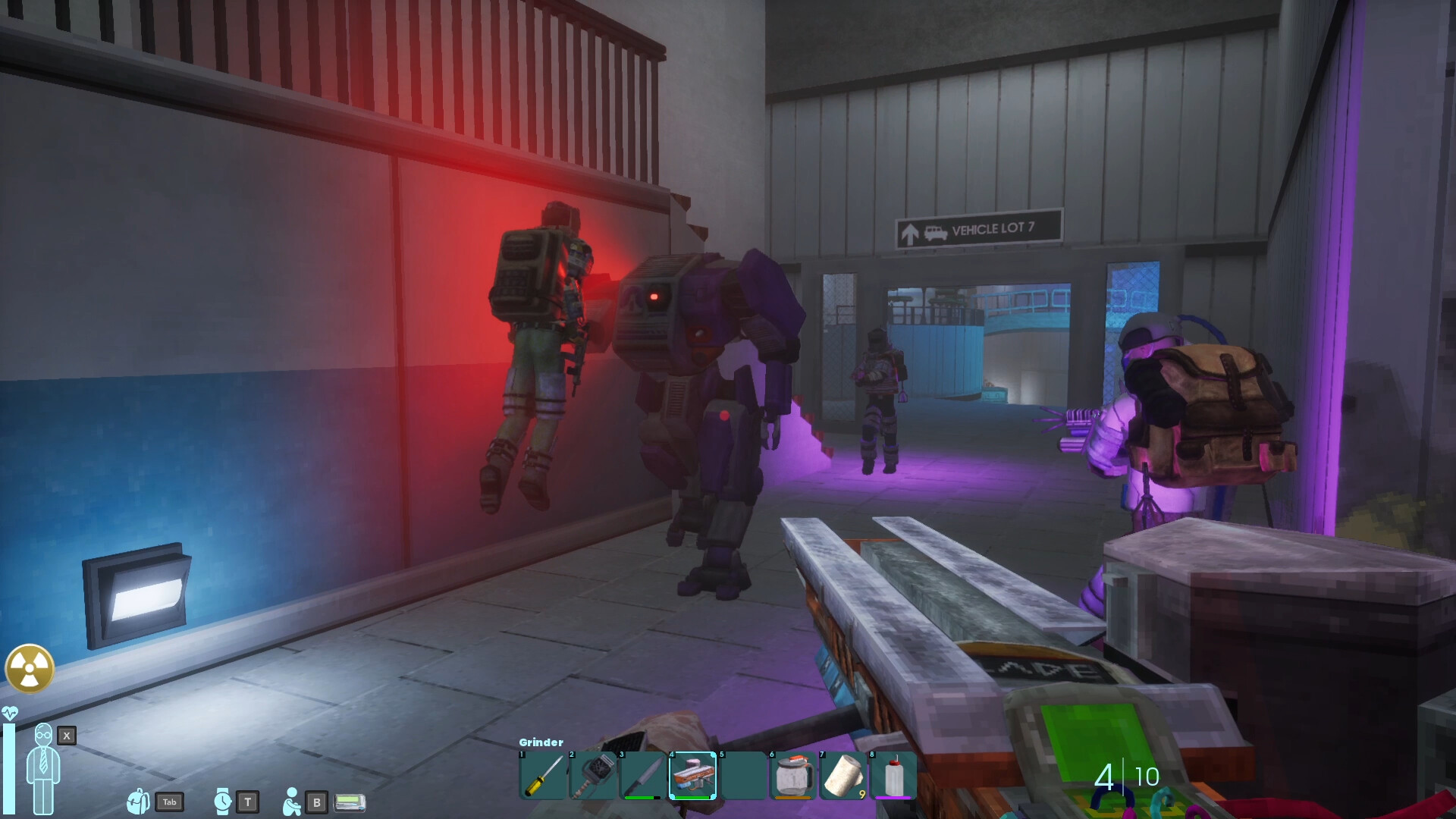
A base gives those materials a continuing purpose. Scavenged objects can be used to establish a home inside the facility, turning a room into a place to regroup, store resources and prepare for another excursion. The group is not tied permanently to its first location: equipment can be packed and transported as the route through the complex changes. Handcarts, forklifts, vehicles and teleporters provide different ways to move belongings across the sprawling site. That flexibility reflects the scale of the setting. Progress is not only about reaching another corridor; it can mean relocating the practical centre of operations closer to a new area, so that a discovered sector and its resources become easier to work from.
Character development starts with the scientist the player wants to create. The game offers different PhD specialisations, including fields such as phytogenetic botany, defence analysis and archotechnics. These choices provide distinct advantages, while traits and skills can be combined to shape how a character contributes. As characters gain experience, they earn perks and abilities that extend those strengths. In cooperative play, up to six people can select and develop their own scientists, creating a team whose capabilities complement one another. Character growth is therefore connected to the group’s survival plans: one specialist’s strengths can support exploration or defence while another develops different tools. The role-playing layer gives the scientific premise mechanical weight without turning the crew into conventional soldiers.
Threats encourage players to use the tools and surroundings creatively. The facility contains alien life, paranormal entities, armed members of the Order and advanced robotic security, so a single approach cannot be assumed to fit every encounter. Crafting gives players options for changing how they respond, while traps and equipment can help control space rather than simply trading attacks. The complex itself also matters: objects and resources found during an expedition can alter what the team is able to build later. Between excursions, a base offers a place to prepare, and character progression adds new abilities over time. These connected systems make exploration, resource collection, making equipment and team development parts of one survival loop.
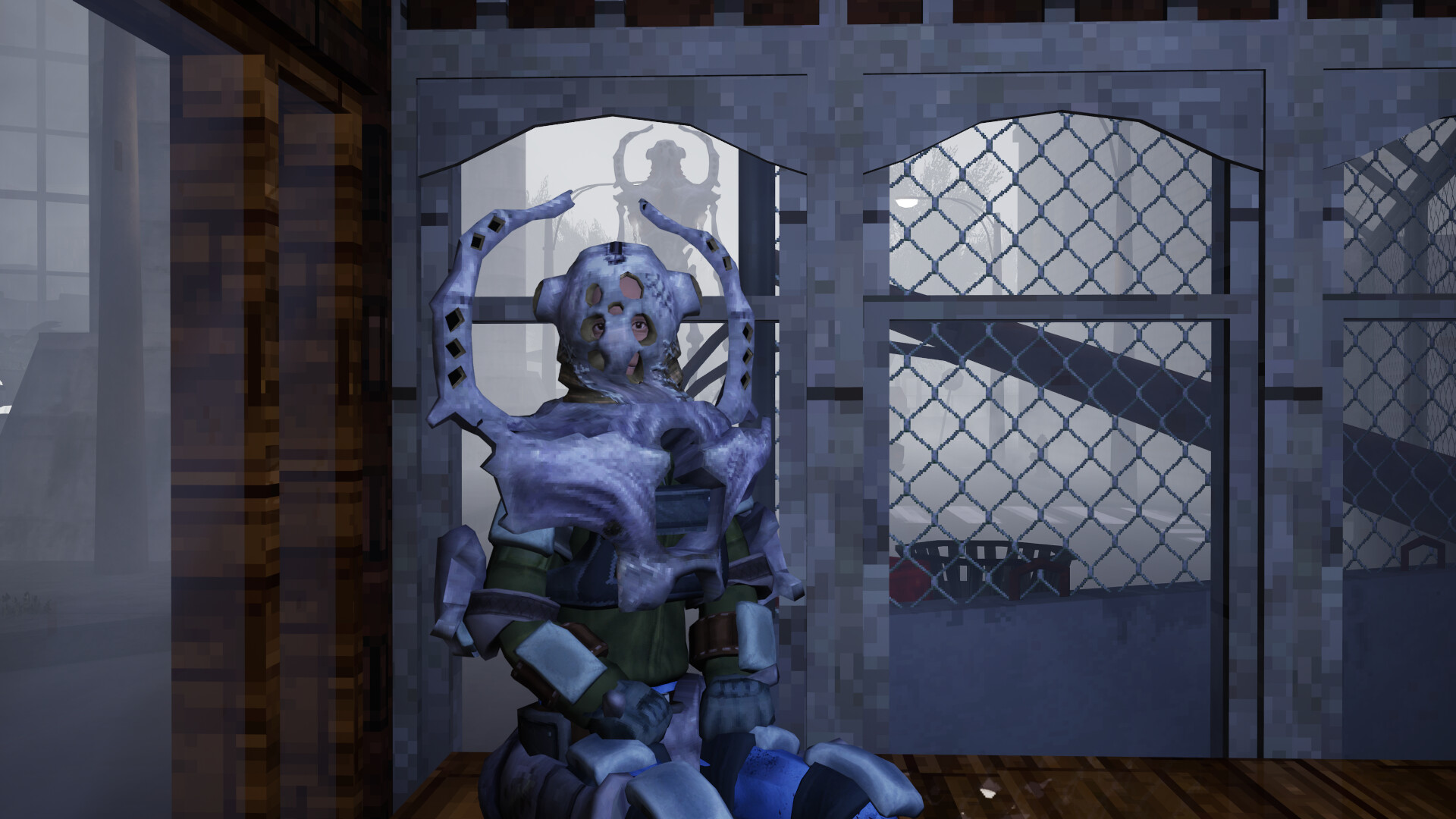
Abiotic Factor supports solo play as well as online and LAN cooperative sessions, with the store listing up to six players. Whether alone or with others, the broad objective remains to survive the containment failure, explore the underground facility and its linked worlds, and work toward escape. Playing together changes how tasks can be divided and how characters’ backgrounds can combine, while solo play concentrates those demands on one scientist. The game’s larger structure joins exploration with ongoing base development, crafting and character progression rather than treating each expedition as an isolated mission. GATE’s research premise supplies the mysteries and dangers; the survival systems provide the practical questions of what to carry, where to establish a foothold and how to deal with the next threat.
- Developer
- Deep Field Games
- Genre
- Survival crafting, open-world exploration and role-playing; science-fiction action-adventure with cooperative play