
About A Plague Tale: Innocence
In plague-stricken 1348 France, young noble Amicia de Rune and her little brother Hugo flee the Inquisition and swarms of unnatural rats. Their route through ruined villages and hostile countryside brings them into contact with other children, while stealth, sling shots, fire and alchemy help them survive dangers neither sibling can face alone.
A Plague Tale: Innocence begins in 1348, as disease and war scar the Kingdom of France. Amicia de Rune, a teenage daughter of a minor noble family, is suddenly responsible for her younger brother Hugo, whose illness has kept him apart from ordinary life. When the Inquisition comes for the children, the siblings must leave the de Rune estate and find a way through villages, roads and battle-scarred landscapes where soldiers and the spreading plague are both immediate threats. The story stays close to their flight: they are children without the strength or authority to confront armed adults openly, so survival depends on staying together, reading danger and finding a path through it.
Amicia and Hugo’s relationship shapes how scenes play as well as what they mean. She leads, protects and gives instructions; Hugo follows close by, but he is curious, observant and capable of drawing attention at the worst moment. The siblings gradually encounter other young people, including the resourceful thieves Mélie and Arthur and Lucas, an alchemist’s apprentice. These companions bring different knowledge and practical help to a journey otherwise defined by mistrust between adults and children. Their conversations unfold while moving through shelters, farms, ruins and enclosed passages, making each new refuge temporary rather than a permanent safe base. The group’s changing trust gives the journey its human centre, while the search for help with Hugo’s condition keeps their route pointed forward.
The rat plague turns light into a route-finding and survival system. Rats mass in darkness and can overwhelm a person who steps into their reach, while flame and other strong light sources hold them back. Amicia and Hugo therefore cross exposed spaces by following lanterns, carrying torches or reaching braziers, then use the sling to strike a light source and change where the safe boundary falls. Fire is limited and can be extinguished, so the player often has to judge which lamp or brazier should be lit, which one can be sacrificed, and whether a nearby object can keep the route open long enough to move the children. The same lighting puzzle can also expose a guard to the rats, letting the environment turn an enemy’s protection into danger.
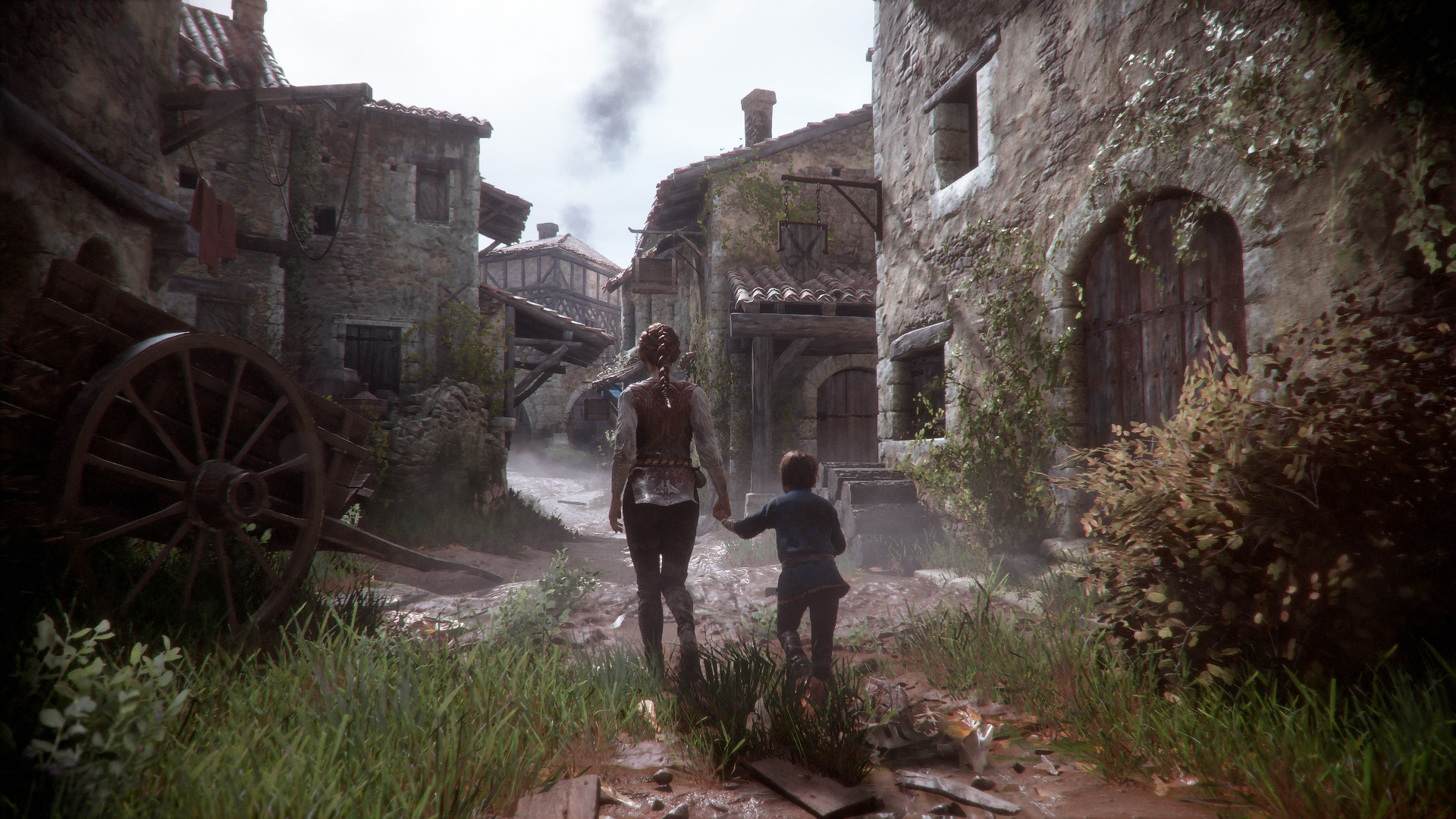
Amicia’s sling is her main tool for dealing with guards and interacting with the environment. A stone can break a chain, distract someone, knock out an unprotected guard or hit a distant object, but using it carelessly can make noise and draw attention. Crafted ammunition adds specialized effects: Ignifer lights embers and flammable material; Extinguis puts out a flame; Odoris attracts rats to a chosen spot; and Luminosa clears rats in an area. Devorantis corrodes a helmet and forces its wearer to remove it, creating an opening for a sling shot, while Somnum can put a person to sleep. These recipes are learned over the course of the journey, so new obstacles also teach new ways to manipulate soldiers, fire and rats rather than simply asking for more force.
Crafting ties exploration to the next encounter. Materials such as leather, fabric, cord, alcohol, sulphur and salpeter are gathered along the route and combined into ammunition or equipment upgrades. At workbenches, Amicia can improve the sling’s loading and accuracy, expand the pockets and ammunition bag, or adjust equipment so movement makes less noise. The sling and equipment branches offer separate benefits: one makes attacks quicker or quieter, while the other increases how much she can carry and how flexibly she can upgrade. Alchemical options and their upgrades arrive later, expanding the ammunition recipes and how they work. Because materials have several uses, each workbench visit is a choice between carrying more supplies, improving a familiar tool or preparing for a particular kind of threat.
The journey passes through more than battlefields and plague-ravaged roads. Chapters bring the children through household rooms, church spaces, a military camp, a castle and a university, places that suggest how ordinary life and institutions are being overtaken by war and disease. These spaces also change the scale of danger: an enclosed home or crypt feels different from an exposed camp or open battlefield, while Amicia and Hugo remain small against both. The variety of settings gives the story room to move between flight, temporary shelter and investigation without losing its focus on two children moving through a collapsing society.
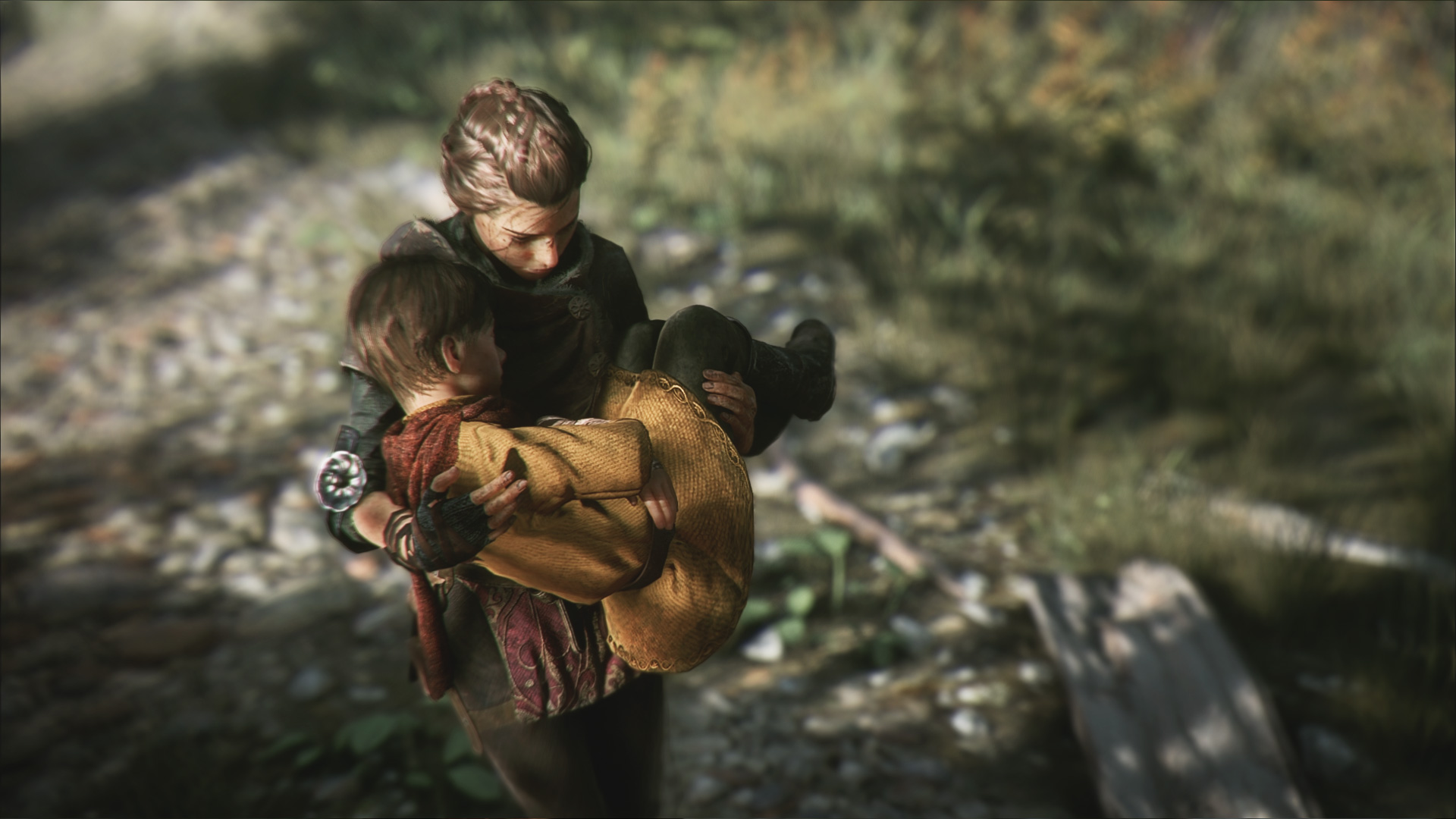
Optional finds add a quieter record of that world and of the siblings’ childhood. Hugo’s Herbarium gathers flowers encountered along the route, while the gifts Amicia can find for him include a whistle and knucklebones. Curiosities preserve details of life beyond the immediate chase: household spices, soap and a tablecloth sit beside incense, a rosary, alchemical objects and items tied to the war. The objects appear in homes, camps and other spaces the siblings pass through, so exploring slightly beyond the necessary path reveals what people used, valued or left behind. Together these collections make small moments of observation part of the escape, giving Hugo interests and ordinary pleasures that contrast with the plague and violence surrounding the children.
- Developer
- Asobo Studio
- Genre
- Action-adventure with stealth and puzzle sequences