
About A Little to the Left
A Little to the Left turns household clutter into more than 100 illustrated logic puzzles. Sort, stack and arrange everyday objects by clues such as order, shape, pattern or symmetry, while a mischievous cat can undo the work. Multiple solutions, optional hints, level skips and a daily puzzle support a flexible pace.
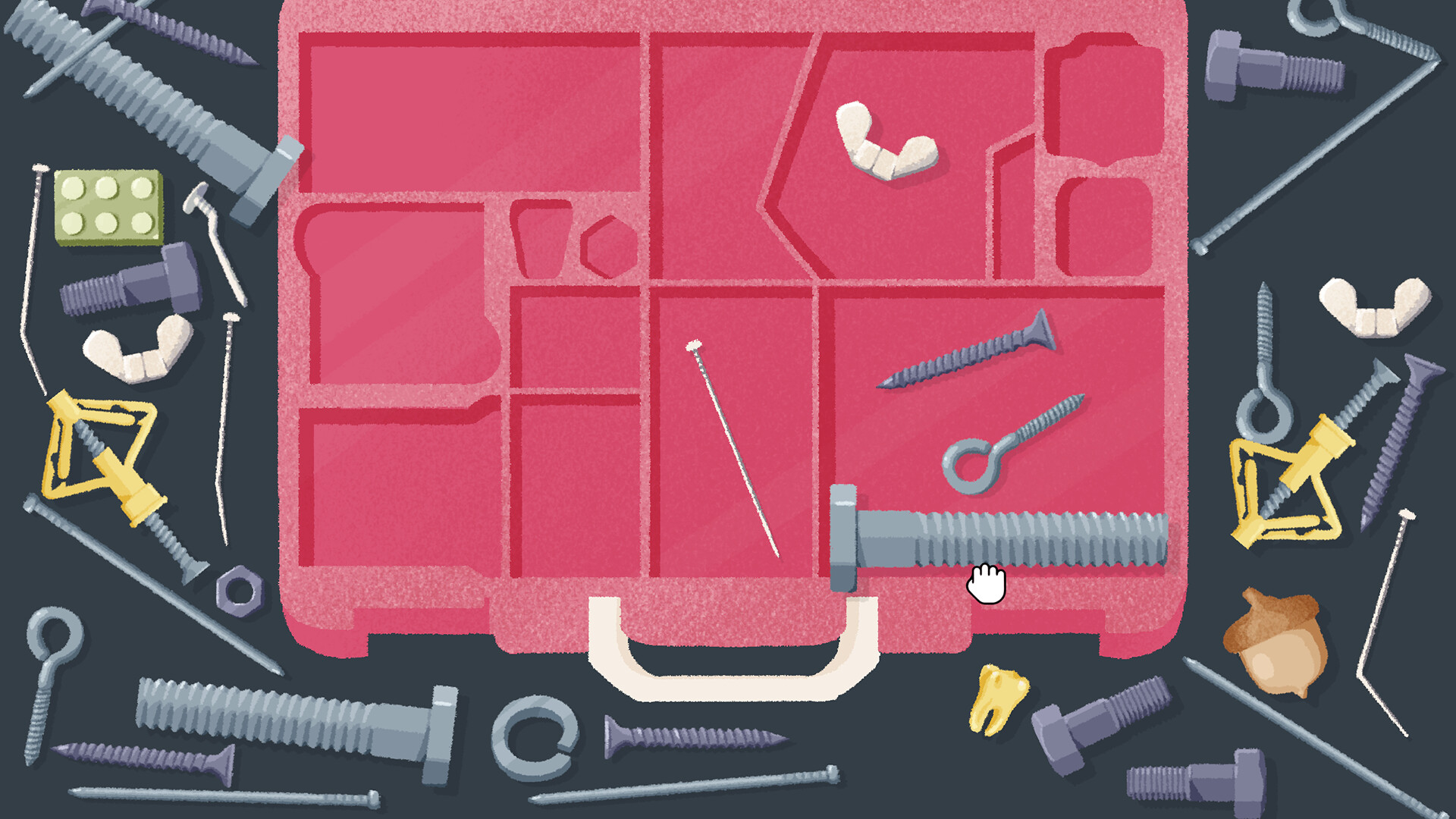
A Little to the Left is a puzzle game built around the small satisfaction of putting familiar things in order. Its scenes centre on household objects and invite you to notice the pattern or arrangement that makes them fit. A clock, eggs or a piece of fruit covered in stickers can each become a short logic problem. The game’s charming illustrations give these ordinary items a warm, expressive look, while the situations often carry a playful surprise. Each level is framed as an individual domestic scene; the focus is on reading what is in front of you, testing a solution and seeing how the arrangement changes when a puzzle is resolved.
The puzzles ask for different kinds of attention rather than repeating one sorting rule. A clock’s hands, a carton of eggs and fruit covered in stickers each turn familiar objects into something to interpret. A level may ask you to look for a visual pattern, arrange items, or notice how one detail changes the whole scene. The game contains more than 100 logical puzzles, with multiple solutions in some of them. The clues sit among the objects, so observation matters as much as trial and error. Colour-based puzzles can also use alternate visual cues through Colour Assist. The variety comes from the objects and their relationships: a tidy stack, a repeated motif or a deliberately odd placement can each suggest a different rule to test.
Many puzzles accept more than one correct arrangement. That flexibility is part of the design: an item need not always have one exact destination, and a scene may recognise several ways to satisfy its logic. When the rule is not immediately clear, the hint system can reveal a little guidance or disclose more of the solution. If a puzzle is holding up progress, the “Let It Be” option lets you skip it and return to other messes. This gives the campaign a gentle rhythm, with short standalone challenges that can be approached at the player’s own pace. The emphasis stays on noticing and arranging, rather than speed or a penalty for taking time to think.
A mischievous cat is the game’s recurring source of disorder. It may interrupt a carefully arranged scene, shifting the objects and asking you to restore the pattern or reconsider the layout. The cat is not just a decorative presence beside the puzzles: its tendency to cause chaos is built into the premise and adds a light change of pace to the quiet tidying. The illustrated objects and feline interruptions keep the tone playful, while atmospheric sound accompanies picking up, moving and placing things. Together, the art, small physical interactions and gentle audio give each puzzle a distinct domestic setting, even though the game’s main structure is a sequence of brief observations rather than a continuous narrative.
Alongside the main selection of more than 100 puzzles, the base game includes The Daily Tidy Delivery, which presents a daily variation on one of its puzzle ideas and awards badges for finding solutions. A puzzle Archive also makes seasonal levels available outside their original holiday periods. The base game has received free content updates, while Cupboards & Drawers and Seeing Stars are separately sold expansions. Cupboards & Drawers adds cabinet and compartment puzzles, including nested puzzles and levels that require several steps of organizing within one scene. Seeing Stars adds levels built around finding several solutions, with stars marking the discoveries. These expansions broaden the collection, while remaining distinct from the original game and its free updates.
The newer support options make some of the visual and interaction demands adjustable. Colour Assist changes puzzles that rely on colour, adding alternate visuals or other distinguishing cues. Zooming and panning can enlarge details and help with small objects, and Tap to Hold lets a player pick up an object with one click and drop it with another instead of holding a button while dragging. Keyboard, mouse, controller and touch are supported, depending on platform. These options do not change the game’s central activity: inspecting a collection of household things and arranging them according to the clue in front of you. Hints, skips and alternate controls provide different ways to engage with that activity.

The final free update added three named drawer puzzles to the Archive: Bathroom Drawer, Tool Drawer and Paper Plane Supplies. It also introduced Shuffle mode, which becomes available after the main campaign is completed and rearranges levels from the campaign, Archive and any owned DLC into a new order. The same update revised hints to clarify solution criteria and added hints for Daily Tidy puzzles, so guidance can point to the logic behind an arrangement. It expanded Daily Tidy with a streak display, checkpoints and a grace period for a missed day. These changes give returning players extra ways to revisit familiar object puzzles and make their reasoning easier to follow, while keeping the activity centred on the original household scenes.
- Developer
- Max Inferno
- Genre
- Casual puzzle game; observational and logic puzzles centered on household objects, per developer and Steam descriptions.