
About A Juggler's Tale
A Juggler’s Tale is a cinematic puzzle platformer about Abby, a marionette escaping captivity and crossing a dangerous fairy-tale world. She navigates obstacles, traps and pursuers while the puppet master Jack narrates her journey. Abby’s strings are both part of the story’s imagery and a central element in environmental puzzles.
A Juggler’s Tale follows Abby, a circus performer and marionette who escapes a cage and enters a dangerous medieval fairy-tale world. The country beyond the circus bears the marks of war, with people in hardship and hazards along the route. Abby’s goal is to find freedom while moving through this unfamiliar landscape, where bandits and the relentless pursuer Tonda threaten to return her to captivity. The story is framed as a puppet performance: Abby is the character at its center, while Jack, the puppet master, tells her tale. That setup gives the game a continuing question about agency. Abby acts and makes progress through the world, yet remains physically attached to strings controlled from beyond the scene. The title’s central image therefore belongs both to the plot and to the player’s experience of movement. The adventure’s premise is not a realistic account of circus life or a historical medieval setting; it is a theatrical fairy tale about a performer trying to shape what happens to her. Her escape opens onto a much larger journey, shifting the focus from confinement in the circus to the different dangers and choices that come with moving through the world outside it.
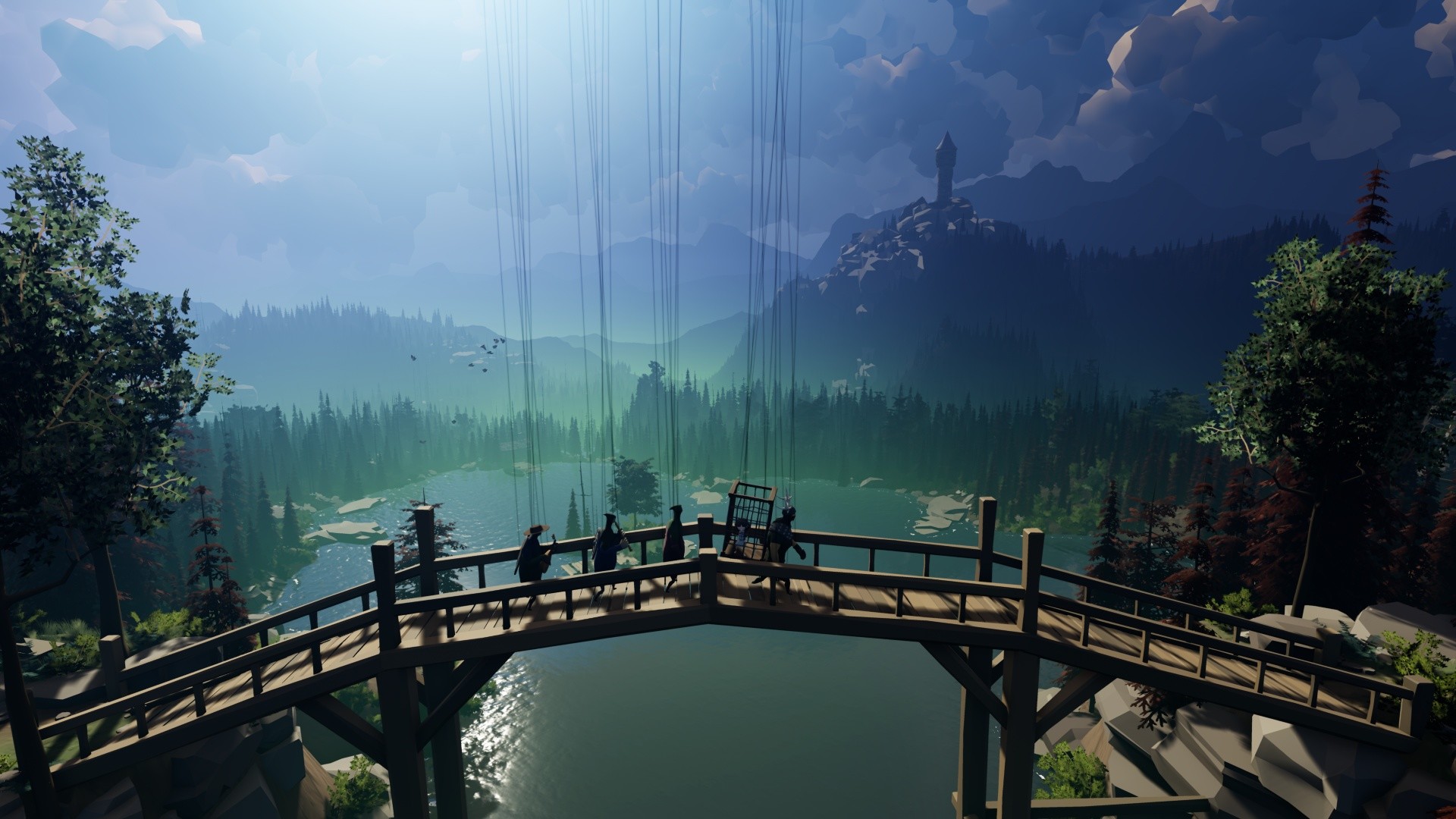
The world is arranged as a sequence of side-scrolling scenes rather than a freely navigable map. Abby moves through marshes, villages, riverside stretches, bandit camps and other fairy-tale environments, with each area staged like part of a theater performance. The setting mixes storybook beauty with signs of hardship: the war-torn land includes ravaged and starving citizens, hostile pursuers and dangerous crossings. These details give context to Abby’s route without turning the game into a broad simulation of a kingdom or a survival system. The player reads each scene as a contained traversal problem, looking for the way forward and for objects that can change the immediate situation. Backgrounds, lighting and weather help define the mood of each passage, while the puppet-theater framing keeps the story’s artificial construction visible. The scenery can shift from open fields and natural views to more enclosed spaces that direct attention toward a specific obstacle. There is environmental storytelling in the contrast between the fairy-tale surface and the damage underneath it, but progression remains focused on moving Abby through the level. The world’s main purpose is to put her strings, movement, danger and narration into changing combinations, so new areas feel like new stages in one continuous escape rather than separate quest hubs.
Abby’s basic movement is deliberately compact: she runs, jumps and interacts with selected objects as she moves through side-scrolling scenes. The marionette strings add a spatial constraint that ordinary platform characters do not have. They extend above and around her, sometimes catching on foreground geometry and preventing a route that appears clear at ground level. The player must account for where the lines pass as well as where Abby’s body can go. A foreground object can be moved to let the strings through, turning the puppetry into a practical navigation rule. This shifts attention toward the whole staged space, including objects that overlap the route without directly blocking Abby. The strings can feel restrictive, but that limitation is also what makes the character’s body distinctive: the puzzle is often about finding a route for both puppet and lines together. The game uses the idea consistently rather than treating the strings as decoration in cutscenes. They are visible while Abby travels and become part of the geometry the player reads. This paragraph’s movement challenge is about clearance, positioning and traversal; other puzzles use objects and hazards to ask different questions about timing and interaction.
Many obstacles are solved through simple interactions with objects in the scene. Abby can pick up small items, including apples, and throw them when an object needs to be shifted or a puzzle calls for a projectile. Those actions give a contained scene a sequence of steps: identify what can be handled, place or throw it, then use the resulting change to continue. Other stages emphasize traps, rivers or routes through bandit camps, while chase sequences ask Abby to keep moving and avoid a pursuer. These moments bring urgency to the platforming, but the game’s threats are approached through evasion and scene-specific solutions rather than a conventional combat system. A puzzle may require noticing an item that is easy to overlook; a chase may test whether the player can follow the route quickly enough. Checkpoints organize these authored challenges into a forward journey. The game does not build a broad inventory or character progression tree around its objects; their purpose is local, tied to the immediate obstacle. This keeps the focus on what the space asks Abby to do in that moment, whether that means navigating a hazard, using an item or moving before a threat closes in.
Jack’s narration gives the journey the cadence of a performed story. He speaks in rhyme, introduces situations and comments on what Abby encounters, so each stretch of play has a voice that belongs to the puppet-show frame. The rhyming lines are not simply background dialogue: they make the player aware that Abby’s world is being told to an audience by someone who also controls her strings. That creates a tension between the story’s staged form and Abby’s effort to act for herself. The narration can set context before or during an obstacle, while the player remains responsible for moving through the scene. Jack also reacts when Abby is in difficulty, maintaining his role as both storyteller and puppeteer. The game uses this voice to tie separate levels together and to keep its central theme visible without requiring long conversations between realistic human characters. The story’s theatrical quality comes from that ongoing relationship between narrator, performer and audience: Abby is presented as a character in a tale, yet the movement and puzzle solving let the player participate in how she proceeds. The framing adds a layer to the adventure’s premise while leaving the controls and platforming grounded in the immediate environment.
The visual presentation makes the puppet-show idea tangible across the world. Abby and the other characters are marionettes, with wooden forms and expressive poses that give them personality despite their constructed bodies. Scenes are arranged like carefully lit sets, from natural landscapes to more enclosed locations, and backgrounds establish a larger world beyond the route Abby can currently traverse. The contrast between a fairy-tale surface and a land marked by conflict supports the story’s mixture of wonder and danger. A medieval-style soundtrack adds another layer to that atmosphere, while changes in scenery distinguish one part of the journey from another. These visual and musical choices work independently of the puzzle rules: a dark forest can change the mood, while the foreground objects and platforms determine how Abby moves through it. The result is a side-scrolling adventure where the theatrical framing remains visible even during ordinary traversal. The puppets do not become realistic people, and the environments do not lose their stage-like quality; both choices keep attention on the artificial nature of the story being performed. At the same time, the detailed backgrounds and soundtrack give each scene a distinct sense of place rather than making the journey feel like a sequence of bare platform layouts.
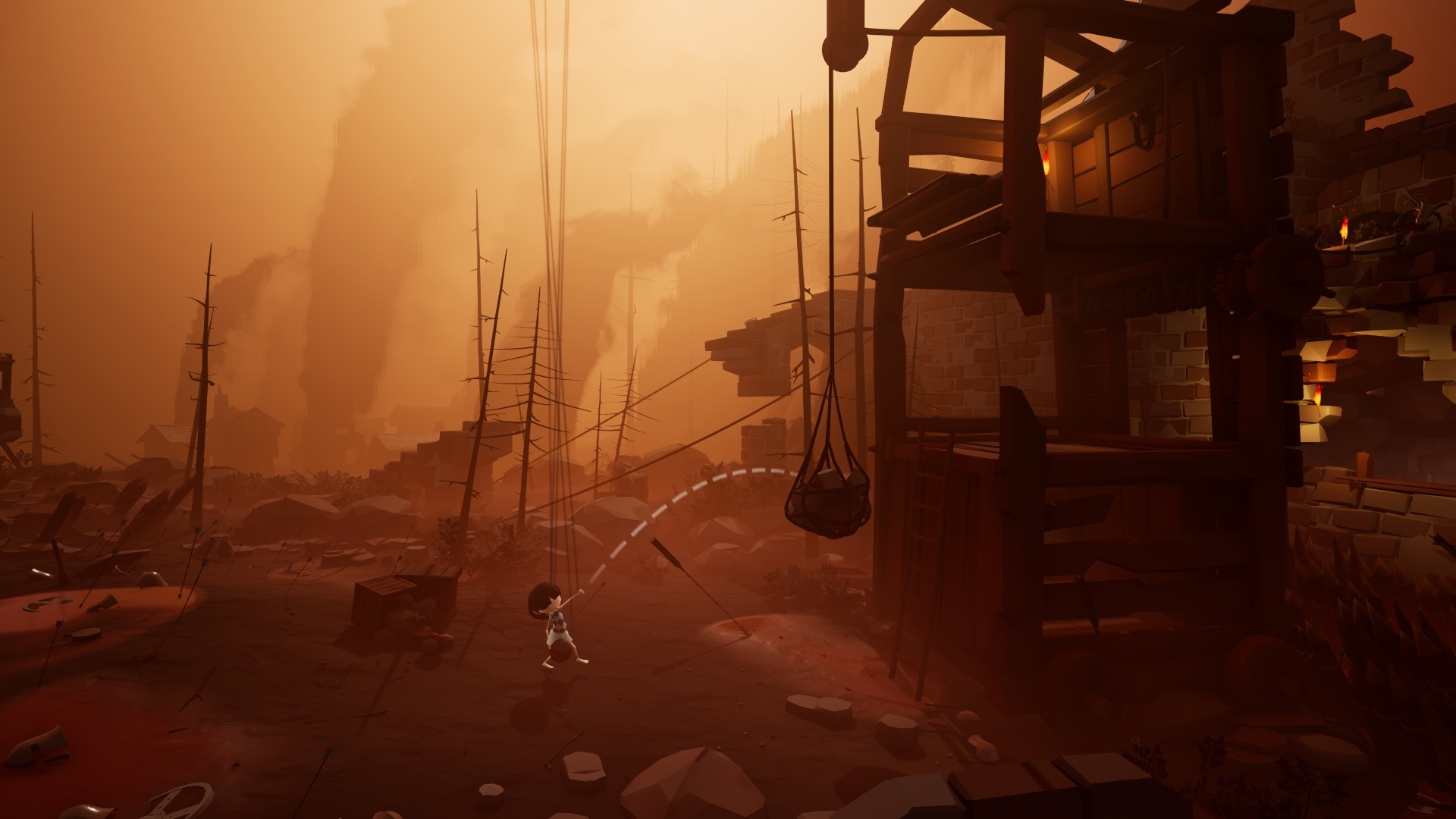
The puppet design shapes how movement looks as well as where Abby can go. Her controls follow a familiar side-scrolling pattern rather than asking the player to manipulate each string like a puppeteer. The body and lines still impose physical limits: Abby cannot simply be lifted over the scene, and the strings may catch or become entangled around objects. At the same time, her limbs move with physics-driven animation, so a jump can make her arms and legs wobble differently in the air. The result separates input from performance. The player issues ordinary movement commands, while Abby’s marionette body responds with the loose motion of a figure suspended on threads. That distinction keeps the game readable as a platformer while preserving the illusion of a puppet show. The strings are a gameplay restriction, but the rest of the puppetry also lives in animation and staging; the character does not require a special control scheme to communicate that she is being operated. The narrator’s performance depends on that visible connection, while the player’s role is to guide Abby through the world using the straightforward movement language of a side-scrolling adventure.
- Developer
- kaleidoscube
- Genre
- Cinematic puzzle platformer