
About A Hat in Time
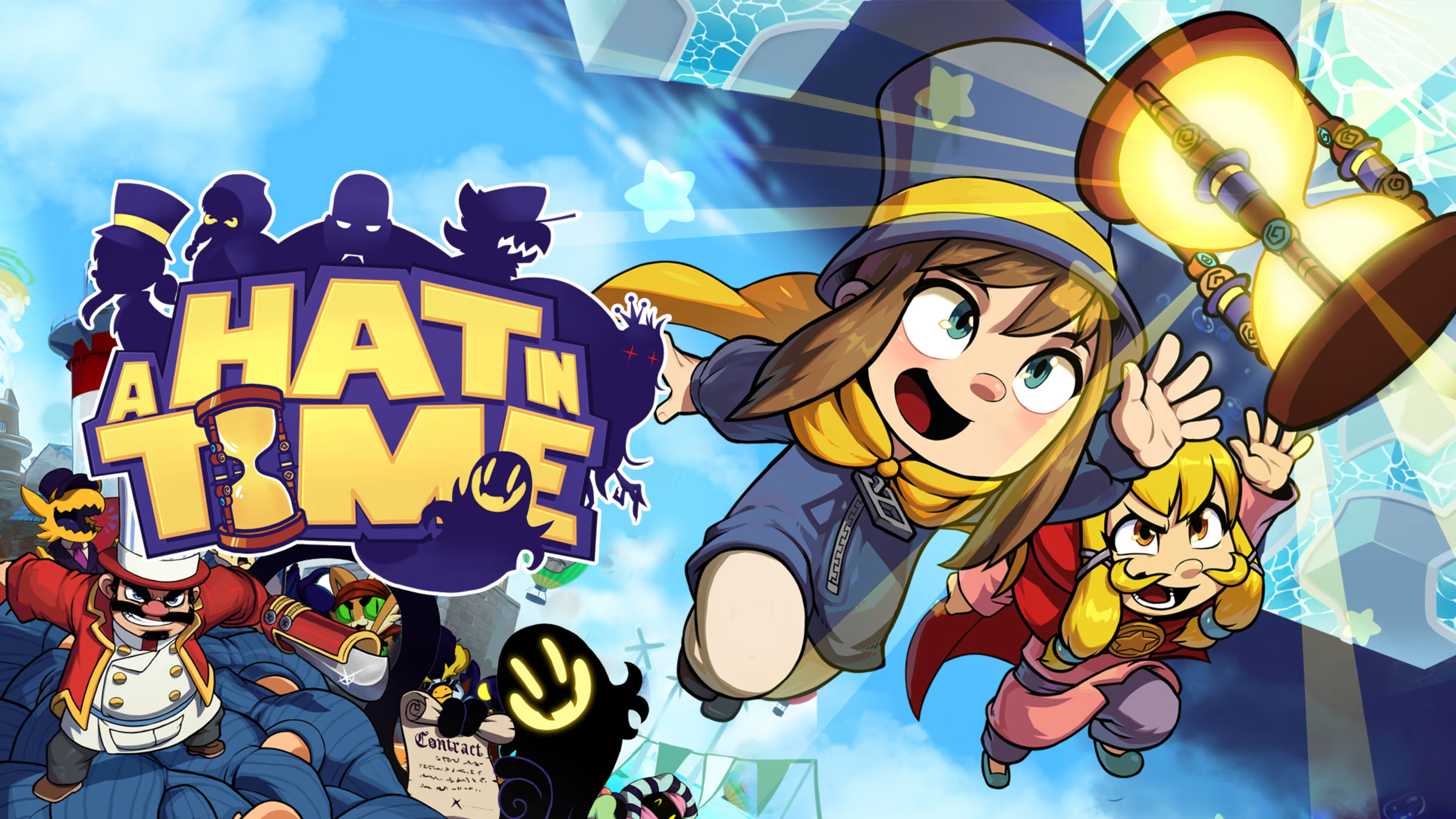
When the Time Pieces powering her spaceship scatter across a nearby planet, Hat Kid must explore its strange worlds and recover them. She jumps, climbs and swings through varied missions, stitches magical yarn into ability-granting hats, and uses badges to adjust those powers as she encounters the Mafia of Cooks, Dead Bird Studio and Subcon Forest.
Hat Kid is a small space traveller whose route home is interrupted when the Time Pieces that power her spaceship spill across a nearby planet. The central task is to recover those pieces from places occupied by eccentric residents, rival groups and stranger forces. Her journey moves between broad themed worlds and individual missions, so the same basic goal repeatedly takes on a different shape: one excursion may send her through a neighborhood controlled by the Mafia of Cooks, while another puts her inside the bird-run Dead Bird Studio or among the shadows of Subcon Forest. The story premise supplies a reason to cross these places, while the local characters and situations give each stop its own problem to solve. Hat Kid remains the focus throughout, a traveller whose oversized top hat and stitched abilities are practical tools as well as part of her recognisable silhouette.
The planet is arranged around spaces meant to be traversed and inspected in three dimensions. Hat Kid can run, jump through several kinds of jump moves, climb walls and swing across gaps; movement therefore links ordinary ground routes with ledges, heights and hanging paths. The camera can turn freely, giving the player a view around Hat Kid as they judge distances and look for routes above or beside the obvious path. An enemy homing attack helps Hat Kid connect a jump with a moving target when ordinary platforming precision would be awkward. Together, these actions make movement useful both for crossing a level and approaching its inhabitants: a route may ask for a leap between platforms, a climb up a wall, or a timed swing over a gap before Hat Kid can continue toward the mission’s objective. A full camera turn and attacks that help connect a jump with a nearby enemy mean the player is not locked to one forward-facing lane. The same mobility that carries Hat Kid toward a mission can also expose alternate approaches in its environment, although the exact route remains part of the player’s moment-to-moment navigation.
Collecting magical yarn changes what Hat Kid can do. She uses it to stitch new hats, and each hat supplies a distinct ability rather than serving only as a costume. The witch-like Brewing Hat lets her prepare explosive concoctions; a wooden ghost mask lets her look into another dimension. These powers give exploration a tool-based layer: the player learns which ability fits a particular obstacle or opportunity, then chooses when to wear it. Yarn is a progression resource, so discoveries in the world feed back into the set of actions available to Hat Kid. Players can choose which hat to stitch, making yarn a way to expand their options rather than a fixed order of world keys. That means the collection loop can reward curiosity with useful options even when a particular new ability is not immediately needed. The hats therefore translate collected yarn into concrete verbs. Brewing is an offensive action, while peeking into another dimension is a way of perceiving space differently; the two examples signal that new hats can answer different kinds of situations. The choice of what to stitch also affects which tool is immediately available, so collecting yarn is not just an accumulating score. It feeds a small, legible equipment decision that the player can make as the adventure develops. This makes a stitched hat useful immediately in both traversal and encounters, even when the next mission does not demand that precise power.
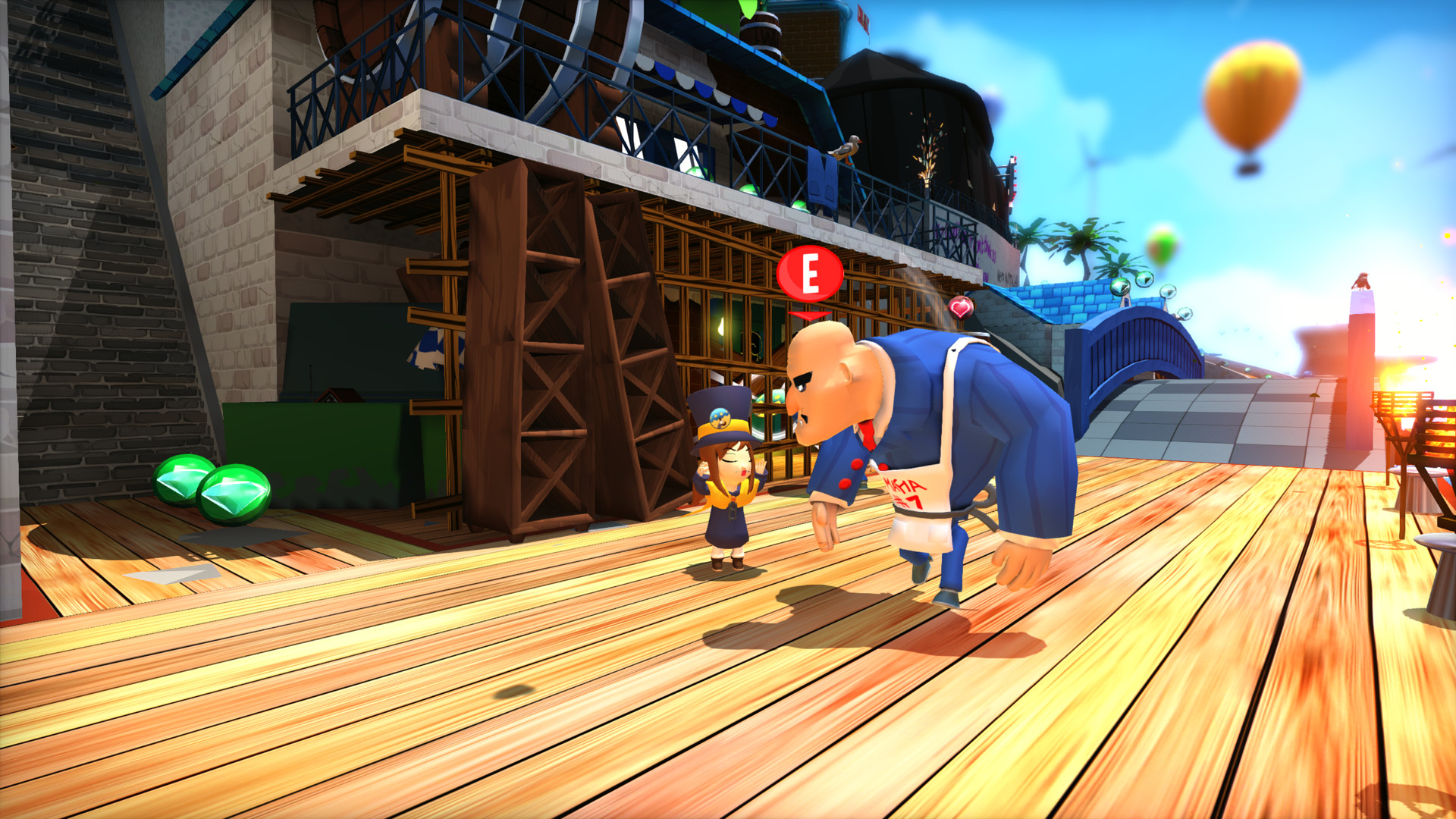
Badges add another layer to those hat abilities. Residents can be sources for badges that Hat Kid finds, buys or trades for, and badges can be attached to hats to make them more powerful. The combination of a stitched hat and an equipped badge gives collected items a practical role in traversal and encounters: hats provide the central ability, while badges modify or extend how that ability works. The game’s progression consequently draws on several kinds of rewards. Time Pieces advance the larger journey, yarn expands Hat Kid’s hat choices, and badges offer additional adjustments. These collections sit alongside the missions instead of replacing them; exploring a route can produce a reward, and a reward can change how the player approaches the next stretch. The systems connect without making every optional find a mandatory key to the main journey. Badges can be found or exchanged with locals, so exploring beyond a mission’s direct route can change the tools Hat Kid carries into the next one. This creates a second collection path alongside yarn. A player can look for a new ability through yarn, then look for badges that alter a hat’s strength; both kinds of find can change the available toolkit without changing the basic task of locating Time Pieces.
Missions vary their objectives around the people and places Hat Kid encounters. In Murder on the Owl Express, she looks for clues and questions locals as she investigates what happened aboard a train. The Big Parade puts her in the role of band marshal, while Dead Bird Studio involves sneaking through a movie studio run by birds. These are not simply interchangeable paths to a collectible: the mission framing changes what the player is trying to notice and how the space is read. Clues and suspects make close inspection useful in one scenario; the parade’s performance premise supplies another kind of task; and the studio’s trespassing setup turns movement through a guarded workplace into the point. The developer has described these scenario-specific mechanics as central to how chapters are experienced, with small objective rules helping give each mission its own identity. Murder on the Owl Express has a clue-and-suspect structure: the player searches the train and questions the people aboard rather than simply racing to its exit. The Big Parade similarly uses a fan-club meter to make the band-marshal role legible as a specific objective. Such scenario rules shift attention toward the mission’s own signals, whether that means checking corners for clues or watching a progress indicator, and they help explain why the game can reuse its movement fundamentals while changing the activity built around them.
The wider progression is built around recovering Time Pieces from these episodes and using them to continue Hat Kid’s interrupted voyage. The pieces are the lost fuel of her ship and the named goal tying together otherwise varied chapters. The developer has discussed a design in which players can collect some pieces while choosing how directly to pursue the main objectives, and can decide when they have gathered enough to move toward the ending rather than completing every available piece first. This structure makes the mission collection flexible: players can spend time wandering through a world, follow a specific episode, or gather enough progress to move on. Individual chapters supply their own comic premise and activity, while the Time Pieces keep those diversions connected to the same journey home.
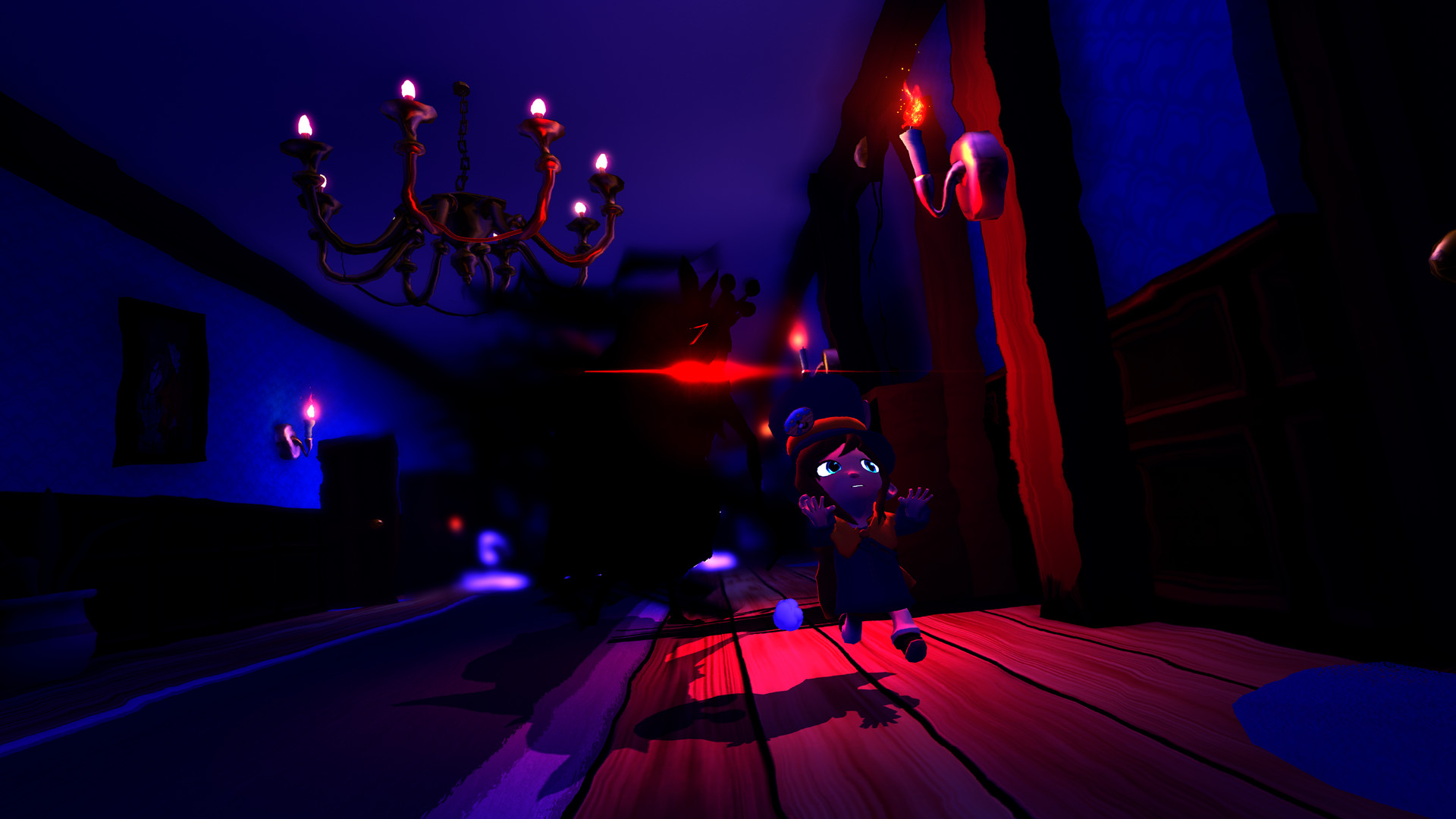
A Hat in Time’s presentation follows Hat Kid through contrasting storybook-like settings and comic situations, from the Mafia’s cooking territory to a bird-operated film studio and the eerie spaces of Subcon Forest. The tonal shifts come through the cast as well as the scenery: the Steam description characterises the Mafia as menacing, the studio birds as goofy and Subcon’s inhabitants as shadowy, giving each region a different social atmosphere. Hat Kid’s outfit-making premise ties these settings together visually, because hats are both visible costume changes and usable powers. The original game stands apart from the Ultimate Edition bundle and the Seal the Deal and Nyakuza Metro add-ons. Those expansions add chapters, challenges and items beyond Hat Kid’s initial journey. Local co-op is available as separate free downloadable content on Steam, so its availability should be checked for the chosen platform.
- Developer
- Gears for Breakfast
- Genre
- 3D platformer