
About WARDOGS
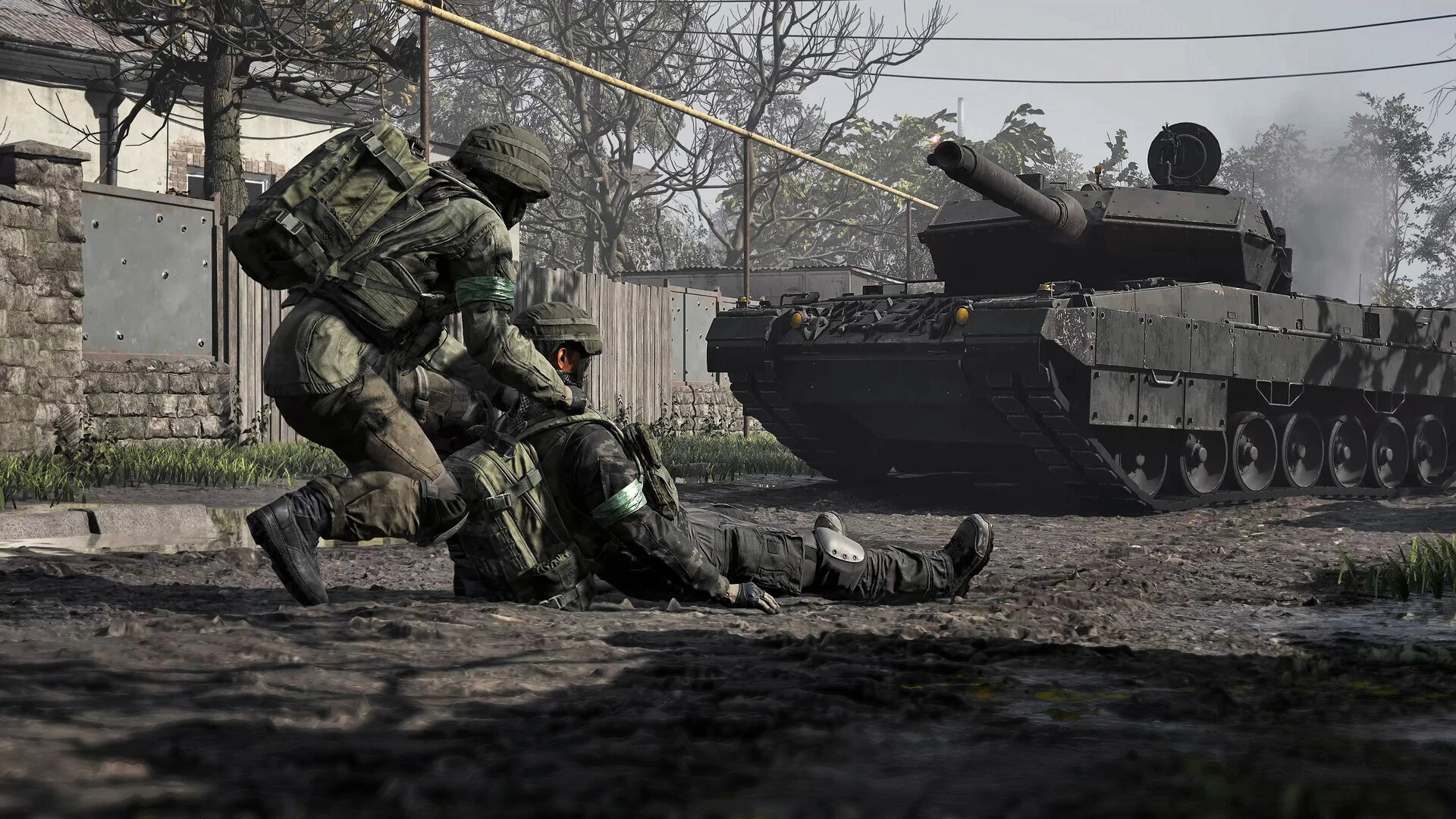
WARDOGS is a large-scale tactical first-person shooter where three teams contest a changing control zone across destructible Eastern European industrial terrain. Cash and XP reward combat, support and logistics, while each life’s purchasable loadout creates a fresh economic decision. Players can capture, build, supply, transport or destroy their way toward control.
WARDOGS is a multiplayer tactical shooter set among derelict industrial mountains in Eastern Europe. Its current Early Access mode places up to one hundred players in three competing teams on large maps, with an objective zone placed at a randomized location. The central contest resembles King of the Hill: the team with the most players inside each randomized 2-by-2-kilometre Control Zone scores, and the first to 100 points wins. Because the objective can occupy different ground from match to match, squads must decide which approaches to hold, how to reach the zone and where opponents are likely to gather. These zones sit within larger maps rather than filling the entire battlefield, leaving surrounding ground for routes, logistics and flanking approaches.
The Control Zone is the match’s strategic center, but players can contribute in several ways. Entering and holding it supports a team’s score, while defeating enemies and reviving squadmates can generate cash. The system also rewards transporting friendly players toward the objective, so a vehicle driver or support player can help a squad reach the fight without leading the eliminations. Some objectives designate a Hot Zone with increased cash rewards. These tasks create a choice between concentrating on the immediate score and pursuing side actions that build resources for later lives.
Cash is both a combat resource and a longer-term progression measure. A new player begins their journey with $10,000, and every life requires purchasing a custom loadout from available weapons, gear, utility and vehicles. Helping the team through actions such as revives, objective control or transport earns more cash, which can then fund later equipment choices. Cash persists from match to match, so spending on a stronger kit or vehicle has consequences beyond one deployment. XP runs alongside the money economy as another progression track, allowing both direct participation and support work to matter.
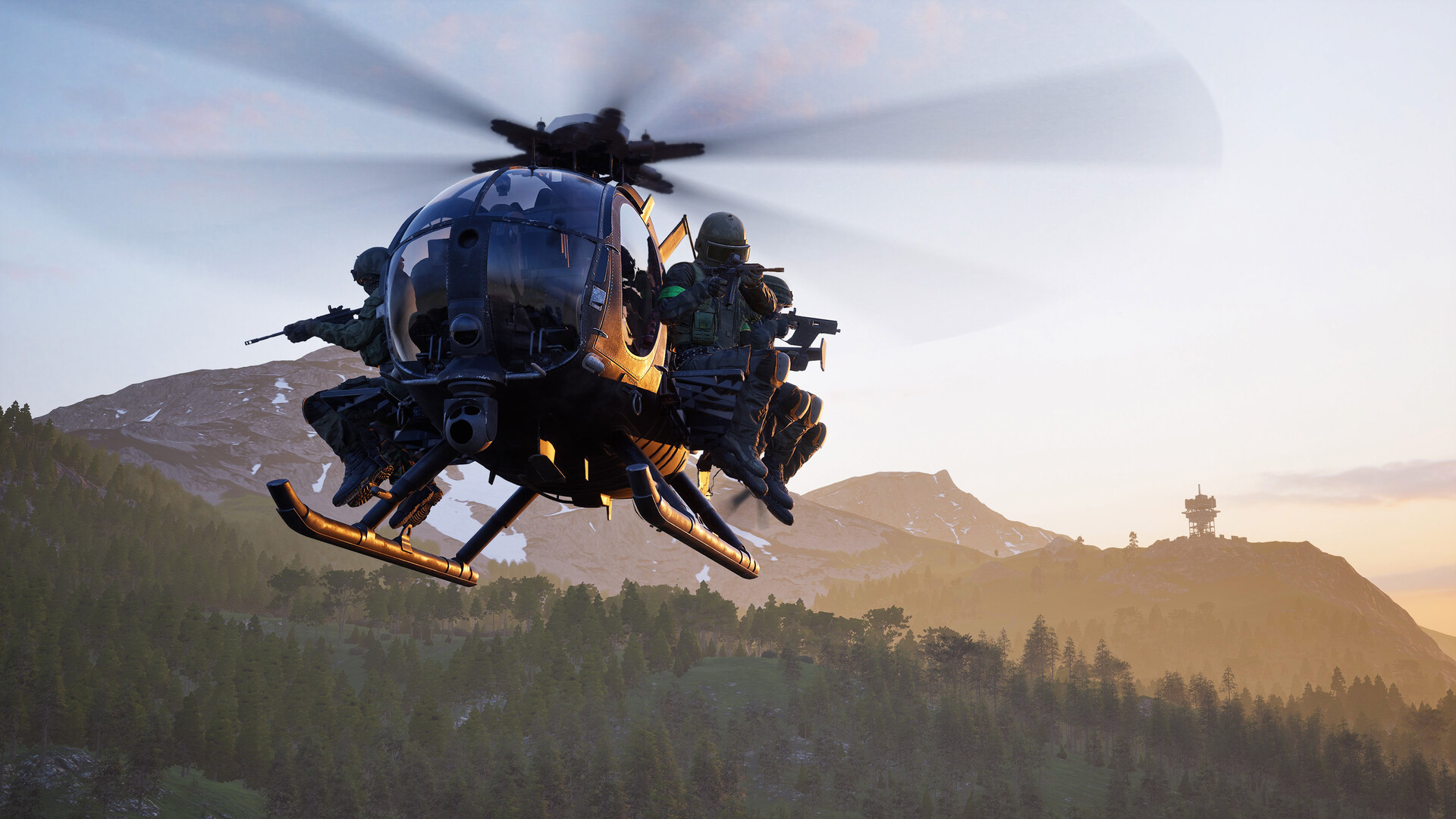
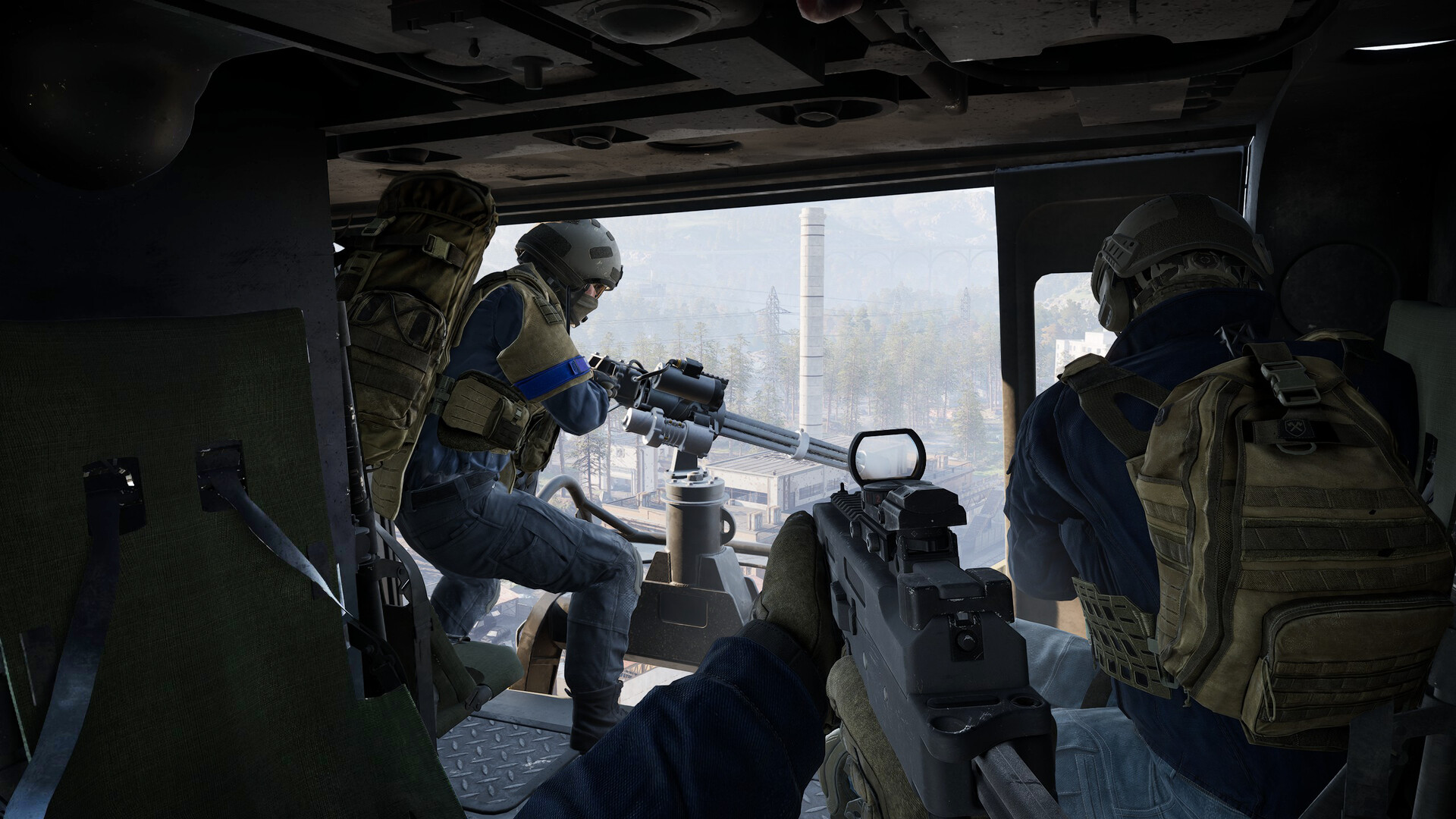
Players can take different battlefield roles without being confined to one class. A ghillie suit and long-range weapon can support a sniper away from the zone, while a transport pilot can ferry teammates or supplies. A player may instead purchase equipment for direct combat or invest in a vehicle that changes how the squad approaches an area. Proximity voice makes that coordination local: teammates can talk tactics near one another, while the same channel can reach nearby opposing players. That turns movement into a communication choice as well as a positioning one; a squad regrouping for a push can coordinate closely, while a lone player is not automatically in a team-wide voice call.
Construction and logistics make the battlefield more than an open arena. Teams can establish a forward operating base at a strategic position, fortify a chokepoint and use that foothold to support nearby operations. Supply transport by helicopter connects the logistics role to front-line demand, while vehicles can move personnel or equipment toward the active zone. These activities can contribute to both team positioning and cash progression. A player concentrating on supply and construction is still participating in the objective, but through preparation and reinforcement rather than simply taking ground with a rifle.
Destruction changes how teams use the map. Rocket launchers can destroy apartment blocks, artillery tanks can rain fire on opposing positions, and armored vehicles can tear through towns. Buildings and fortified positions that initially shelter a team may become vulnerable under sustained attack. At the same time, construction allows squads to strengthen selected positions, creating a contest between the defenders’ effort to hold an approach and the attackers’ ability to break it. The combination of building and destruction supports a changing tactical landscape around each Control Zone.
Rewards depend on what an action actually contributes, rather than treating every repeated interaction as an unlimited source of cash. Revives have server-side validity checks, vehicle travel rewards are capped, and destroying a buildable pays according to its construction progress. Knocking down a newly placed schematic therefore differs from removing a completed defensive position. Supply pallets delivered to a forward operating base outside the objective zone also receive reduced rewards. Those distinctions connect the economy to the contested ground: logistics still matter, but delivering toward the relevant fight carries a different reward from working far away. Because the bank balance persists beyond a match, these rules affect the funds available for later deployments as well as the current life. They also make location and timing part of support work, alongside choosing a vehicle or deciding which teammate to revive.
The server browser lets players choose among Official and Community servers, as well as Infantry Mode and Low-Level servers. Those distinctions offer entry points into different session types without changing the game’s central objective of competing for the active Control Zone. WARDOGS launched on Steam Early Access in September 2026, and its current playable core includes three-team zone combat, cash-and-XP progression, vehicles, logistics, building, destruction and proximity voice. Its player-driven format lets a match develop from the interaction of the objective, purchases and team decisions rather than a fixed sequence of scripted rounds.
Every player starts with $10,000, every life is bought from the shop, and the studio says cash carries over between matches. That loop, rather than the firefight, is the part a squad is really negotiating.
Three teams, one zone that moves
The mode is built on King of the Hill, with one change that rewrites how you play it. There aren't two sides taking turns on a point; there are three teams hunting the same objective, and the objective is a randomised 2x2km Control Zone dropped somewhere inside a much larger map. Points go to the team with the most players inside the boundary, and the first team to 100 wins.
That scoring rule is the decision everything else hangs off, because it counts bodies standing on the objective rather than flags flipped. A squad that trickles in one at a time is worth less than those same players arriving together, and since the zone lands somewhere new each match, our read is that the habit of travelling as one pays better than the strong ground you learned last time.
Every life is a purchase, and the budget is the game
You begin with $10,000. Each life you buy a custom loadout from weapons, gear, utility and vehicles, and the studio's own wording is that every teamplay action rewards cash. The examples it names are all support work: reviving squadmates, transporting friendlies to the zone, and controlling the objective, plus the option of chasing the Hot Zone for double cash. The Early Access notes describe progression the same way, as cash and XP progression where every action earns rewards.
The part that keeps us interested is that the balance persists from match to match rather than resetting. The money you spend on a life is spent, and the next life is bought out of the same pot, so the shop stops being a look at the weapon list and becomes a read on how the match is going. The useful question each round isn't which gun is best. It's what the squad is missing, and whether this is a life worth arming properly.
Support work is a role with a budget
The purchases the listing puts in front of you are mostly the ones that aren't a bigger gun: a ghillie suit to snipe from a distance, a helicopter to ferry supplies to teammates, an artillery tank to rain destruction on the enemy, or a forward operating base to fortify a strategic chokepoint. Those are the studio's own examples, and the pitch around them is that money is the mechanism turning helping into a role rather than a courtesy.
Destruction is presented as the other half of the same decision. In the listing's words you can destroy apartment blocks with rocket launchers or tear your way through towns in heavily armoured tanks, and fortifying key locations with your squad is offered as the counter-move. Local voice chat is the layer over all of it, and in a mode where the scoring is about who is standing in the same zone, that matters more than it usually does.
What Early Access does and does not change
The build on sale went straight into Early Access, and the studio's own notes are careful about what that means. The Early Access version is described as fully playable and as representing the core vision of the game, with the core experience in place, while the game is also described as still actively evolving, with ongoing balance changes, feature expansion and polish. A core vision in place is a claim about the shape of the game. It isn't a promise that the loop is finished, and we would rather not read it as one.
What the studio says is coming is specific: more maps, weapons, vehicles and gameplay variety, deeper progression systems, a stronger seasonal meta game, and systems that reward the time and impact you bring to a match rather than kills alone, with new vehicle types including fighter jets, expanded weapon categories and additional objective variations. It also expects to stay in Early Access for around one to two years and says it plans to price the game lower during that period than at full release, which is the studio telling you plainly that you are buying in early. A second season has been announced and a server-browser patch arrived shortly after launch, so there is a cadence to point at.
What you are buying on PC today
BULKHEAD's shooter is published by Team17, and this store entry is a Windows build: the listing marks macOS and Linux as unsupported. It asks for a 64-bit system, 16GB of RAM, roughly 50GB of storage and a broadband connection. The play modes it lists are multi-player, PvP and online PvP, with no offline or single-player mode on offer, so everything here happens with other people on a live server. The store also flags a third-party EULA to accept and kernel-level anti-cheat as a feature, which is worth knowing before rather than after.
Steam lists fourteen interface languages for the game, and marks English as the only one with full audio.
Should you play it
Yes, if you want a large-scale shooter where the support work is paid rather than merely praised, and if you have people to play it with. The cash economy gives every life a cost and the moving zone gives a squad a reason to travel as one, and paying for the help instead of only asking for it is the idea worth buying into here.
Skip it if you need a game that runs without a connection, if you are not on Windows, or if a moving balance patch is a dealbreaker for the way you play competitive shooters. And if you want the finished version, waiting is the choice the studio is openly inviting you to make.
Go deeper with V4mp
- Developer
- BULKHEAD
- Genre
- Tactical FPS
Explore WARDOGS further
Explore the wiki for detailed reference pages on the game's world, systems, items and locations.