
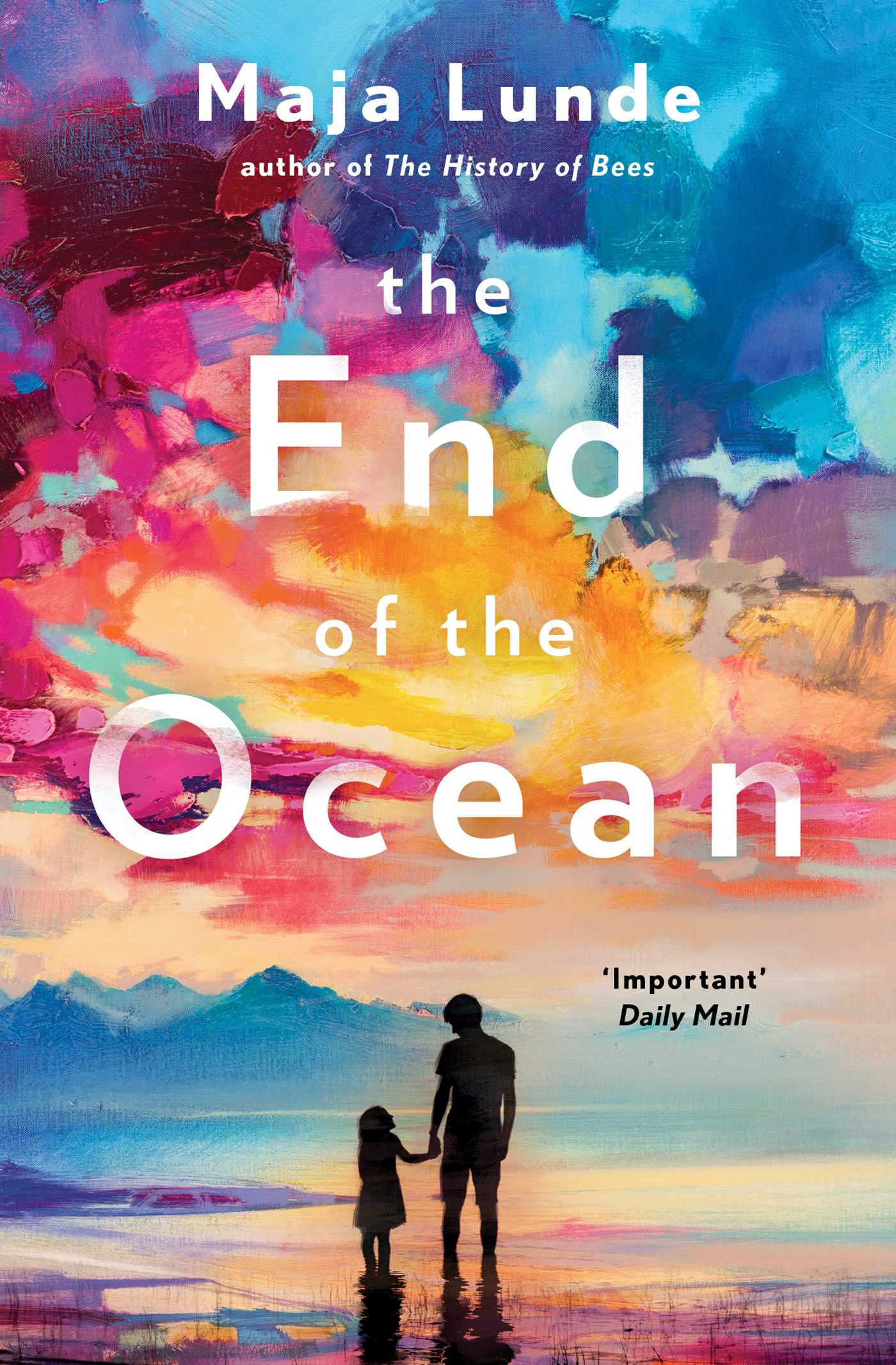
The End of the Ocean
In a drought-stricken future, David and his young daughter Lou flee southern Europe while searching for their family.
About
Spoiler notice: Discusses both timeline premises and the discovery of Signe’s boat, along with environmental and family themes; it does not reveal later plot resolutions or the ending.
Maja Lunde builds The End of the Ocean around two journeys separated by time but joined by water. One follows Signe, a woman approaching seventy who sets out alone by sailboat on a mission tied to a man she once loved. The other follows David and his young daughter, Lou, as they flee drought-stricken southern Europe and search for their missing family. Their paths meet indirectly when father and daughter find Signe’s abandoned boat far from the coast. This structure gives the novel a clear speculative premise, but its attention remains close to particular people trying to keep relationships intact under environmental pressure. The boat carries the past into the future as a material clue, allowing the two strands to speak to each other without making their characters contemporaries.
Signe’s strand begins with deliberate movement toward a destination, not with the collapse that dominates David’s world. She leaves her childhood region in western Norway and sails south, carrying an unusual cargo and intending to confront a former lover. An environmental activist, Signe opposes glacier extraction and plans for power infrastructure around waterfalls, disputes that connect her private history with the changing landscape. These details make her voyage more than a test of seamanship. The journey asks what a person can do when a resource treated as inexhaustible becomes scarce, and what personal costs can be hidden inside projects described as progress. Signe’s memories and purpose give the earlier timeline its own emotional direction.
David’s route is shaped by a different kind of urgency. In the future strand, drought and conflict have made southern Europe unsafe, and he travels with Lou while trying to reunite the family. Set in 2041, their search crosses a drought-stricken region where there is not enough water for everyone. Their discovery of Signe’s boat in a dry, inland garden is both startling and practical: an object built for water has been left in a landscape where water is missing. The two do not know Signe’s story at first. Her personal effects give their search a second history to follow, so the boat becomes a connection between survival in the present and choices made years earlier.
The alternating timelines let the reader compare different relationships to the same element. For Signe, water belongs to a Norwegian landscape and a life shaped by its rivers, glaciers and coast. For David and Lou, scarcity is already a force that drives displacement and separates people from home. The contrast does not reduce the book to a simple before-and-after warning. Signe’s strand is also marked by loss and by an attempt to reach someone, while the future strand remains focused on a father’s responsibility to his child and their need for other people. Water is both a necessary resource and part of the environmental disruption connected to melting glaciers. That double role gives the title its tension: the ocean can signify continuity and livelihood even as the climate story unsettles familiar assumptions about nature’s stability.
Lou is central to the way the future story stays intimate. She is not simply evidence of what a damaged environment may leave to the next generation; she is David’s young daughter, whose immediate needs shape the decisions he can make. Parent-child care makes the large-scale crisis legible through ordinary action. That focus helps keep the journey from becoming only a sequence of hazards. Food, safety, travel and the hope of finding family are concrete concerns, and they alter the meaning of each new place. David’s youth and inexperience as a father add another pressure to the search: he must protect Lou while learning how to navigate a world whose limits are increasingly difficult to ignore.
The abandoned sailboat gives the two strands a shared centre without erasing their differences. The boat becomes both a mobile refuge and a carrier of memory: David and Lou encounter an earlier person’s traces while searching for their own family. A sailboat discovered far from shore registers how dramatically the surrounding landscape has changed, while its survival allows the past to become present evidence. It also gives the characters something tangible to respond to in a world where large causes can feel remote. The boat does not solve the water crisis by itself; it gives the story a place where memory, movement and the practical work of staying alive meet.
The End of the Ocean stands on its own while extending Lunde’s Climate Quartet into a story about water. Its two journeys need no earlier characters to give them force. Lunde uses the paired journeys to place environmental change beside grief, family attachment and responsibility across generations. The effect comes from keeping those scales in conversation: glaciers and water systems alter the conditions of life, while individual people still have to choose whom to seek, protect or confront. The book’s structure makes the old sailboat an understated bridge between these concerns, carrying Signe’s history into David and Lou’s search.
Book details
- Author
- Maja Lunde
- First published
- 2017
- Series
- The Climate Quartet, book 2
- Subgenre
- Climate fiction, Dystopian
- Primary genre
- Literary Fiction, Sci-Fi
- Tags
- No tags for this book.
- Reading order
- Also on this shelf: The Last Wild Horses (book 3), The Dream of a Tree (book 4)
Review
Editor profile
Baby Bat
Goodreads and social links will be added soon.
- Goodreads — link coming soon
- Social media — link coming soon