
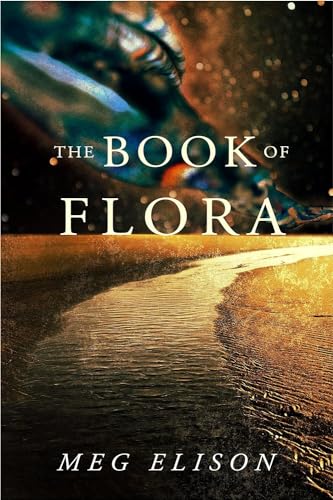
The Book of Flora
After surviving the Lion’s rule, Flora and the other residents of Nowhere seek refuge in Ommun, an underground community governed by Alma’s religious authority.
About
Spoiler notice: Spoilers for the survivors’ refuge in Ommun, their departure and the older Flora’s autobiographical frame. The later outcomes of the group and the ending are not revealed.
The Book of Flora returns to the damaged world of Meg Elison’s Road to Nowhere, where a plague has left women scarce and pregnancy dangerous. Flora, first encountered earlier in the sequence, becomes the central viewpoint here. She is a trans woman whose life has been shaped by other people’s attempts to define and control her, yet the novel follows her across more than one stage of life. Its frame includes an older Flora writing an account of her past on Bambritch Island, near the settlement called Settle, as a possible invasion threatens her home. Alongside that reflective voice, the story follows a younger Flora after the survivors of Nowhere escape the rule of the Lion. The split perspective lets the book place remembered history beside immediate danger, while keeping Flora’s own account at the centre of both.
The younger Flora and her companions find refuge in Ommun, an underground settlement governed by Alma, a woman whose pregnancies and visions have made her a religious authority to the community. That refuge offers safety from the Lion’s violence, but its order carries its own demands. The survivors must decide whether protection is worth living under rules that restrict how people understand gender, intimacy and authority. Flora, Alice, Eddy and others eventually leave Ommun and return to the surface, where they search for a place to live without slavers or another rigid system claiming ownership over them. Their departure begins a journey through communities whose histories and customs differ, but where questions about bodily autonomy and belonging remain immediate.
Flora’s companions bring different skills and relationships to the journey. Alice is an herbalist who knows how to work with the plants and medicines available in a world with few reliable institutions. Eddy, a trans man, has a close and complicated connection with Flora, as well as ties to Alice. Their group also includes survivors such as Ina, whose past links them to the earlier books. They cannot approach every settlement with the same expectations: a community may offer help while still assigning people a place according to sex, fertility or usefulness. In Shy, an all-women city, Flora encounters a different arrangement of social life while searching for books. Even a community that appears to offer refuge can treat her identity as a resource to manage. Travel therefore becomes a series of practical judgments about whom to trust, what to reveal and whether a seemingly safer home will ask them to surrender too much in return.
The post-plague setting makes reproduction a political concern throughout the trilogy, and Flora’s story tests the assumption that every person must serve a population’s future in the same way. Women are treated as valuable because of their scarcity and reproductive capacity, while the social categories built around that scarcity can become tools of coercion. Flora’s identity does not fit neatly inside the roles different settlements offer her. The novel follows her efforts to live as herself amid threats that are physical, economic and ideological. Its conflict is not simply between one villain and a band of fugitives; it also grows from communities trying to turn survival into a justification for controlling other people. That pressure gives the group’s search for shelter a personal and political edge.
The book also connects Flora’s present to the remembered story of the Unnamed Midwife, whose diaries she reads. This link brings the first novel’s history into Flora’s life without making the series a single uninterrupted account. Memory, records and stories about the past shape how people understand the world that remains, and those accounts can carry ideas that later generations reinterpret. The older Flora’s autobiographical frame adds another layer: the woman looking back has lived through changes the younger traveller cannot yet see. Elison’s author commentary describes following Flora from youth into old age, and that span is reflected in the novel’s movement between experience and recollection. The frame keeps the question of what survives open across both an individual life and a changing society.
Across its journey, The Book of Flora brings post-apocalyptic adventure together with a close account of gender, self-definition and chosen relationships. The group encounters a range of ways to organise life after catastrophe, and none can be judged only by whether it has food or walls; the terms of belonging matter too. Flora’s perspective gives those conflicts a specific human scale, from her relationships with Alice and Eddy to her attempts to find a community where safety does not require her to become someone else. As the final volume in the Road to Nowhere trilogy, the novel carries forward people and histories introduced in The Book of the Unnamed Midwife and The Book of Etta. The older Flora writes the journey into a history that her threatened community can inherit and interpret for itself. Those memories give future generations a way to question the stories they inherit.
Book details
- Author
- Meg Elison
- First published
- 2019
- Series
- The Road to Nowhere, book 3
- Subgenre
- Post-apocalyptic, Dystopian
- Primary genre
- Sci-Fi
- Tags
- No tags for this book.
- Reading order
- Also on this shelf: The Book of the Unnamed Midwife (book 1), The Book of Etta (book 2)
Review
Editor profile
Baby Bat
Goodreads and social links will be added soon.
- Goodreads — link coming soon
- Social media — link coming soon