
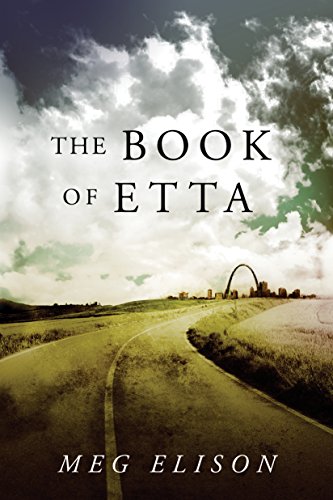
The Book of Etta
Generations after a plague devastated the population, the survivors of Nowhere expect women to become mothers or midwives.
About
Spoiler notice: This overview covers the plague-altered world, Nowhere, Etta’s life as Eddy, the communities he encounters and his conflict with the Lion’s power in Estiel. It avoids the novel’s late revelations and ending.
The Book of Etta returns to the world of The Book of the Unnamed Midwife, but moves forward to a time when the people who survived the plague have built new communities across the American Midwest. The disaster remains present in everyday life: childbirth is dangerous, pregnancies and newborns are often lost, and girls are much rarer than boys. What began as a medical catastrophe has become the foundation for laws, economies and customs. Communities do not share one answer to the resulting imbalance. Each has made its own arrangements, and those arrangements distribute safety and power unevenly. The earlier novel's protagonist has become a distant figure in this later society, more a story passed down than a person anyone can turn to. The second book therefore examines what people have made of the world after the first generation of survivors is gone.
Etta belongs to Nowhere, a settlement where women are expected to choose between bearing children and training as midwives. She does not want either role. Beyond the town, she travels under the name Eddy and is read as a man; the change lets him move through a society that assigns sharply different expectations to bodies and genders. Eddy is a scavenger, crossing damaged roads and settlements to recover useful goods and to find women and girls held by slave traders. His trips answer a personal restlessness, but they also connect Nowhere to the dangers beyond its borders. The distinction between Etta at home and Eddy on the road is not simply a disguise for an adventure. It gives the character room to pursue a self that the available social roles cannot easily contain, while leaving questions of belonging and intimacy unresolved.
Nowhere is only one of several political experiments the novel sets against one another. Nearby Jeff City has a population of castrati who live as women, a social arrangement that creates the appearance of balance without making the underlying scarcity disappear. Other settlements have different rules, shaped by their histories and by who controls food, safety and movement. These communities make the Midwest feel lived in rather than empty: people have created routines and institutions from the remains of the old country, even where the systems they build reproduce coercion. Travel between them exposes Eddy to ways of organizing life that challenge his assumptions as well as his expectations. The book's worldbuilding comes through these concrete encounters, with each place presenting a distinct answer to the same urgent question of how people survive when reproduction itself has become dangerous.
Eddy's rescue journeys repeatedly draw him toward Estiel, formerly St. Louis, where the Lion rules through violence and raids other communities for women and girls. The city stands apart from Nowhere not just in scale but in the concentration of force around one ruler. Eddy wants to free captives there, yet approaching that goal means entering a system designed to make people vulnerable and to punish resistance. The danger is not limited to a confrontation with the Lion. Eddy must also consider what rescue demands of the people being rescued, what risks others will bear, and how far an individual can go without reproducing the control he opposes. These conflicts give the journey moral pressure: the character's aims are understandable, but the methods and consequences cannot be settled by good intentions alone.
The novel also places intimacy beside survival. A world that treats women as scarce resources makes relationships vulnerable to the same bargains and hierarchies that govern communities. Eddy's desires and loyalties do not fit comfortably into the roles available to him, and other characters carry histories that affect what safety or trust can mean. His connection with Flora is particularly important to the story's questions about recognition and acceptance. The book allows Eddy's own struggle with identity to coexist with the limits of his understanding of other people; having experienced exclusion does not automatically make him able to see every form it takes. This tension keeps the character's growth unsettled. Instead of treating self-discovery as a single revelation, the novel follows how conviction, attraction, fear and survival can pull in different directions.
As a sequel, The Book of Etta expands the post-plague setting while staying close to one person's movement through it. Its roads link villages, trading routes and places built around different forms of authority, so a journey also becomes a way to compare their values. Elison uses the speculative premise to ask what happens when a demographic crisis is turned into a social order: who is protected, who is made useful to others, and what happens to a person who refuses the role assigned to them. The result is a dystopian science-fiction story concerned with gender, community and power, grounded in the practical demands of travel and rescue. Etta's divided life gives those questions a human scale, as Eddy tries to act for others while discovering that freedom, care and self-knowledge do not always point toward the same choice.
Book details
- Author
- Meg Elison
- First published
- 2017
- Series
- The Road to Nowhere, book 2
- Subgenre
- Post-apocalyptic, Dystopian, Survival fiction
- Tags
- No tags for this book.
- Reading order
- Also on this shelf: The Book of the Unnamed Midwife (book 1), The Book of Flora (book 3)
Review
Editor profile
Baby Bat
Goodreads and social links will be added soon.
- Goodreads — link coming soon
- Social media — link coming soon