
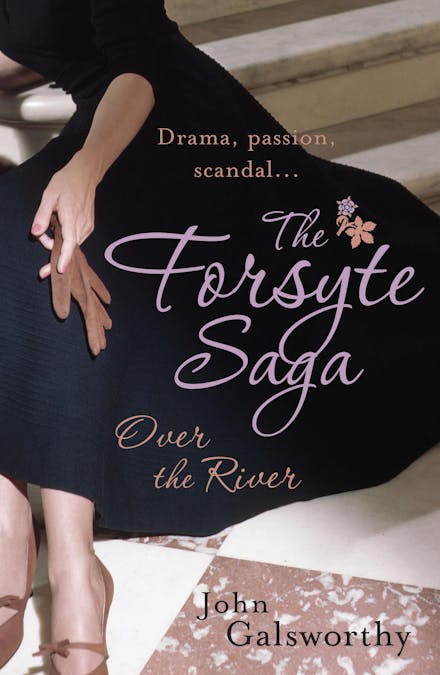
Over the River
Clare Corven returns to England determined to live apart from a husband she no longer trusts.
About
Spoiler notice: This overview discusses the divorce verdict, news of Wilfrid’s death and Dinny’s marriage in the final chapter.
Over the River opens with Clare Corven approaching England aboard a liner after leaving Ceylon and the husband she no longer trusts. Tony Croom, whom she has met during the voyage, wants their closeness to continue when they reach land. Clare appreciates his company but refuses to promise that it will become the love he desires. The ship has allowed an intimacy detached from ordinary surroundings; docking returns them to relatives, employment, marriage and consequences. Published in 1933 and also known as One More River, the novel completes John Galsworthy’s End of the Chapter trilogy. It places Clare’s struggle for a life apart from Gerald Corven beside her older sister Dinny’s effort to live after the devastating attachment explored in Flowering Wilderness.
Clare’s refusal to return to Gerald is rooted in what happened within their marriage, rather than simply in Tony’s arrival. When Gerald confronts her in England, he treats the separation as something he can overcome through pressure, promises and possession. His official position gives him another reason to resist any arrangement that might damage his career. Clare answers that his conduct has killed her feeling for him and that she cannot trust him. His unwanted kiss makes the gulf between a claim upon a wife and her own consent painfully concrete. She seeks work as a secretary to Eustace Dornford, the constituency’s new Member of Parliament, and wants independence without becoming an additional financial burden on her already strained family.
The Cherrells provide support, but support does not remove every difficulty. Condaford carries expenses and responsibilities that Dinny regards as extending beyond the people who own the house. Jobs, staff and the village’s welfare enter family conversations alongside private distress. Relatives try to understand Clare’s position and find a course that will protect her, while she resists turning the most intimate parts of her married life into material for other people’s scrutiny. Her friendship with Tony also has boundaries he finds difficult to accept. He loves her and hopes for a physical relationship; she asks for companionship without that demand. Galsworthy follows the discomfort on both sides, allowing Clare’s need for space and Tony’s longing to remain distinct from the accusation that will later engulf them.
Gerald’s divorce petition turns this private arrangement into a public case. It alleges adultery between Clare and Tony and seeks two thousand pounds in damages. A night spent in a car becomes central to the evidence, although they maintain that they did not become lovers. Their lawyers must consider what a jury will infer from circumstances rather than from the assurances of the people involved. Clare’s determination not to expose her married life makes the defence harder to present in the way advisers would prefer. Dinny believes her sister, but belief within the family cannot dictate the courtroom’s response. The preparations themselves are exhausting: each consultation requires decisions about how much to reveal, whose interests to protect and whether defending the action will deepen the humiliation.
The trial gives those pressures a public stage. Questions, answers and the presentation of a witness become inseparable from the conclusions others draw about character. Clare’s manner does not necessarily convey what Dinny knows of her, and Tony’s evident feeling can be turned into support for the very charge he denies. The jury ultimately finds both guilty of adultery. Instead of awarding the requested damages, it makes Tony responsible for the costs of all parties, a result that threatens a young man without substantial money. The verdict establishes the case’s outcome while leaving the novel’s attention on the distance between appearances, testimony and truth. The family’s later relief when the costs are settled does not erase the experience of being judged or immediately repair Clare and Tony’s relationship.
Dinny carries another loss through this ordeal. Wilfrid Desert’s absence has left her suspended between memory and uncertainty; news that he has drowned in Siam makes the separation final. Illness follows, and the care of her relatives and neighbours becomes part of her recovery. Dornford’s growing attachment offers companionship without reproducing the intensity of her earlier love, though she cannot simply decide that gratitude will become happiness. Clare and Tony face their own difficulty after the verdict when he interprets her invitation as repayment of a debt rather than freely given love and leaves in distress. By the closing movement, Dinny’s thoughts place them together in his converted cottages. Their course has required more than winning freedom from Gerald, because the terms of a new intimacy must also change.
Dinny’s marriage to Dornford supplies the final chapter’s occasion, reported in Adrian’s letter to his wife. The account describes the ceremony, the village guests, the family’s affection and the couple’s plans for their honeymoon and home. Adrian does not claim that Dinny feels for Dornford what she felt for Wilfrid. He sees respect, admiration and a wholehearted willingness to undertake this life, and hopes that love will deepen. His subsequent walk through the woods links that guarded hope to the future of Condaford and the old social world it represents. Beauty, inherited service and belonging seem worth preserving, although none can be protected simply by wishing change away. The title’s crossing becomes a movement towards another shore: a possible life after suffering, with the people left behind still learning what has ended.
Book details
- Author
- John Galsworthy
- First published
- 1933
- Series
- The End of the Chapter, book 3
- Subgenre
- Literary fiction, Modern classics
- Primary genre
- Literary Fiction
- Tags
- No tags for this book.
- Reading order
- Also on this shelf: Maid in Waiting (book 1), Flowering Wilderness (book 2)
Review
Editor profile
Baby Bat
Goodreads and social links will be added soon.
- Goodreads — link coming soon
- Social media — link coming soon