
Behind the series
- First aired
- 2007
- Creators / development
- Michael Hirst
- Principal cast
- Jonathan Rhys-Meyers, Sam Neill, Natalie Dormer, Maria Doyle Kennedy, Jeremy Northam
- Story scope
- Season 1, Season 2, Season 3, Season 4
About the series
Contains story spoilers.
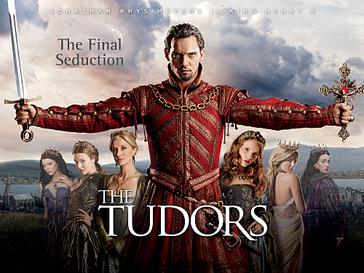
The Tudors is a fictionalized period drama about Henry VIII and his court, with Jonathan Rhys Meyers playing the king. Its plot makes private desire a matter of public consequence: marriage changes who may inherit, religious authority becomes a contest with Rome, and diplomatic alliances shift with the king’s needs. The story moves among Henry, his wives, advisers and children, showing how their loyalties and rivalries press against the monarchy’s rules. Its events are dramatic storytelling, not a historical record; the series reshapes people and politics into a serial account of power, intimacy and succession.
The opening episode links an assassination in Italy to Henry’s appetite for a French war, while Wolsey turns him toward a peace treaty and a summit with France. There, the king’s political calculations meet family ambitions: Henry and Catherine’s daughter Mary is promised to the French Dauphin, while Thomas Boleyn tries to secure his family’s place by putting his daughter Mary in Henry’s bed. When Henry loses interest, Boleyn brings Anne to court as her sister’s replacement. This early sequence establishes the court’s pattern: foreign policy, marriage and personal access all become tools in the same contest, while Henry’s own desire to leave a male heir gives religious doubts a political edge.
Henry’s attempt to end his marriage to Catherine of Aragon turns court uncertainty into a crisis of authority. He asks for an annulment on the claim that her earlier marriage to his brother invalidated their union. Cardinal Campeggio arrives as a papal legate to hear the case with Wolsey, but Catherine refuses to surrender her marriage, despite Wolsey’s pleas. The legatine court opens at Blackfriars with both Henry and Catherine presenting their cases; when the trial continues without Catherine, Campeggio is recalled to Rome with the evidence unresolved. As the Pope delays, Henry strips Wolsey of his temporal power and property, bars him from court and confines him to his archbishopric. The king’s personal case has undone his chief minister’s political position.
The second season makes Henry’s break with Rome a matter of law and punishment. As Elizabeth is baptized, Cromwell presents an Act of Succession that names the children of Henry and Anne as legitimate heirs; subjects must also swear to the validity of the marriage and the king’s supremacy. Brandon takes the oath, but More and Fisher refuse and are imprisoned. Catherine lives in seclusion, and Mary is made to serve her infant half-sister. More and Fisher continue to reject the oath even after pressure from their families, and both are convicted of treason and executed. Henry’s new order therefore takes shape not only through legislation, but through the removal of men whose conscience will not bend to it.
Anne’s prospects then rise and fall with the king’s need for an heir. Catherine’s death eases Anne’s fear that her daughter Mary still contests Elizabeth’s place, and Anne announces a pregnancy; but a jousting accident makes succession suddenly uncertain. Henry recovers, Anne sees him kissing Jane Seymour and miscarries a son, after which Henry calls the marriage void. The Seymour family displaces the Boleyns at court, while accusations of adultery and witchcraft lead to arrests. Cromwell runs the interrogations and coerces false confessions; Anne’s brother George and other accused men are executed before she is tried. As Anne waits in the Tower, Henry asks Jane to marry him. Anne maintains her innocence at her final confession and is executed, while the court turns toward a third queen.
After Anne’s execution, Henry marries Jane Seymour, whose pregnancy finally produces a son, Edward. The third season tests the cost of that dynastic success. Henry’s campaign against Catholic practice and the monasteries prompts a northern rebellion, and he sends Brandon to suppress it. Henry promises the insurgent leaders pardons and redress, but when resistance resumes he uses the renewed uprising as a pretext to have Brandon execute them. Brandon is left troubled by his role in the crackdown. Jane dies within days of Edward’s birth, leaving Henry grieving. Later, Cromwell seeks a Protestant marriage alliance through Anne of Cleves, but Henry moves to annul their loveless union; Cromwell’s fall is sudden, and he is beheaded.
Catherine Howard’s story brings the court’s appetite for scandal into Henry’s final years. During the Christmas celebrations, his age and illness limit his participation while the younger courtiers continue their rivalries. Catherine’s affair with Thomas Culpepper begins as Henry travels north and forgives the rebels, but the queen’s past catches up with her when an anonymous letter and the arrival of former lover Francis Dereham expose her relationships. Henry confines her and the investigation rounds up and tortures suspects. The sequence connects personal secrets to access and power: courtiers can use what they know to influence the king, while the queen’s safety depends on the same household that has helped keep those secrets.
Henry’s marriage to Catherine Parr brings a different source of instability. War with France looms as he marries a woman presented as a respected queen and stepmother, then sets out on campaign; the English army wins a costly victory, but the strain weakens him. The court continues to fracture: accusations of heresy are raised against Parr, while the ailing king shows little interest, and Lord Surrey faces punishment after a disastrous offensive costs many soldiers. In the final episode, Henry confronts his mortality as Charles Brandon and the French king die, and the ghosts of his former queens appear. The story closes on a monarch surrounded by memories and succession anxiety, rather than extending beyond his reign into his children’s later rule.