
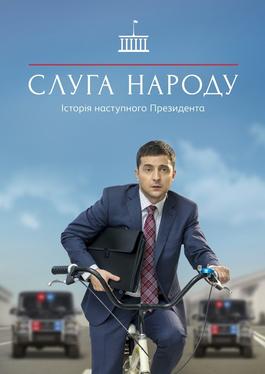
Behind the series
- First aired
- 2015
- Creators / development
- Volodymyr Zelenskyy
- Principal cast
- Volodymyr Zelenskyy
- Story scope
- Season 1, Season 2
About the series
Contains story spoilers.
Vasyl Holoborodko is a history teacher whose private frustration becomes public when a student records his furious speech about corruption and posts it online. The video spreads widely, and an unexpected crowdfunding campaign allows him to run for president. He wins, then discovers that the office he has inherited is surrounded by people who already know how to use its routines for their own advantage. Volodymyr Zelenskyy plays Vasyl as an ordinary man pushed into a position he has not prepared for; his first response is to keep ordinary habits, resist displays of privilege and treat public service as a practical job rather than a reward. The comic premise depends on the collision between that self-image and the machinery of power.
Vasyl tries to make the presidency look less distant. He resists a limousine and excessive bodyguards, returns to his family home and expects the state to operate within budgets he considers reasonable. These small refusals quickly expose how much status is built into the system. His parents and sister respond to his new position in their own ways, while his ex-wife Olha and son Dima are pulled into the consequences of his decisions. The administration itself includes people with mixed motives, among them foreign minister Serhiy Mukhin and prime minister Yuriy Ivanovich Chuiko. Vasyl’s attempts to appoint capable people also create a problem: selecting friends and former teachers may look like a clean break from old patronage, but it can reproduce the same appearance of favoritism.
Much of the first season turns reform into a test of whether public behavior can change when incentives remain untouched. Vasyl asks officials to live more modestly, then discovers that some have merely staged restraint for publicity. When he opens senior posts to auditions, Yuriy has already shaped the process; Vasyl counters by choosing people he trusts, only to face accusations of nepotism and the practical weakness of inexperienced appointees. Bribes, leaked recordings, missing advisers and political spin keep threatening the credibility of his project. A campaign to improve tax compliance and cut official budgets brings new enemies, while his focus on roads makes the gap between a presidential order and local implementation painfully visible.
The satire also follows the household’s response to suddenly becoming a presidential family. Vasyl’s father makes expensive purchases, relatives receive favors, and his sister wants a position in the government. Their behavior makes corruption harder to dismiss as something practiced only by remote villains: access to a helpful relative can begin the same process on a smaller scale. His fiscal minister discovers officials hiding their income under family members’ names, linking the domestic story to a concrete administrative problem. Meanwhile, Vasyl imagines encounters with historical figures, including Che Guevara and Abraham Lincoln, as he weighs how to govern. These fantasies provide exaggerated alternatives to the negotiations awaiting him at work. A sweeping gesture can look decisive in his imagination, but appointments, budgets and parliamentary votes still require people to cooperate. His own family’s expectations keep bringing that conflict back into the flat where he wanted life to remain ordinary.
The second season opens with Vasyl’s arrest, then rewinds to show the political decisions that led there. A search for a new prime minister runs beside the trial of Yuriy Ivanovich, whose alliances with oligarchs make him both a compromised former adversary and a possible source of evidence. An IMF loan adds pressure to debates over reform; Vasyl’s proposals are rejected, he visits Yuriy in prison, and the former prime minister offers to testify in exchange for amnesty. Their political bargain complicates any clean division between reformers and the people who helped build the system. As the conflict moves through regional visits and negotiations, Vasyl threatens parliament with dissolution to secure anti-corruption laws, then clashes with Mukhin and refuses the IMF delegation’s terms.
That confrontation leaves Vasyl facing accusations of treason and a public turning against him. The oligarchs move toward impeachment, and the president unexpectedly resigns, throwing both his team and the country into uncertainty. He soon changes course and returns to the presidential race, but the campaign now lacks his original momentum and funding. He has to decide what sort of contest he is willing to enter: public debates, manufactured images and accusations are all available to candidates who want to win. The campaign’s tactics test the identity that first made him popular. Speaking as an ordinary teacher brought him to office; maintaining that image after governing is much harder, because voters can judge decisions as well as promises. Rival candidates copy his approachable style, and their sponsors can present another apparently ordinary person as an alternative. His refusal to attack opponents personally does not ensure that others will treat him with the same restraint. The later election brings the presidency back to its starting question—who represents the people—after showing how institutions and money can shape the answer long before a ballot is cast.