
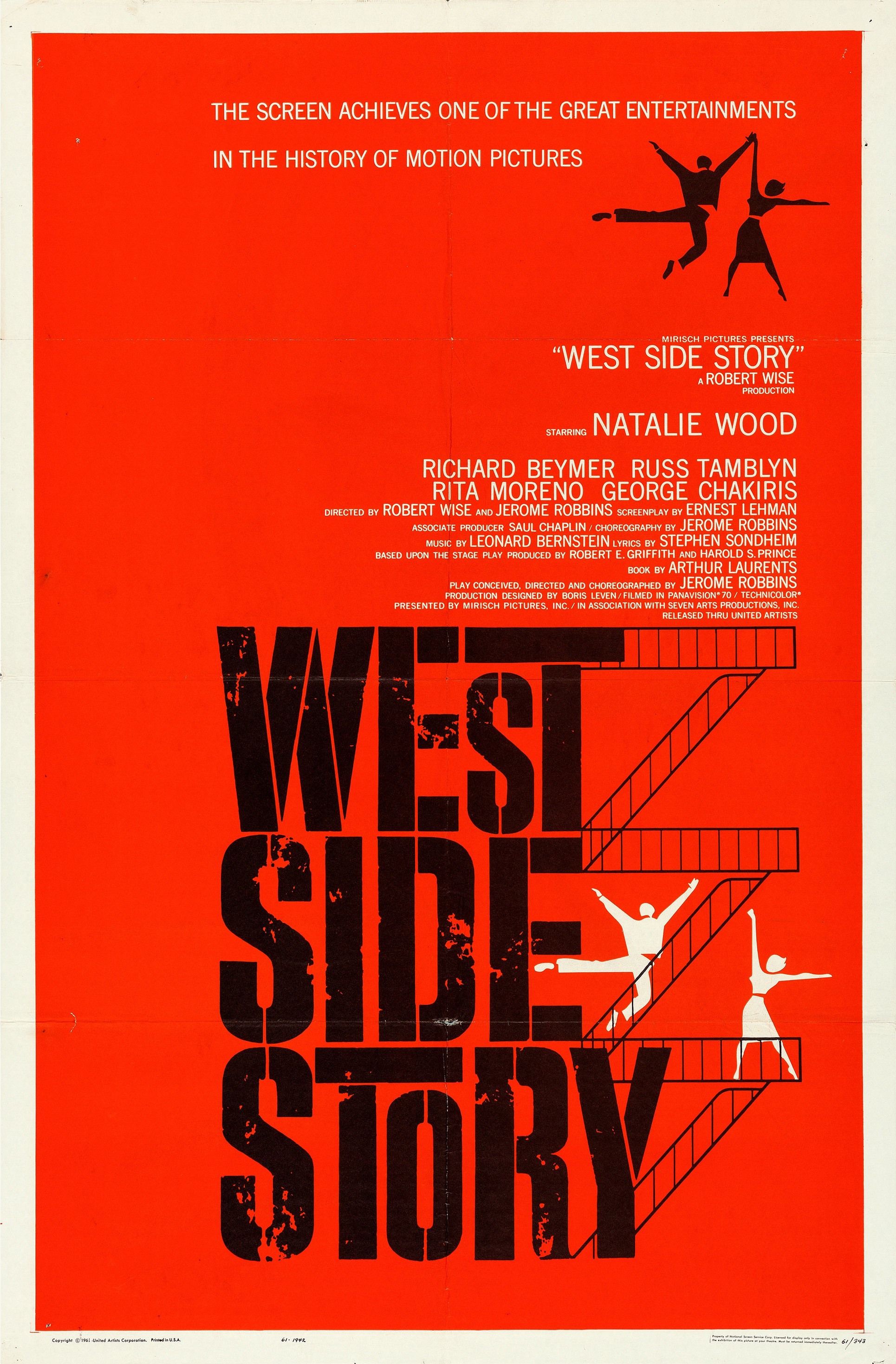
Behind the film
- Year
- 1961
- Director
- Robert Wise, Jerome Robbins
- Writers
- Ernest Lehman
- Genres
- Musical, Romance, Drama, Crime
- Production
- United Artists, The Mirisch Company
- Country
- United States
- Cast
- Natalie Wood, Richard Beymer, Russ Tamblyn, Rita Moreno, George Chakiris, Simon Oakland, José De Vega, Ned Glass
About the film
Contains story spoilers.
West Side Story makes the street a place people fight to possess before Tony and Maria have met. The Jets and the Sharks watch one another, move in groups and treat the neighbourhood as a boundary that needs defending. The 1961 film, directed by Robert Wise and Jerome Robbins, adapts the stage musical into a world where a playground or a patch of pavement can become contested ground. The conflict brings white teenagers into confrontation with Puerto Rican teenagers, but the film does not let the Jets' claim to belonging pass as a neutral fact. Their hostility works alongside discrimination from the adults who are meant to keep order. A badge can stop a fight without removing the prejudice that feeds it.
Riff, played by Russ Tamblyn, wants a rumble that will settle the rivalry. His friend Tony has already stepped away from the Jets and works for Doc. Richard Beymer's Tony carries an expectation that life may offer something beyond the gang, although friendship still draws him back towards it. Natalie Wood's Maria is newly arrived and excited by the prospect of a dance. Her brother Bernardo, played by George Chakiris, wants to protect her and hopes she will marry Chino. When Tony and Maria notice each other at the gym, the competing groups seem to recede around them. Their concentration creates a private space within a public event. Bernardo's intervention immediately shows how difficult it will be to preserve that space outside the dance.
The romance speaks in an expansive musical language, while the gang arguments insist on rules, loyalties and territory. Leonard Bernstein's music and Stephen Sondheim's lyrics give those different impulses their own energy. Tony can hear an entire future inside Maria's name; the Jets can turn collective identity into a declaration of force. In 'America', Anita and the other women challenge the men's account of life on the mainland, with celebration and complaint moving through the same number. The disagreement matters because the Puerto Rican characters do not all want or fear identical things. Rita Moreno's Anita can delight in possibilities and still understand discrimination. The song allows social argument to happen through movement and rhythm rather than pausing the film for an explanatory speech.
Tony and Maria's meetings briefly make ordinary surroundings answer to their imagined future. A fire escape becomes a place to declare love; mannequins in the bridal shop become witnesses to a make-believe wedding. They are trying to create an arrangement that the people around them have not offered. Maria asks Tony to prevent the rumble, trusting that a decision to refuse violence can change the evening. Tony's attempt instead ends with Riff killed by Bernardo and Tony killing Bernardo in retaliation. The speed of the reversal is crucial. He has arrived believing he can keep the encounter within reason, then acts from grief before reason has time to recover. Maria is left loving the man who has killed her brother, a contradiction no romantic promise can make simple.
After the deaths, the Jets' performance of toughness becomes a means of containing panic. 'Cool' turns the need for self-control into a strained physical discipline: the energy remains, but releasing it recklessly now threatens survival. Chino is searching for Tony with a gun. Maria and Tony hope to escape together, and Anita, despite her grief for Bernardo, agrees to help. Her decision is not effortless forgiveness. It requires her to recognise Maria's attachment while still knowing exactly what Tony has done. The musical makes room for that disagreement between women without reducing either to a spokeswoman for one gang. Anita's force and Maria's insistence bring different kinds of experience to the same impossible problem.
The attempted escape fails because a message is destroyed on its way. At Doc's, the Jets harass and sexually assault Anita until Doc intervenes. In anger and anguish, she tells them Chino has killed Maria. Doc passes this false news to Tony, who leaves his hiding place wanting Chino to kill him too. He sees Maria alive just before Chino shoots him. The final meeting therefore contains recognition and catastrophe almost at once. The lovers are not undone by a mysterious fate hovering above the city: the violence and cruelty of people around them have made a fatal misunderstanding possible. What happened to Anita is an assault with consequences, not merely a convenient interruption in the romance.
Maria takes Chino's gun and confronts the gathered gangs. For a moment, the weapon makes the logic of revenge available to her as well. She names their shared responsibility, but does not answer Tony's death by shooting somebody else. Members of both groups help carry his body away. The gesture is smaller and more uncertain than a declaration that the conflict has been solved. They can finally approach one another to bear a weight they helped create. Maria remains alive to witness that change, with no promise that it can give her back the future she imagined. The street that supplied room for exuberant movement now has to make room for grief.
Dance gives the film much of its social vocabulary. A group can occupy a space, exclude somebody or demonstrate solidarity before a word is spoken. The stylisation keeps its New York recognisable as a city while allowing emotional intensity to alter the way bodies move through it. This also makes the loss of ease after the rumble visible: gestures that once advertised confidence become defensive or desperate. The film's differences from ordinary street realism are part of how it shows the characters' desires, rather than evidence that the conflict is harmless. Its romantic passages imagine distance from prejudice; its ending returns everyone to the same neighbourhood. The question left there is whether the people who remain can behave differently once the songs and claims of loyalty have cost them so much.