
Behind the film
- Year
- 2015
- Director
- Robert Eggers
- Writers
- Robert Eggers
- Runtime
- 1h 32m
- Genres
- Horror, Mystery
- Country
- United States, Canada
- Cast
- Anya Taylor-Joy, Ralph Ineson, Kate Dickie, Harvey Scrimshaw, Ellie Grainger, Lucas Dawson
About the film
Contains story spoilers.
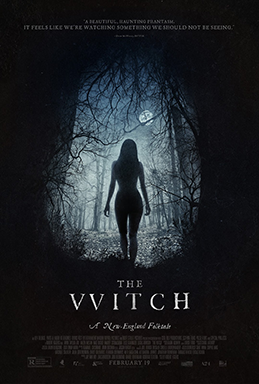
Robert Eggers sets The Witch in the 1630s, following an English family forced to leave a Puritan settlement and make a home beside a forest. William and Katherine live there with their children Thomasin, Caleb, and the twins Mercy and Jonas. Their infant Samuel disappears while Thomasin watches him outside, and the film never treats that moment as an ordinary lost-child search. The woods become a presence at the edge of the farm, while the family’s prayers and arguments fill the rooms inside. The period setting is not merely costume: language, food, labor and religious belief shape what the characters can imagine when something goes wrong.
The farm is fragile from the beginning. William’s crops do poorly, the family’s store of food is limited, and Katherine grieves for Samuel in a way that places blame close to home. Thomasin is nearing adulthood, but the family’s isolation leaves her few choices beyond work and obedience. Caleb is old enough to question his father and to worry about the woods, while Mercy and Jonas repeat a mixture of childish play and frightening claims about a witch. The family suspects one another because they have no outside authority they trust and little evidence they can interpret together. The film lets their beliefs feel sincere without turning every fear into proof that a character is guilty.
Caleb and Thomasin go into the forest, where Caleb follows a hare and becomes separated from her. He is later found ill and brought home, and his convulsions lead the family to attempt a desperate religious response. He dies after a delirious episode in which he speaks fervently about Jesus and his faith. This scene changes the family’s crisis from a run of misfortune into an accusation that something has entered their home. Thomasin and the twins each become targets of suspicion. William, who tries to preserve his authority, keeps the children together but cannot prevent them from turning on one another.
Mercy and Jonas accuse Thomasin of witchcraft, and she points to their conversations with Black Phillip. William locks all three children in the goat house. During the night they discover an old witch among the animals, while Katherine experiences a vision of her dead sons in the farmhouse. She believes she is nursing Samuel, but a raven is pecking her exposed breast. At dawn William finds the goats slaughtered, the twins missing and Thomasin unconscious. Their disappearance is shown without a confirmed final fate. Black Phillip then gores William, killing him in front of Thomasin. The night has destroyed the household's physical security as well as its remaining trust, leaving Katherine to confront her surviving daughter through grief and terror.
Katherine attacks Thomasin, and Thomasin kills her while defending herself. Left alone, she approaches Black Phillip and asks whether he can speak. The goat answers in a human voice, offering a different life and the pleasures she has been denied. Thomasin signs a book and follows him into the woods, where she encounters a coven of women gathered around a fire. Thomasin joins the women as they rise into the air, laughing as she ascends above the trees. The ending is a clear supernatural culmination, but it does not turn the earlier family conflict into a simple contest between innocent people and an external monster. The film shows how the family’s isolation and certainty make suspicion destructive, even as a real witchcraft story operates within the world of the film.
Eggers builds that world from close attention to sound and texture. The farm is full of labor: wood must be cut, food gathered and animals tended. The forest is visible from the home but difficult to read, and Mark Korven’s tense score makes the boundary feel unstable. Thomasin’s position within the family is especially important: she is old enough to be blamed as an adult but still subject to parental control. Anya Taylor-Joy’s performance carries the shift from guarded obedience to a frightening, self-directed choice. The film’s austere look and period language keep the story grounded in the family’s own beliefs, so its supernatural ending feels like both a rupture and the outcome of a world that has narrowed around Thomasin.
The title’s uncertainty is carefully controlled. The audience sees enough to believe that a witch exists in the story, yet the family’s suspicion still has consequences independent of what the supernatural figures do. Thomasin’s mother reads her daughter’s maturation as a danger, William fears the loss of paternal control, and the children repeat ideas they have heard without understanding their force. Those conflicts make the farm feel as precarious as the crops: its survival depends on people who no longer trust one another. Eggers’ dialogue and domestic detail suggest a community formed by strict religious expectations, but the film does not ask the viewer to treat one family’s crisis as a neutral portrait of all seventeenth-century settlers. Its historical texture supports a specific fictional story about a household collapsing under fear and isolation.