
Behind the film
- Year
- 2011
- Director
- Terrence Malick
- Writers
- Terrence Malick
- Genres
- Science fiction, Fantasy, Coming-of-age, Drama
- Production
- River Road Entertainment, Plan B Entertainment
- Country
- United States
- Cast
- Brad Pitt, Jessica Chastain, Sean Penn, Hunter McCracken, Laramie Eppler, Tye Sheridan, Fiona Shaw
About the film
Contains story spoilers.
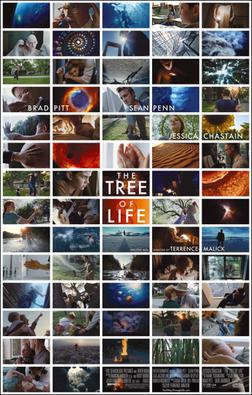
Terrence Malick’s The Tree of Life begins with the grief of an adult family and opens outward until private memory and cosmic time seem to occupy the same frame. Jack O’Brien, now a corporate architect, is marked by the death of his brother R.L. The film moves between this adult present and the brothers’ childhood in a 1950s Texas household: their mother offers warmth, while their father’s strictness shapes the home. A long, wordless creation sequence places the family story among images of the universe, earth and early life. As young Jack begins to question authority, kindness and faith, the film follows his divided feelings toward both parents. Its final images gather memory and longing into an open-ended vision, then return Jack to the modern world without explaining exactly what he has seen.
The structure asks the viewer to accept association as a form of storytelling. A remembered gesture can lead into a cosmic image, and a domestic conflict can sit beside immense spans of time without being treated as a different subject. The film does not provide a conventional guide who translates each transition. Instead, its repeated motifs—light through leaves, hands reaching, water, the movement of bodies through a room—create links that feel emotional before they become logical. This method makes attention active. The viewer is asked to hold a face or sensation across a cut and decide what kind of connection it creates. Rather than tidy biography, the result resembles memory itself, where a small childhood detail can remain more vivid than a date or explanation.
The parents are drawn less as opposing moral types than as competing ways of meeting a world that cannot be controlled. Mrs O’Brien’s openness makes care feel expansive, but the film does not suggest that tenderness can prevent loss. Mr O’Brien’s discipline comes from fear of weakness and his desire to prepare his sons, yet that intention does not erase the pressure it puts on them. Brad Pitt plays him with an awkward mixture of authority and regret; Jessica Chastain gives the mother a gentleness that still has force. Their household is a moral environment, not a debate stage. The children experience the parents through daily rhythms—lessons, corrections, games and touch—so broad questions about grace and nature begin in ordinary family life.
The brothers provide another emotional scale. Their shared childhood is not one continuous idyll: affection exists alongside rivalry, curiosity and the tests children make of one another. Hunter McCracken’s young Jack registers the moment when obedience stops feeling natural and begins to look like a bargain with power. The film stays close to that changing consciousness, allowing a child’s small transgression to feel momentous without making it a grand revelation. The other boys are not simply supporting figures in Jack’s self-portrait. Their presence gives the family a social texture and makes R.L.’s later absence felt as a gap in a once crowded home. Adult Jack’s grief remains hard to verbalize because it is attached to a whole vanished arrangement of voices and rooms.
Malick’s camera often moves at the height of a child, observing rather than organizing every image into a fixed master shot. Emmanuel Lubezki’s cinematography follows faces and gestures through natural light, letting the frame discover a look or a patch of sky. The shifting camera can make the Texas neighborhood feel accessible, even when the narration moves toward abstraction. The creation passage expands the scale with a different visual vocabulary, combining effects imagery with the familiar textures of a remembered childhood. That mix matters: the cosmic material is not presented as a detached lecture. It is an extension of the film’s attention to substance, light and change, shaped to sit beside a family’s remembered world.
Sound helps bind these scales without spelling out their meanings. Music, environmental noises and fragments of voice may carry across images, creating continuity while the geography changes. The voice-over has the quality of thought spoken before it has settled into argument; questions recur rather than resolve into a thesis. This gives the film its distinctive rhythm, but it also asks patience. Scenes do not always arrive to advance a plot point. A child running, a parent pausing or light shifting across a room can be given the duration of an event because the film treats perception as part of the drama. The viewer is not simply told that the past matters; the editing makes recollection an experience of movement between unlike scales.
The seaside imagery near the end can be read as Jack’s imaginative meeting with the people and periods that shape his inner life, but the film does not settle whether it represents an afterlife, memory, reconciliation or metaphor. That uncertainty is consistent with its form. The images give emotional shape to questions that the dialogue cannot answer, while the return to contemporary architecture keeps Jack situated in a life beyond the vision. The Tree of Life therefore resists an easy choice between scientific beginnings and spiritual meaning. It places both within a cinematic act of looking, where the origin of life and the origin of one person’s values can be contemplated together. Its openness is not a riddle with a hidden key; it is the condition under which its images speak.