
Behind the film
- Year
- 1965
- Director
- Robert Wise
- Writers
- Ernest Lehman
- Runtime
- 2h 56m
- Genres
- Musical, Biographical, Drama, Romance
- Production
- 20th Century Studios
- Country
- United States
- Cast
- Julie Andrews, Christopher Plummer, Eleanor Parker, Richard Haydn, Peggy Wood, Charmian Carr, Nicholas Hammond, Heather Menzies
About the film
Contains story spoilers.
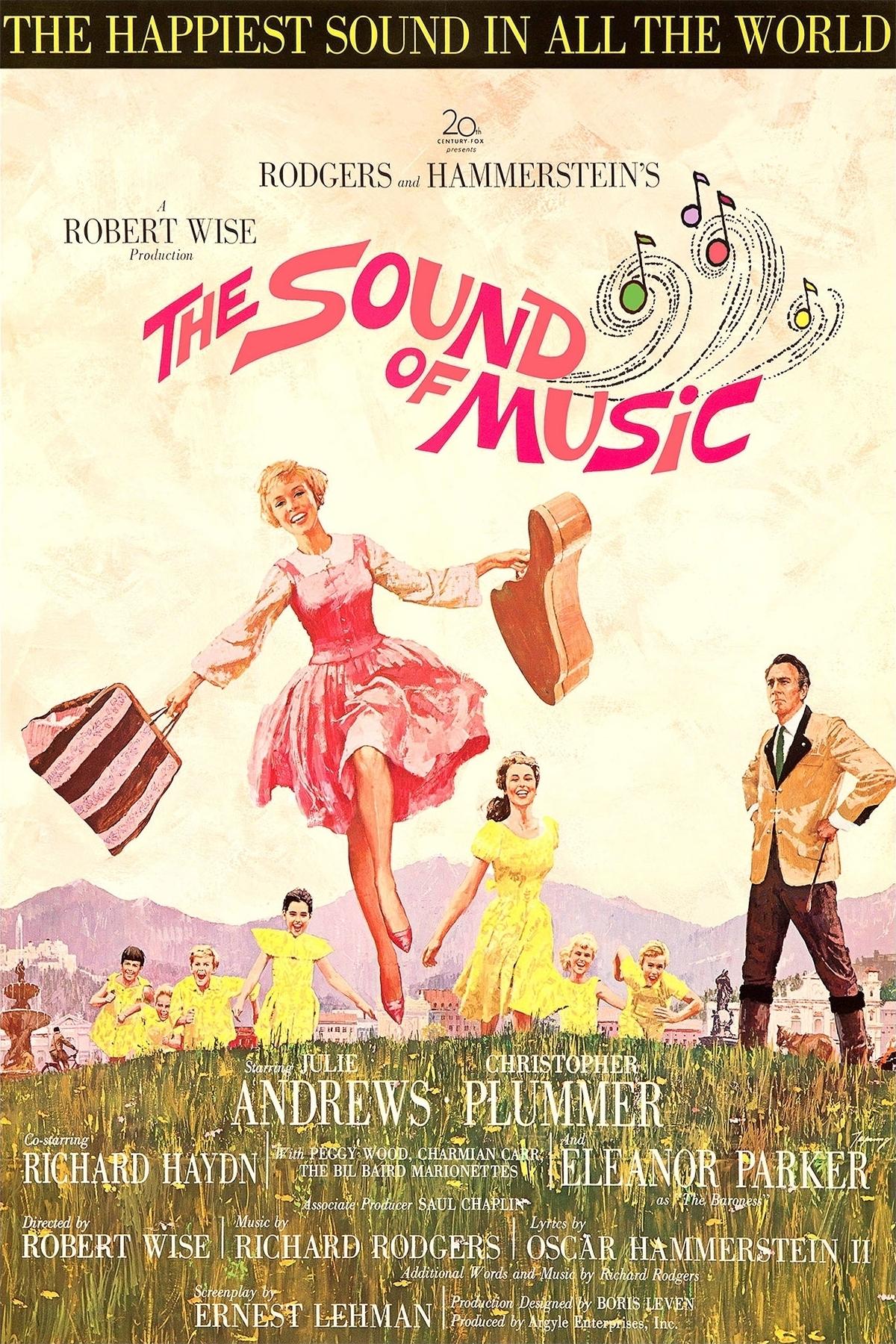
The Sound of Music begins with open mountains and a young woman whose delight in singing keeps taking her away from the duties of Nonnberg Abbey. Maria wants to become a nun, but wanting a vocation and being suited to its daily discipline are different things. Mother Abbess sends her into Salzburg as governess to the seven children of Captain Georg von Trapp, a widowed naval officer who runs his house with whistles, rules and military formality. Maria’s arrival puts two habits of living into the same rooms. He expects orderly obedience; she wants to know the children as people. Their early tricks are an attempt to get rid of another adult placed over them, but Maria responds without turning every encounter into punishment. The change starts in ordinary domestic matters before it becomes a romance or a public performance.
Maria brings music and play into a household that has largely shut them out. While the Captain is away, she makes the children clothes from old curtains and takes them through Salzburg and into the surrounding countryside. Teaching them to sing is also a way of giving each child a place in a group that can act together without marching in formation. Liesl is almost grown, while Gretl still needs the reassurance of the youngest child; treating them as seven identical subordinates cannot meet those different needs. When the Captain returns with Baroness Elsa Schraeder and their friend Max Detweiler, the children’s outdoor freedom collides with his expectations. He initially intends to dismiss Maria. Hearing his children sing changes the encounter, allowing an emotion he has been trying to contain to become audible. He joins them and asks their governess to stay.
Romantic feeling develops through the same activities that have made the home less rigid. At a party, the Captain steps into a folk dance Maria is teaching and becomes her partner. Their sudden closeness unsettles her, partly because she has been thinking of herself as someone whose future belongs at the abbey. The Baroness notices the attraction and encourages Maria to retreat. Back at Nonnberg, Maria tries to hide from feelings she cannot reconcile with her original plan. Mother Abbess responds by asking her to seek a purpose rather than confuse fear with religious commitment. Returning to the villa does not immediately settle things: the Captain is now engaged to the Baroness. That engagement ends when Elsa recognises where his feelings lie, and Maria and Georg marry. Her life has changed direction without the abbey becoming an enemy she has to reject.
The family’s musical life takes several forms, which prevents the songs from doing only one job. A lesson such as “Do-Re-Mi” allows Maria to teach while the film moves through different spaces; the children’s storm-night fears give “My Favorite Things” a more immediate use as reassurance. The puppet performance supplies an activity they can make together, while a formal farewell number turns their orderly exit from a party into entertainment for adults. Max sees another possibility in the group: a public appearance at the Salzburg Festival. Georg resists because he does not want his family treated as a commercial act. That disagreement matters later, when appearing on stage becomes a practical means of escape. Music has first repaired communication inside the house, then given outsiders something they can recognise and organise around.
Beyond the villa, Austria’s political situation is changing. The Nazi annexation turns the Captain’s opposition into an immediate problem when he is ordered to accept a German naval commission. After returning from their honeymoon, Georg and Maria decide the family must leave. Max has entered the children in the festival during their absence, despite the Captain’s earlier refusal. When the family is stopped while attempting to depart, the performance offers a cover story: they claim they are on their way to sing. Officials escort them and intend to take Georg away afterwards. The bright public stage now contains a danger that was mostly outside the children’s earlier routines. Georg’s rendition of “Edelweiss” carries attachment to a homeland being taken over, and the family’s farewell becomes a coordinated departure rather than simply a charming way to end an evening.
The escape depends on help and delay, not on the family overpowering its pursuers. Max keeps the festival audience waiting while the von Trapps disappear, and the abbey that Maria once found difficult becomes a refuge. Hiding in its cemetery brings the story into enclosed, dark spaces after the expansiveness of the opening hills. Mother Abbess protects the family, and two nuns disable the pursuing vehicles so the escape can continue. The last mountain crossing presents freedom as something they still have to reach on foot. It belongs to the film’s dramatisation of the von Trapp story, rather than serving as documentary evidence of the real family’s route. The household comedy and romance have not vanished, but their resolution has been placed inside a historical threat that requires everyone to act beyond the comfort of the villa.
Robert Wise uses the difference between those settings to shape the experience. The mountains give Maria room to move and sing freely; the Captain’s house initially arranges bodies and conversations around authority; the festival exposes the family to an audience whose attention must be managed. Julie Andrews’s openness and Christopher Plummer’s controlled bearing make the gradual changes in their relationship visible before either character names them. The children supply their own rhythm through questions, interruptions and group performances, while Richard Haydn’s Max approaches the same talent from a more opportunistic position. Ernest Lehman’s screenplay adapts the Rodgers and Hammerstein musical, retaining music as a means of action rather than an interruption of the story. By the ending, a whistle is no longer the family’s defining sound. They can listen to one another, perform together and cooperate under pressure, carrying the bonds formed at home into a much less forgiving world.