
Behind the film
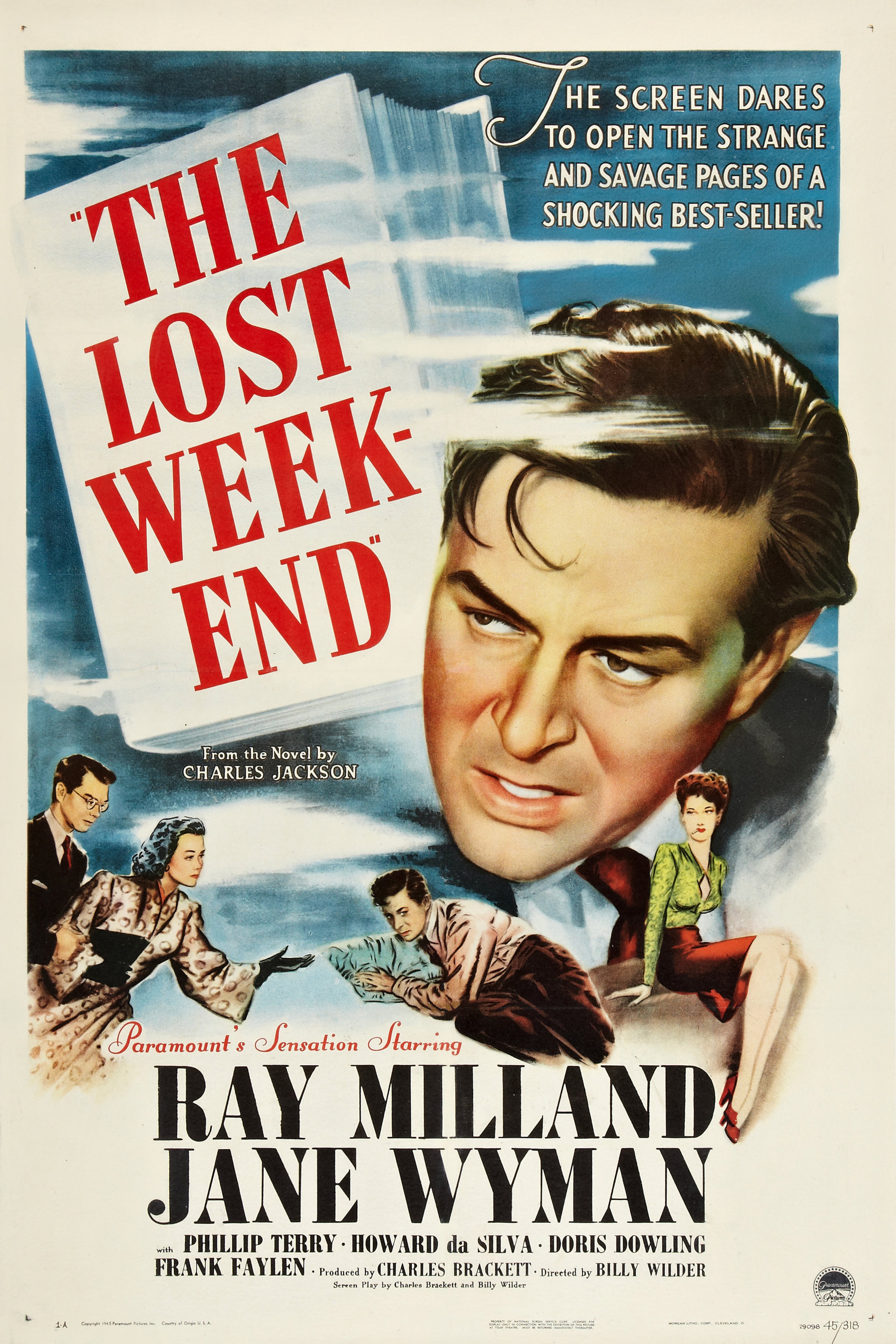
- Year
- 1945
- Director
- Billy Wilder
- Writers
- Charles Brackett, Billy Wilder
- Genres
- Drama, Flashback, Film noir
- Production
- Paramount Pictures
- Country
- United States
- Cast
- Ray Milland, Jane Wyman, Phillip Terry, Howard da Silva, Doris Dowling, Frank Faylen, Ernest Whitman, Anita Sharp-Bolster
About the film
Contains story spoilers.
Billy Wilder follows a New York writer whose drinking defeats a planned weekend away with his brother. Don Birnam steals household money for alcohol, misses their departure and recounts his relationship with Helen to bartender Nat. Attempts to write give way to cravings, theft and humiliation. Seeking cash, he falls and wakes in a hospital ward, then escapes and drinks until frightening hallucinations bring Helen back to help him. His despair culminates in a suicidal crisis, which she interrupts. When Nat returns his typewriter, Helen urges Don to stop dividing his identity into writer and drunk. He commits to writing The Bottle about these events and rejects the drink in front of him. The ending offers a concrete beginning, rather than evidence that recovery has already been completed.
Wilder frames the crisis through a city that feels both open and airless. Don can walk out of an apartment, cross a street, enter a bar or ask for help, but every route seems to return him to the same need. The urban geography supplies no grand external villain; the narrowing comes from what he hides and the excuses he constructs. That makes the title’s weekend feel less like a vacation than a measurement of time: each day presents another chance to keep a promise, and another practical reason to break it. The tension comes from familiar places becoming parts of a private ritual. A door, a coat, a glass or a pocket can hold the next decision in suspense without requiring a conventional chase.
Ray Milland plays Don with a divided manner: he is articulate enough to persuade people, and frayed enough that the persuasion keeps exposing itself. His wit has social ease, but it also gives him cover; a joke can change the subject before anyone can name what is happening. The performance makes intelligence part of the problem rather than a solution. Don can describe himself, recognize the pattern and still act against that knowledge. Milland lets those capacities sit together in one gesture, so the character is not reduced to a warning label. The visible strain in his posture and pacing does not erase the charm that first attracted Helen. Their coexistence helps explain why she keeps hoping while also showing the cost of hope when it is asked to substitute for his own action.
Jane Wyman gives Helen a different kind of steadiness. She does not simply stand outside Don’s trouble as an emblem of goodness; her attention is active, practical and vulnerable to disappointment. The film lets her love be meaningful without presenting it as a medicine. Wick, played by Phillip Terry, offers another contrast. His concern is expressed through arrangements and plans, the language of a person trying to keep a household and career on track. Those responses are understandable, but Don’s behavior turns even care into something he can manipulate. The three performances create a small social world around him, where affection, embarrassment and exhaustion coexist. Rather than asking viewers to choose between condemnation and absolution, the drama shows how repeated broken promises alter what other people can reasonably believe.
The film’s visual emphasis is often on objects and thresholds: the hidden bottle, the cash, the apartment, the bar and the hospital. These details keep the crisis material. Drinking is not an abstract symbol that floats free of consequence; it organizes money, movement and access to other people. At the same time, Wilder uses compositional clarity and sharp shifts in tone to keep the story legible. Scenes may carry a dry comic edge, especially when Don is inventing an explanation, then turn sharply as that explanation fails. The tonal movement is not a release from the subject. It shows how humor can be a defense and how quickly that defense becomes frightening when the person speaking has lost control of the plan.
The flashback to the opera changes the emotional weight of Helen’s persistence. It gives their bond a beginning shaped by performance and attraction, so the present is measured against a memory in which Don could still appear composed. That memory does not excuse what follows; it makes the gap between promise and behavior more painful. The film’s use of recollection also complicates the idea of a clean downward spiral. Don is not shown as someone who has always been only one thing. He has ambitions, habits of self-description and a capacity for connection, all of which remain visible even as alcohol becomes the center around which his decisions orbit. The past supplies context, not a guarantee that affection can reverse the present.
Don’s imagined book gives the film a final question about authorship. He wants to turn his experience into a story, which means placing events in order and making them seem shaped. But the crisis he is living resists the neat control of a manuscript: he cannot command the next hour merely by naming it. That tension makes the ending’s attention to writing more than a symbol of artistic vocation. It asks whether description can become the first honest act, while refusing to confuse that act with completed recovery. The film closes with the possibility of a choice still ahead. Its severity comes from leaving responsibility with Don, and its compassion from not pretending that responsibility is simple once dependence has narrowed the world around him.