
Behind the film
- Year
- 1921
- Director
- Charles Chaplin
- Writers
- Charles Chaplin
- Genres
- Comedy drama, Drama, Silent, Social comedy
- Production
- Charles Chaplin Productions
- Country
- United States
- Cast
- Charles Chaplin, Jackie Coogan, Edna Purviance, Carl Miller, Henry Bergman
About the film
Contains story spoilers.
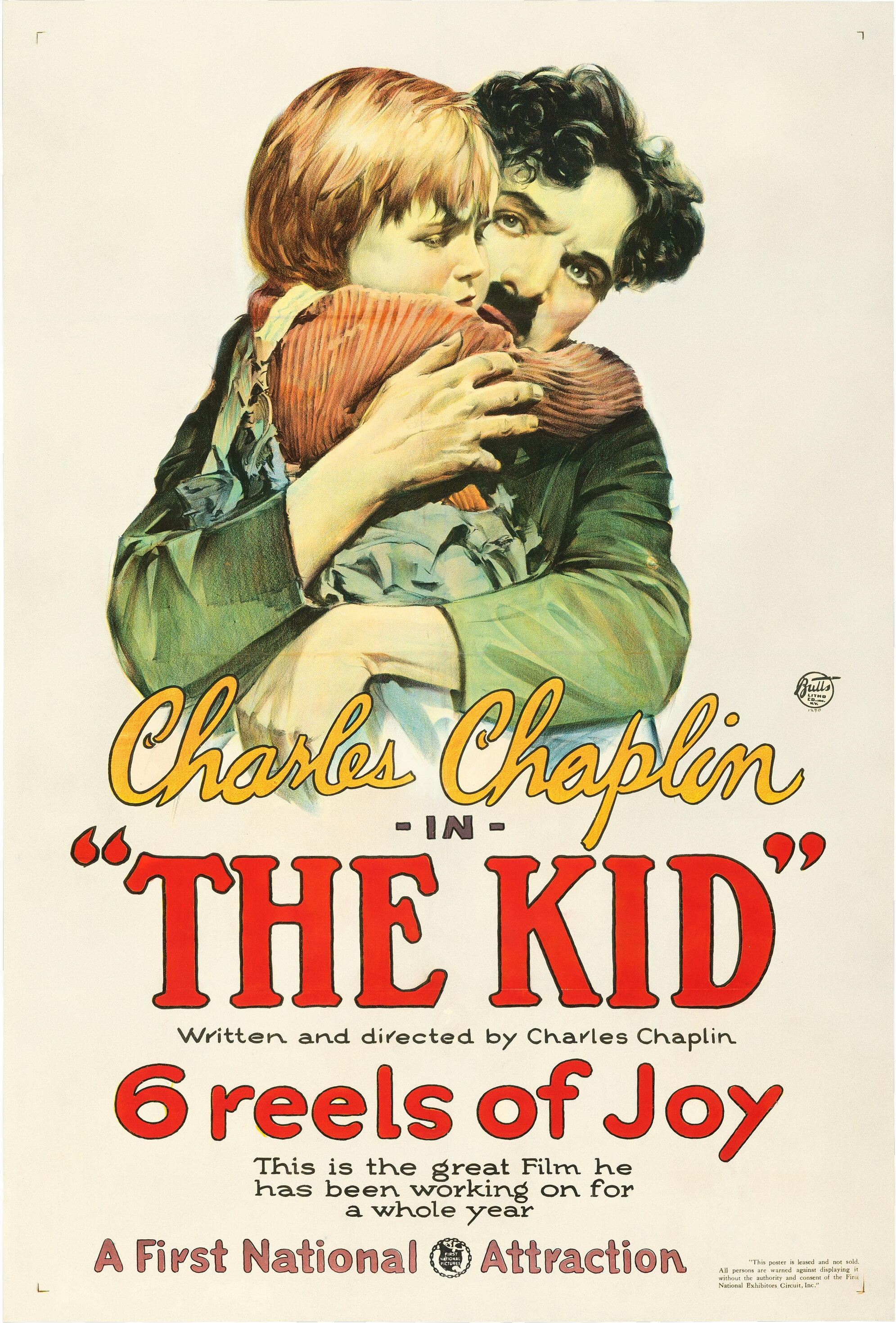
Charlie Chaplin’s The Kid begins with a woman leaving a hospital with her infant and then, overwhelmed, abandoning him in a car. Thieves steal the vehicle, discover the baby and set him down in a slum alley. The Tramp comes upon the child during his morning walk. He tries to pass the responsibility to several strangers, but each attempt fails; at last he finds a note with the baby and takes him home to his small attic room. The opening gives the story a hard premise, then lets the Tramp’s uncertainty turn into a comic, makeshift kind of parenthood.
Five years later, the child, played by Jackie Coogan, and the Tramp have developed a routine together. The boy throws stones through windows; the Tramp, carrying a glazier’s tools, arrives soon afterward to offer repairs. Their small enterprise is funny because it requires both planning and a straight face, but it also shows how carefully they have learned to depend on each other. The room is crowded and poor, yet Chaplin makes it function as a home through the pair’s gestures: setting a place to eat, sharing chores and adapting furniture to the boy’s needs.
The woman who left the baby has risen from hardship to become an opera singer. She supports children in the same poor district and sometimes encounters her son without knowing who he is. In one scene, she gives him a toy and later carries him home after he is hurt in a fight. This overlap builds dramatic irony without making her indifferent: she is trying to help him even before she knows he is hers. When a doctor recognizes that the boy is not the Tramp’s biological child, he reports the case and argues that the boy belongs in institutional care.
The authorities come to remove the child while he is recovering. The Tramp resists, and the boy is taken away in a vehicle as he cries for him. Chaplin turns the pursuit into a rooftop escape: the Tramp uses alleys and roofs to overtake the officials and retrieve the boy. The action is clear even without spoken dialogue because the framing gives the viewer the necessary geography, while Coogan’s expression makes the child’s fear and relief legible. Their reunion restores their partnership, but it leaves them unable to return safely to their former room.
The mother learns that the boy is her son when the doctor shows her the note found with him. She starts searching while the Tramp and child seek shelter at a lodging house. The proprietor notices a newspaper description of the missing boy and steals him from the sleeping Tramp, taking him to the police station. The authorities return the child to his mother. Waking to an empty bed, the Tramp wanders the streets through the night and eventually falls asleep on his own doorstep, exhausted and alone.
Chaplin then breaks the emotional pressure with a dream. The poor neighborhood becomes a welcoming place where the people who once fought or mistrusted one another live in harmony. The Tramp and the Kid appear among them, and the vision gives shape to the kind of generosity the real city withholds. A quarrel interrupts the fantasy; the Tramp is shot down and wakes as the policeman bundles him into a car. The shift from the dream’s open, floating space to the blunt street encounter is part of the film’s tonal design, moving swiftly between comic invention and genuine peril.
The car brings the Tramp to a large house in a wealthy neighborhood. The boy’s mother opens the door, and she and the child pull the Tramp inside, giving their separation a warm resolution. The film does not show the years of practical arrangements that would follow, but it ends with the household reunited in a new form: a biological mother who can care for her son and the man who has already raised him. The Tramp’s place is included rather than erased, which makes the reunion feel like an expansion of the child’s family, not simply a correction of his past.
The film’s silent form makes timing, movement and readable physical behavior carry the emotional argument. Chaplin uses title cards sparingly compared with the expressive work done by faces and hands; Coogan can shift from mischief to alarm in a glance, and the Tramp’s carefully dignified posture is repeatedly undone by practical need. The comic partnership never cancels the poverty around them, and the danger of institutional separation remains real within the story. In the version’s famous opening promise of a smile and perhaps a tear, both tones come from the same relationship: the pair’s ingenuity is funny because their attachment is serious. The street setting matters to the visual storytelling. Narrow rooms, busy sidewalks and the exposed rooftops leave little privacy for the pair, so the camera can turn ordinary movement into both a gag and a threat. The Tramp’s familiar costume signals a recognizable comic figure, but the film places him among people whose choices are shaped by need. The contrast helps keep the sentiment grounded: affection does not make their circumstances easy, and the boy’s removal is painful precisely because the life they built together has been shown in everyday detail.