
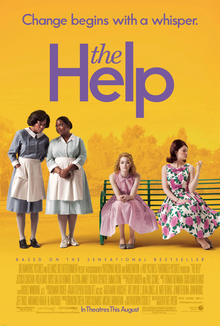
Behind the film
- Year
- 2011
- Director
- Tate Taylor
- Writers
- Tate Taylor
- Genres
- Comedy drama, Female buddy, Drama, White savior
- Production
- 1492 Pictures, DreamWorks, Touchstone Pictures
- Country
- United States
- Cast
- Emma Stone, Viola Davis, Octavia Spencer, Bryce Dallas Howard, Jessica Chastain, Allison Janney, Ahna O'Reilly, Sissy Spacek
About the film
Contains story spoilers.
The Help takes place in Jackson, Mississippi, in 1963, where Black domestic workers care for white families in a city structured by segregation and racial intimidation. Aibileen Clark works in Elizabeth Leefolt’s home, patiently raising little Mae Mobley while Elizabeth remains distant. Minny Jackson, Aibileen’s closest friend, is a gifted cook with a sharper tongue and less patience for the women who employ her. Their everyday labor creates intimate bonds with the children, yet the adults’ household rules insist those bonds should never become equality. The film begins in these kitchens and living rooms, where politeness can conceal a threat and a small act of care matters.
Eugenia “Skeeter” Phelan has returned from college hoping to write, but finds the women of her social circle focused on marriage, parties and a campaign led by Hilly Holbrook to require separate bathrooms for Black maids. Skeeter takes a housekeeping-column job despite knowing little about the work, so she asks Aibileen for practical advice. Their conversations make her notice how much knowledge and emotional work the maids provide, and how little recognition they receive. Skeeter approaches a New York editor with the idea of recording their experiences, but the project depends on women taking a serious risk by speaking honestly about employers who can damage their livelihoods.
Aibileen hesitates before agreeing to an interview, and she insists on protecting the women’s identities. Her choice is shaped by grief as well as fear: her son died after a workplace accident, and she carries that loss into the patient attention she gives Mae Mobley. The film’s quiet domestic scenes let Aibileen’s tenderness emerge without pretending the household is safe or fair. Hilly, meanwhile, uses social standing to enforce her bathroom campaign and punishes Minny for using the indoor toilet during a tornado. After dismissing her, Hilly spreads an accusation of theft that makes it difficult for Minny to find another position.
Minny’s fortunes begin to change when Celia Foote hires her for a large house outside the circle of Jackson’s society women. Celia is isolated from that group and initially unsure how to manage a household, but she treats Minny with a directness that differs from Hilly’s surveillance and Elizabeth’s dependence on convention. Minny also sees Celia’s private vulnerability: she has miscarried and carries pain she cannot comfortably discuss with the other women. Their connection grows through cooking and ordinary routines, while Minny has to conceal her employment from Celia’s husband, Johnny, and continue to navigate violence from her own husband.
As Aibileen and Minny begin telling Skeeter their stories, Elaine Stein, the editor, explains that one or two accounts will not be enough for a book. The danger of being identified keeps other women away until events in the community make silence harder to maintain. Yule May, another maid, is arrested after Hilly refuses her request for a small loan and reports her for taking a ring she found beneath a sofa. Aibileen and Minny persuade more women to participate. The film shows the book taking shape through conversations, not as Skeeter’s discovery alone: each woman weighs what can be said, what must remain anonymous and what the truth could cost.
Minny has kept one story in reserve as protection against Hilly. After being fired, she served Hilly a chocolate pie containing feces, then makes clear what Hilly ate. The episode is comic in its timing, but it also marks a rare reversal in a relationship where Hilly usually controls the consequences. Skeeter’s book is published anonymously and reaches readers in Jackson. The stories reveal recognizable details to the people involved, while Hilly threatens a libel suit and then backs away rather than publicly confirm the pie incident. Skeeter’s private life changes too: Stuart leaves after learning she wrote the book, and her editor offers her a job in New York.
The film’s final movement returns to the unequal relationships that made the book necessary. Hilly pressures Elizabeth to fire Aibileen, using an accusation of stolen silverware as the pretext. Aibileen speaks up for herself and refuses to leave quietly, then says goodbye to Mae Mobley with a plea that Elizabeth love her daughter. As she walks away, Aibileen begins to imagine a future as a writer rather than returning to domestic service. Minny receives security from Johnny, who assures Minny of lasting employment, giving her and her children the security to leave her abusive husband. Skeeter accepts the New York position, while the women’s new direction remains tied to risks and choices they have made together.
Tate Taylor adapts Kathryn Stockett’s novel as an ensemble period drama whose spaces carry social meaning: kitchens are workplaces and confidences, while club meetings and manicured homes make status visible. Viola Davis gives Aibileen a composed presence that can hold affection and anger at once; Octavia Spencer’s Minny moves between comic defiance and the practical calculations required for survival. Emma Stone’s Skeeter provides a route into the story, though the project’s emotional center rests with the maids whose testimony supplies its substance. The film is a dramatization set amid the civil-rights era, not a complete account of that movement; its particular story traces how a small group of women risk speaking and how those decisions reshape their lives.