
Behind the film
- Year
- 1925
- Director
- Charlie Chaplin
- Writers
- Charlie Chaplin
- Runtime
- 1h 35m (1925 silent version)
- Genres
- Silent, Comedy, Romantic comedy, Social comedy
- Production
- United Artists
- Country
- United States
- Cast
- Charlie Chaplin, Georgia Hale, Mack Swain, Tom Murray, Henry Bergman, Malcolm Waite, Betty Morrissey, Joan Lowell
About the film
Contains story spoilers.
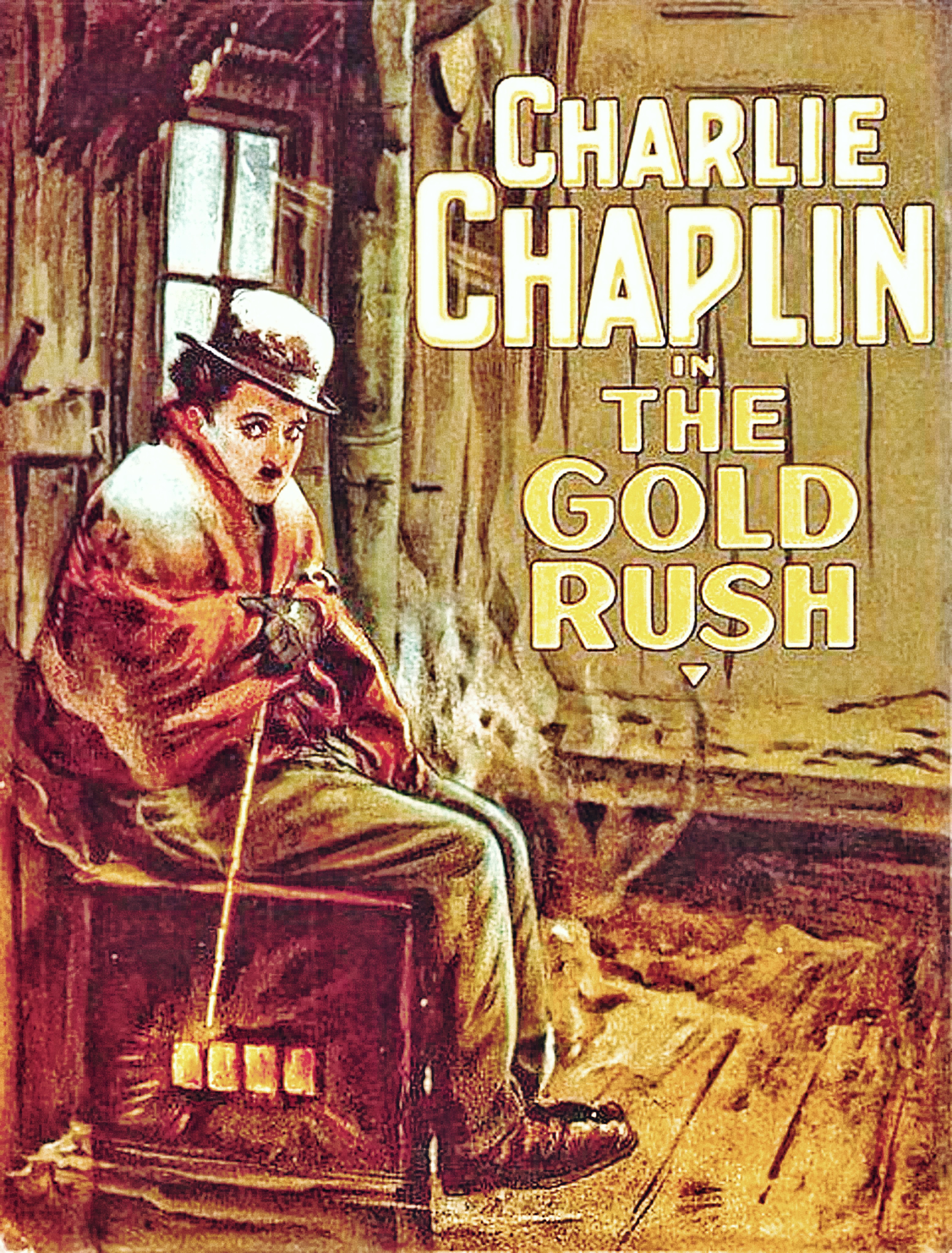
The Gold Rush places Charlie Chaplin’s Little Tramp in the Klondike during the prospecting rush, surrounded by snowfields, makeshift cabins and a settlement where dance-hall performers offer warmth and company. The Tramp is one of the small, poorly equipped seekers among the sturdy men who have crossed the Chilkoot Pass. His patched clothes and delicate manners make him vulnerable to mockery, but Chaplin’s performance turns those disadvantages into precise comic movement: he steps carefully across treacherous ground, keeps his dignity through hunger, and treats even improvised shelter as a place where ordinary courtesies still matter.
A blizzard drives him into the cabin of Black Larsen, a wanted criminal who tries to throw him back into the storm. Big Jim McKay arrives and overpowers Larsen, after which the three men agree to remain together until the weather clears. Food soon runs out. The men draw lots, Larsen loses and goes out into the snow, where he finds Jim’s rich claim. In the cabin, hunger changes the Tramp’s shoe into a meal; laces become spaghetti and nails become bones in an elaborate pantomime. Jim, delirious, imagines his companion as a giant chicken and lunges at him. A bear wanders into the cabin and supplies food, ending the immediate crisis without making the prospectors any less exposed to the landscape.
When the storm passes, Jim returns toward his mine and the Tramp heads to the nearest town. Black Larsen has reached the claim first and attacks Jim with a shovel, then dies in an avalanche while trying to escape with gold. Jim wakes with amnesia, remembering only that the mine and cabin are connected to the man he met. His search for the Tramp becomes the thread that will eventually tie the two men’s fortunes together. In town, the Little Tramp encounters Georgia, a dance-hall performer, and falls in love from a distance. She notices his awkward earnestness, but he is more absorbed by the idea of being worthy of her than by any assurance she has offered.
The Tramp prepares an elaborate New Year’s dinner in the hope Georgia and her friends will visit. He waits alone while the women go elsewhere, and the empty room turns the comedy toward disappointment. Georgia later enters the cabin with Jack, her admirer, and sees the meal the Tramp had set out for her. Jack pressures her, and she leaves him a note expressing regret and affection. Jack hands the note to the Tramp as if it were meant for him. The misunderstanding carries him into a joyous fantasy in the dance hall, where he believes Georgia has chosen him. Chaplin lets the Tramp’s excitement play through an entire crowd: he searches for her, dances and builds an imagined future out of a few lines on paper.
Big Jim arrives at precisely the wrong moment, partly remembering the gold claim and needing the Tramp to take him back to the cabin. He grabs his friend and insists that the location will make them both rich. The Tramp sees Georgia and runs to her, breaking away to embrace her before he can explain anything. The room watches the mismatch between his tender certainty and her surprise. Jim drags him out, but the Tramp calls back that he will return as a millionaire. His declaration sounds absurd while he is still penniless; the later expedition gives it a literal outcome, though not through a masterful plan of his own. Back at the cabin, another storm shifts the building until it balances on a cliff edge. Movement inside makes the floor tilt, turning a familiar shelter into a trap. Jim escapes and pulls his companion clear before it falls. The gold is nearby, but reaching it requires surviving one more reversal of apparent safety.
A year later, Jim and the Tramp have found the mine and are returning to the United States with wealth. The press wants a photograph of the now-successful prospector in his former clothes. Dressing as his poorer self makes the Tramp look like a stowaway rather than a millionaire, and Georgia, who is aboard the same ship, tries to protect him. The confusion reveals her concern before his new status becomes clear. Photographers then attempt to pose the pair, but their embrace and kiss overtake the formal portrait. Money has changed the public story attached to him, while the reunion briefly takes place outside that story, between two people whose earlier encounters were full of missed intentions.
The 1925 original is a silent feature designed around Chaplin’s visual timing, not the later narration. Its gags often begin with a practical problem—cold, hunger, a precarious cabin or the confusing note—and expand through the Tramp’s exact gestures. The famous dinner ballet, in which bread rolls stand in for dancers’ feet, lets him share an imagined social evening without words. His shoes and the cabin on the cliff similarly make deprivation into physical comedy while keeping danger present. The film’s balance of slapstick and longing depends on that clear pantomime. Chaplin’s silent original has a different editing rhythm and Georgia subplot from his 1942 narrated reissue, so this account follows the 1925 release.