
Behind the film
- Year
- 2023
- Director
- Andy Muschietti
- Writers
- Christina Hodson
- Genres
- Science fiction, Action, Adventure, Superhero
- Production
- Warner Bros. Pictures, DC Studios
- Country
- United States
- Cast
- Ezra Miller, Sasha Calle, Michael Shannon, Ron Livingston, Maribel Verdú, Kiersey Clemons, Antje Traue, Michael Keaton
About the film
Contains story spoilers.
The Flash gives its hero a power that appears capable of answering the loss around which his life has formed. Speed can become access to the past, making a wish that would normally remain impossible seem like a practical option. The film's central danger grows from that possibility. Saving one person is an understandable desire, but the world in which the rescue occurs cannot be treated as a set of independent pieces. Barry wants to change a particular event without losing everything connected to it. The story makes him confront the difference between identifying what hurts and possessing the authority or knowledge to rearrange its consequences safely.
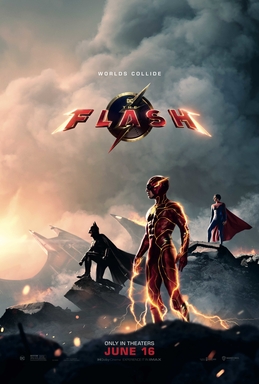
Andy Muschietti directs the 2023 superhero film, with a screenplay by Christina Hodson. Ezra Miller plays Barry and his younger counterpart, Michael Keaton plays an alternate Batman and Sasha Calle plays Kara Zor-El. The film uses DC's time-travel and multiverse framework to turn a personal intervention into an altered history. It belongs to a specific screen continuity rather than presenting every version of these characters as interchangeable. Their familiar names create expectations, while the changed circumstances test those expectations. Barry's knowledge of the world he left is useful but incomplete once he begins asking a different world to supply the same people and solutions.
Barry prevents his mother's death and reaches an altered 2013, where he meets his younger self. With a retired Batman, they rescue Kara and attempt to stop Zod. Repeated attempts cannot avert Batman and Kara's deaths. An older version of the younger Barry reveals the destructive end of refusing that limit, before the younger Barry sacrifices himself. The original Barry restores his mother's fate but adjusts the past to obtain evidence clearing his father. Returning, he finds Bruce changed again. The conclusion grants one form of justice while showing that intervention still has consequences beyond the result he intended.
Meeting another self makes the altered history personal rather than merely spectacular. The younger Barry has lived under different conditions, so resemblance does not produce identical judgement. This gives the time-travel premise a useful emotional distinction. A person can imagine that removing a loss would simply produce a happier version of the life already known, but the film treats a changed life as genuinely changed. The two Barrys must negotiate differences instead of regarding one another as duplicate tools. The older visitor's familiarity with his own name and abilities cannot substitute for understanding the person created by a different set of experiences.
Batman and Kara make the same problem visible beyond Barry himself. An expected ally can occupy a different position, and searching for one familiar answer can lead to somebody whose needs have been overlooked by the question. This is why the rescue matters as more than assembling a recognisable team. The alternate world contains people who must be encountered on its own terms. Barry's initial concern belongs to his family, but the consequences require him to care about lives that his plan did not originally include. The adventure widens responsibility by refusing to let personal intention define the entire scale of what must now be addressed.
The repeated attempts to change the battle turn persistence into something morally unstable. Continuing can look like courage when giving up would allow somebody to die, yet the film's time-travel rules make continuation itself destructive. That conflict prevents a simple equation between effort and virtue. A person can care intensely and still reach a point where more intervention creates more harm. The older alternate Barry embodies the danger of allowing the desired result to become the only acceptable evidence. Every failure can then become a reason to repeat the action, rather than information that the action's underlying promise needs to be questioned.
The family story keeps that argument attached to grief rather than treating it solely as a rule about fictional universes. Barry is not trying to perform an abstract experiment. He is trying to recover a relationship and repair an injustice that have shaped his everyday life. Accepting a limit therefore requires more than understanding a diagram of timelines. It asks him to live with an absence he has briefly believed he could remove. The film's resolution separates that acceptance from indifference. Letting go of a particular intervention does not mean the lost person mattered less, or that seeking justice for the person still alive has become unnecessary.
The final changed Bruce keeps the conclusion from becoming a complete restoration of familiar order. Barry has learned something about limits while still making another adjustment, and the world records that choice in a way he did not anticipate. The Flash uses its alternate heroes and repeated selves to ask what repair can mean when a past event is connected to more than one desired outcome. Its large-scale conflict remains rooted in a smaller wish that cannot be satisfied without cost. The ending allows movement forward, but leaves certainty behind: the hero can act, grieve and pursue justice without possessing a version of history that obeys him completely.