
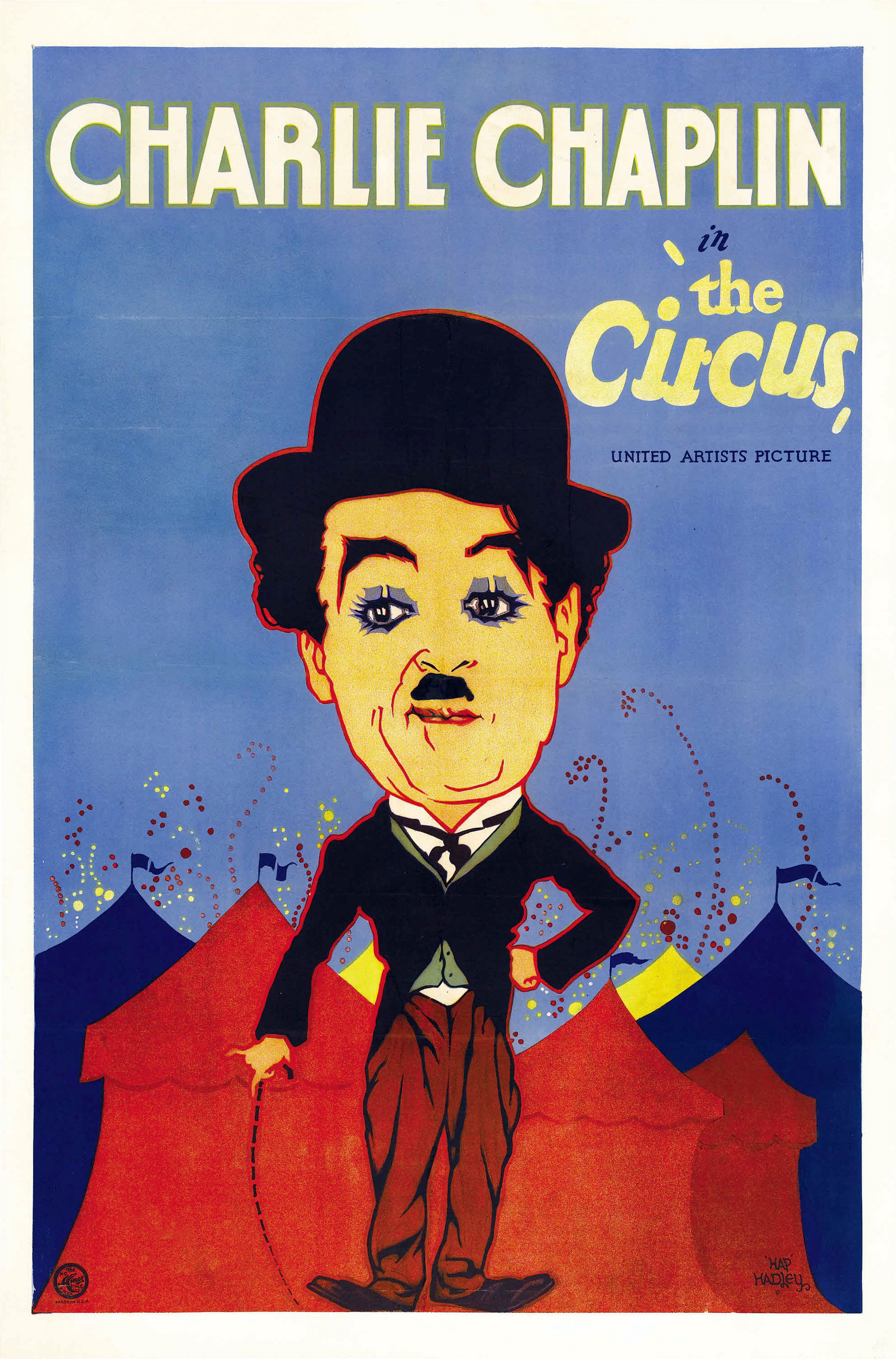
Behind the film
- Year
- 1928
- Director
- Charlie Chaplin
- Writers
- Charlie Chaplin
- Genres
- Comedy, Silent, Drama
- Production
- United Artists
- Country
- United States
- Cast
- Charlie Chaplin, Merna Kennedy, Al Ernest Garcia, Harry Crocker, Henry Bergman, Stanley Sandford, George Davis, Betty Morrissey
About the film
Contains story spoilers.
The Circus places Charlie Chaplin's Tramp in a world that makes a living by organising entertainment, then asks what happens when its funniest person does not know he is performing. The distinction between doing something deliberately and being watched doing it gives the film its comic engine. A mishap can become valuable the moment an audience sees it, although that value may remain concealed from the person responsible. Chaplin uses the circus as both a physical playground and a workplace, letting laughter arise alongside questions about payment, authority and the emotional costs of becoming the centre of attention.
Mistaken for a thief, the Tramp runs into a circus performance and accidentally delights the crowd. The ringmaster hires him cheaply, exploiting the comedy he creates without realising it. The Tramp befriends Merna, the ringmaster's mistreated stepdaughter, and learns that he is the show's attraction. He hopes she loves him, but she falls for tightrope walker Rex. His heartbreak damages his ability to amuse. Later, he survives a dangerous tightrope performance, then attacks the ringmaster for striking Merna and is dismissed. When she joins him, he brings Rex back so the couple can marry. The circus departs, leaving the Tramp behind. He eventually walks away, with generosity and loneliness occupying the same conclusion.
The failed attempt to reproduce his own success makes the film unusually alert to the conditions of a joke. The Tramp's anxious movement can be hilarious when it belongs to an urgent problem, yet the instruction to be funny removes the very urgency that made it work. This turns performance into a question of context rather than an interchangeable talent he can switch on. Chaplin lets the audience recognise the distinction while the character remains caught inside it. The circus wants a repeatable attraction; the attraction depends on someone whose relationship to the event is different from that of the spectators who enjoy watching him.
The ringmaster gives that difference an economic consequence. Knowing what the audience values does not make him inclined to share the benefit fairly. His authority extends from the workplace to Merna's treatment, connecting the circus's public entertainment with private coercion. The contrast prevents the setting from becoming an entirely carefree refuge for a wandering outsider. A spectacle can be cheerful from the seats and harsh behind the scenes. The film follows a character who is useful to that spectacle without initially possessing the knowledge needed to bargain with it, making recognition a practical matter as well as an emotional desire.
Merna Kennedy's presence changes the meaning of success for the Tramp. Approval from a crowd is not the recognition he most wants, and becoming central to the show does not guarantee a central place in her affections. That separation gives the romance its melancholy without requiring Merna's preference to become a betrayal. Her life cannot reasonably be treated as the reward attached to his comic achievement. The ending develops this distinction through his decision to help her rather than insist on a claim. His kindness remains costly because doing the generous thing does not automatically spare him from the loneliness that follows it.
The tightrope sequence makes the comic body's vulnerability especially clear. Balance has to be maintained inside a situation where every distraction changes the practical problem. Escaped monkeys add another unpredictable set of movements, turning a controlled act into a succession of urgent adjustments. The audience's laughter depends on understanding what can go wrong before it does, so the sequence needs spatial clarity as much as inventive incident. Chaplin's physical precision lets several kinds of attention coexist: the character trying to stay safe, the circus spectators enjoying a performance, and the film audience able to see the disparity between his intentions and their interpretation.
The 1928 film belongs to silent comedy, with expression and movement carrying relationships that need no continuous spoken explanation. Its circus setting makes that physical language part of the story rather than merely the way the story is told. Spectators inside the film are also interpreting bodies, timing and surprises. This creates a playful doubling of the viewing experience: the audience watches an audience learn to value someone whose immediate concern is often something entirely different. The later soundtrack and its opening song belong to the film's subsequent presentation history, so a particular edition can add another emotional frame to the original visual construction.
The departure leaves an image of absence where the show had promised constant activity. A successful attraction can be left outside the community that benefited from it, and a generous act can end without the romantic consolation the protagonist wanted. Yet the Tramp's eventual movement keeps the conclusion from becoming a complete surrender. Walking away is neither a proof that nothing mattered nor a guarantee that the next place will treat him better. It preserves his capacity to continue after a loss. The Circus brings technical comic invention and feeling together by allowing that persistence to remain modest, bodily and recognisable.