
Behind the film
- Year
- 1977
- Director
- John Badham
- Writers
- Norman Wexler
- Genres
- Drama, Coming-of-age, Music-themed
- Production
- RSO Records
- Country
- United States
- Cast
- John Travolta, Karen Lynn Gorney, Donna Pescow, Barry Miller, Joseph Cali, Paul Pape, Bruce Ornstein, Val Bisoglio
About the film
Contains story spoilers.
Saturday Night Fever gives Tony Manero a place where he can become important without changing the rest of his circumstances. The disco recognises a skill that his working day does not reward in the same way. That separation creates the film's attraction and its limit. Admiration on a dance floor can offer real pleasure, but it cannot settle the conflicts waiting outside the room or make the admired person behave generously towards somebody else. The story is organised around that gap, giving a young man a convincing escape while gradually exposing what remains unaddressed when escape becomes the only experience through which he feels capable of mattering.
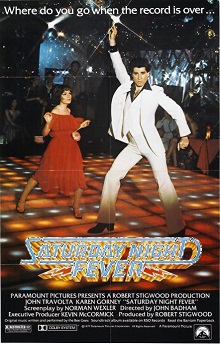
John Badham directs the 1977 drama, with a screenplay by Norman Wexler based on material by Nik Cohn. John Travolta plays Tony and Karen Lynn Gorney plays Stephanie, with Donna Pescow as Annette and Barry Miller as Bobby. Its disco setting and music are central, but the surrounding narrative is considerably darker than an account focused only on clothes, dancing and celebration would suggest. The film follows a working-class Brooklyn world whose pleasures coexist with prejudice, aggression and distress. Understanding the attraction of the dance floor requires keeping that world present, rather than treating the musical identity as a complete description of the story.
Tony partners with Stephanie for a dance contest while his family and friendships become increasingly unstable. They win, but he rejects the award after recognising racial bias against another couple. His own subsequent attempt to assault Stephanie and his friends' rape of Annette expose conduct that dancing cannot redeem. Bobby's death forces a further break with the group. Tony travels to Stephanie's Manhattan apartment, apologises and asks for friendship. The ending offers the possibility of a changed relationship rather than a triumphant reward for winning the competition, leaving maturity connected to conduct beyond the dance floor.
The contest makes fairness visible within the one setting where Tony already feels valued. Recognising an unjust result requires him to separate the pleasure of being chosen from the question of whether the choice was deserved. That is a significant distinction because status can encourage a person to accept flattering evidence without examining its terms. His refusal of the award challenges that response. Yet the story refuses to let this action become a complete moral transformation. A person can recognise prejudice in one encounter and still behave harmfully in another. The contrast prevents a moment of insight from becoming permission to overlook the conduct that follows it.
Stephanie's role is important because her ambitions do not exist solely to give Tony a better version of himself. She has an account of moving beyond the neighbourhood, and partnership on the floor does not create an obligation to satisfy his expectations elsewhere. The film's sexual violence must be understood as harm, not as another expression of romantic frustration or proof that persistence might eventually win affection. Tony's later apology does not make the earlier behaviour harmless. It begins a different possibility by acknowledging that a relationship cannot be built through treating another person's refusal as an obstacle to the future he wants.
The male friendships offer belonging at a cost. A group can provide company and confidence while discouraging attention to people whose needs do not fit its preferred performance of toughness. Bobby's distress makes that problem especially visible. Being surrounded by companions is not the same as being heard by them, and repeated closeness does not guarantee that somebody's situation receives serious consideration. The film connects its social pleasures to this failure without turning a death into a simple consequence of one missed response. The more substantial point is that a familiar group can become inadequate when its habits leave little room for vulnerability or care.
Music and dancing give Tony's body a different relationship to the environment. A constrained life can briefly acquire rhythm, space and an audience, making possibility feel available before it has become a practical future. That is why the glamour matters even within a harsh account of his world. It is not simply a distraction the film should remove in order to become serious. It shows what the character is trying to preserve: an experience of competence and recognition. The question is whether that experience can lead towards a life that does not require the same social limitations and harmful habits to continue around it.
The Manhattan meeting makes friendship a more meaningful proposal than another victory. It asks for a connection that can acknowledge limits, rather than one guaranteed by performance or conquest. Tony's future remains uncertain, and the film does not establish that one conversation completes the work of changing him. Saturday Night Fever joins disco's visual and musical excitement to an account of disillusionment that refuses to stay outside the frame. Its ending becomes clearest when the possibility of moving on involves responsibility for how others have been treated, with dancing preserved as an ability rather than mistaken for an answer to every failure of character and circumstance.