
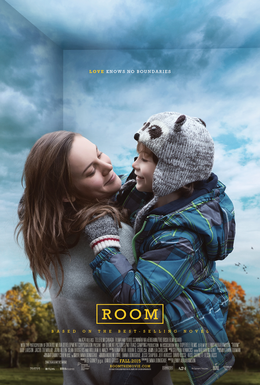
Behind the film
- Year
- 2015
- Director
- Lenny Abrahamson
- Writers
- Emma Donoghue
- Runtime
- 1h 58m
- Genres
- Drama
- Country
- Canada, Ireland, United States, United Kingdom
- Cast
- Brie Larson, Jacob Tremblay, Joan Allen, William H. Macy, Sean Bridgers, Tom McCamus, Cas Anvar, Amanda Brugel
About the film
Contains story spoilers.
Joy and her five-year-old son Jack are confined by Old Nick, who abducted Joy years earlier. To protect Jack, she has taught him that their room is the real world and everything beyond it belongs to television. When their situation becomes more dangerous, she tells him the truth and arranges an escape by wrapping him in a rug as though he has died. Jack gets away and helps police find Joy. Freedom brings them to her mother Nancy’s home, but neither adjusts easily. A painful television interview contributes to Joy’s crisis, while Jack gradually forms new attachments. After Joy returns from hospital, they visit their former prison together. Jack sees it differently now and says goodbye. Their release changes their surroundings before it changes everything those surroundings have taught them to feel.
The film’s title names a place and a whole system of understanding. A child can give objects an importance that adults no longer notice, making a restricted environment contain an entire emotional life. That perspective creates the story’s central difficulty for the viewer: something can be familiar, meaningful and still be part of a terrible situation. Recognising Jack’s attachment to his world does not minimise what has been done to his mother. Instead, the film asks the audience to hold two experiences of the same space together. Its intimacy depends on allowing a child’s perception to have its own logic without treating that logic as a complete account of the circumstances.
Jacob Tremblay’s performance makes curiosity an active force. Jack is not simply a small figure placed inside an adult ordeal; his attention shapes what the audience understands and when it understands it. The scale of a thing can matter more to him than its conventional importance, while unfamiliarity can make an ordinary encounter feel enormous. That gives the film a distinctive emotional measure. Safety is not immediately obvious merely because a place has more space, and an adult’s reassurance may require meanings a child has not yet learned. The performance lets uncertainty register through observation and hesitation, giving new experiences time to feel genuinely new.
Brie Larson’s Joy must communicate care while containing feelings her son cannot fully share. That divided task is central to the relationship. Protecting someone can require patience when patience is nearly exhausted, and making a day manageable can conceal how unmanageable the larger situation has become. The film gives that labour emotional weight without requiring Joy to perform constant reassurance for the audience as well. Frustration and anger are allowed to exist beside devotion. This matters because an idealised portrait of motherhood could easily make the character less human. Her bond with Jack remains powerful precisely because the story does not demand that love remove every limit of endurance.
The small setting gives everyday activities unusual significance. Space, light and the arrangement of objects affect how bodies can move and how a day can be organised. Familiar routines provide structure, but the same repetition can expose how little freedom exists. The film can therefore make an ordinary object carry more than one meaning: something useful or comforting can also belong to a pattern imposed by confinement. Its visual closeness encourages the viewer to notice those contradictions. The environment is not merely a background for dialogue. It determines the available forms of privacy, attention and contact, making the relationship inseparable from the physical conditions in which it has developed.
The wider world introduces a different kind of pressure. People outside the central relationship may want explanations, reassurance or a clear account that makes the situation comprehensible to them. Those wishes can feel reasonable from a distance and invasive at close range. The film is attentive to the gap between being available for conversation and being ready to explain oneself. It also distinguishes support from a demand that someone recover on a convenient schedule. The family setting matters because concern is personal, yet even personal concern does not produce perfect understanding. Closeness has to be learned again when people return with experiences that their relatives cannot completely enter.
Lenny Abrahamson directs from Emma Donoghue’s screenplay, adapted from her novel, and the film’s form reflects the difference between an event ending and its effects ending. A rescue can be decisive without becoming a finish line for every emotional difficulty. That gives the later movement a purpose beyond adding an aftermath to a suspense story. It considers how a person begins to inhabit possibilities that previously had no practical meaning. For Jack, growing understanding can alter the size of a remembered place; for Joy, a life beyond captivity requires room for an identity larger than survival. Their relationship remains the centre, but its future includes learning how to share a world that can finally contain other people.
The restrained approach leaves space for feelings that do not fit a simple progression from fear to happiness. Attachment, grief and relief can coexist, particularly when a familiar environment has held both care and harm. Room invites attention to those overlaps without offering a universal account of trauma. Its particular mother and child are enough to make the distinction meaningful: freedom opens possibilities, and building a life inside those possibilities remains a human process rather than a single triumphant moment.