
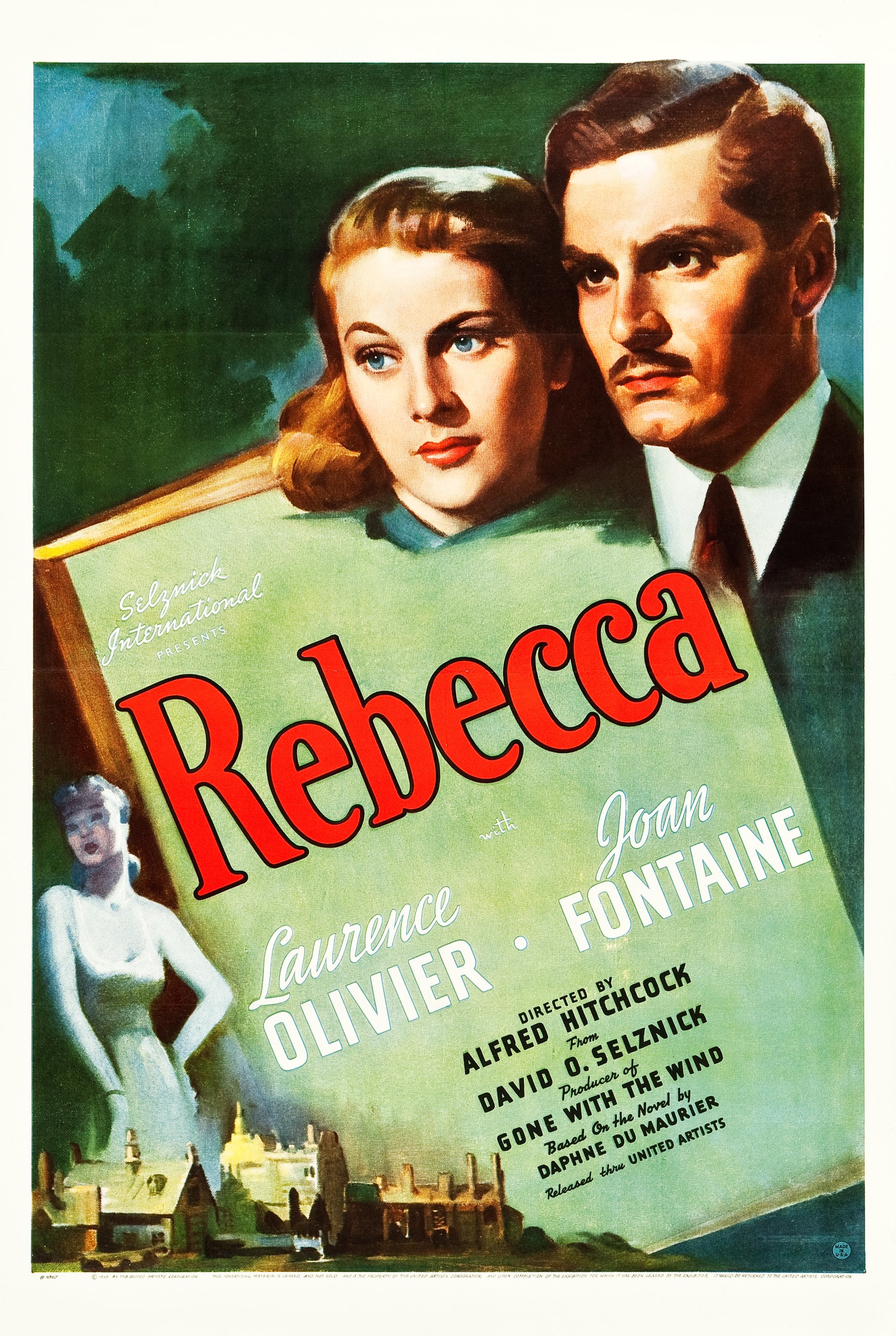
Behind the film
- Year
- 1940
- Director
- Alfred Hitchcock
- Writers
- Robert E. Sherwood, Joan Harrison
- Genres
- Mystery, Drama, Romance, Thriller
- Production
- Selznick International Pictures
- Country
- United States
- Cast
- Laurence Olivier, Joan Fontaine, Judith Anderson, George Sanders, Reginald Denny, Gladys Cooper, C. Aubrey Smith, Florence Bates
About the film
Contains story spoilers.
Rebecca follows an unnamed young woman who works as a paid companion to the socially ambitious Mrs. Van Hopper. On the French Riviera she meets Maxim de Winter, a wealthy widower who seems so troubled that she first encounters him at a cliff edge. Their conversations and excursions draw her out of the routine of her employment, and she falls in love with him. When Mrs. Van Hopper abruptly plans to leave Monte Carlo, Maxim proposes. The young woman accepts, though she knows little about his former life. Her employer warns that he may be using marriage to escape memories of Rebecca, his first wife, and that Manderley will be a hard place for a shy newcomer to inhabit.
At Manderley, Maxim’s Cornish estate, the new bride finds that Rebecca is absent yet everywhere. Mrs. Danvers, the housekeeper, remains fiercely loyal to the dead mistress and preserves Rebecca’s rooms and possessions as if her return were still possible. She shows the new Mrs. de Winter the bedroom, clothes and monogrammed objects, making the contrast between the glamorous predecessor and the inexperienced bride feel unavoidable. The house’s staff and routines have already been shaped around Rebecca. The new wife struggles to ask questions or assert herself, while Maxim’s silences leave her unsure whether he loves her or expects her to become the same kind of hostess. The new wife’s namelessness is reinforced by how people address her through her new title rather than an identity of her own. She is asked to manage a household where Rebecca’s name still organizes daily conversation, and her attempts at ordinary self-assertion seem almost improper. Even the preserved suite works like a forbidden exhibit: Danvers can enter and display it, while the bride has no authority to alter or occupy it. This makes her insecurity part of the architecture, not just a personal flaw.
Mrs. Danvers engineers a costume-ball humiliation by persuading the new wife to copy a dress from a portrait. When Maxim sees her wearing the costume, he reacts with alarm because Rebecca wore the same outfit at her last ball. The mistake deepens the bride’s belief that she has failed to understand her husband’s household and that Rebecca remains the true center of his affection. Danvers then presses her toward suicide, urging her to jump from an upstairs window. A ship runs aground offshore at that moment, and during the rescue effort a submerged boat is found with Rebecca’s body inside. The discovery breaks the surface calm at Manderley and brings the past into a legal inquiry.
Maxim now tells his wife what he has concealed: his marriage to Rebecca was miserable, and she had made clear that she would pursue other lovers while maintaining the appearance of a perfect marriage. In an argument, Rebecca implied she was pregnant by her cousin Jack Favell and taunted Maxim about the future of the estate. Maxim struck her; she fell, hit her head on ship’s tackle and died. He placed her body in a boat and sank it, then identified a different body when one later washed ashore. The confession reverses the new wife’s understanding of Maxim’s grief. What looked like devotion to Rebecca was fear of exposure and guilt over concealing her death.
At the inquest, Favell tries to use Rebecca’s letter as evidence that she had been pregnant and therefore unlikely to have taken her own life. He attempts to blackmail Maxim, who alerts the authorities rather than paying him. A doctor’s account of Rebecca’s illness reveals that she had terminal cancer and was not pregnant; the investigation accepts the possibility that she had been contemplating suicide, leaving Maxim legally cleared. The film gives the second Mrs. de Winter a new confidence after the confession, but her change does not erase what she has learned about violence, shame and the power that Rebecca retained over the household even after death.
When Maxim returns to Manderley, the house is burning. Mrs. Danvers has set the fire, unable to relinquish the home and the memory she served. The new Mrs. de Winter and the staff escape, while Danvers remains inside Rebecca’s room and dies as the ceiling collapses. The ending destroys the physical structure that made the past seem permanent, but it does not turn the story into a simple escape from memory: Maxim and his wife have to leave their old life behind with the mansion. The film’s central mystery resolves through confession and medical evidence, while the final fire gives the emotional conflict a visible, irreversible consequence.
Hitchcock’s first Hollywood production makes Manderley feel like a system of power as much as a home. The unnamed heroine’s lack of a personal name in the story reinforces her uncertain place, while Rebecca’s monogram and preserved belongings seem to give the dead woman a stronger presence than the living wife. Mrs. Danvers controls access to the rooms and objects, and the camera’s attention to those spaces makes the house’s history tangible. The film adapts Daphne du Maurier’s novel but changes the circumstances of Rebecca’s death: the 1940 film makes it accidental, with Maxim striking her and concealing the body, rather than reproducing the novel’s murder account. The contrast between the social world of Monte Carlo and the tightly controlled estate also marks the bride’s transformation. Early on, she can hide her outings from Mrs. Van Hopper and experience a measure of freedom; at Manderley, every corridor appears to return her to somebody else’s story. Once Maxim discloses the truth, she gains knowledge and a shared position with him, but the fire removes the setting that held that uneasy marriage together. The concluding destruction changes their circumstances without guaranteeing a comfortable future.