
Behind the film
- Year
- 1936
- Director
- Charlie Chaplin
- Writers
- Charlie Chaplin
- Genres
- Romantic comedy, Comedy drama, Silent, Tragicomedy
- Production
- Charlie Chaplin Studios
- Country
- United States
- Cast
- Charlie Chaplin, Paulette Goddard, Henry Bergman, Chester Conklin, Tiny Sandford, Al Ernest Garcia, Edward LeSaint, Gloria DeHaven
About the film
Contains story spoilers.
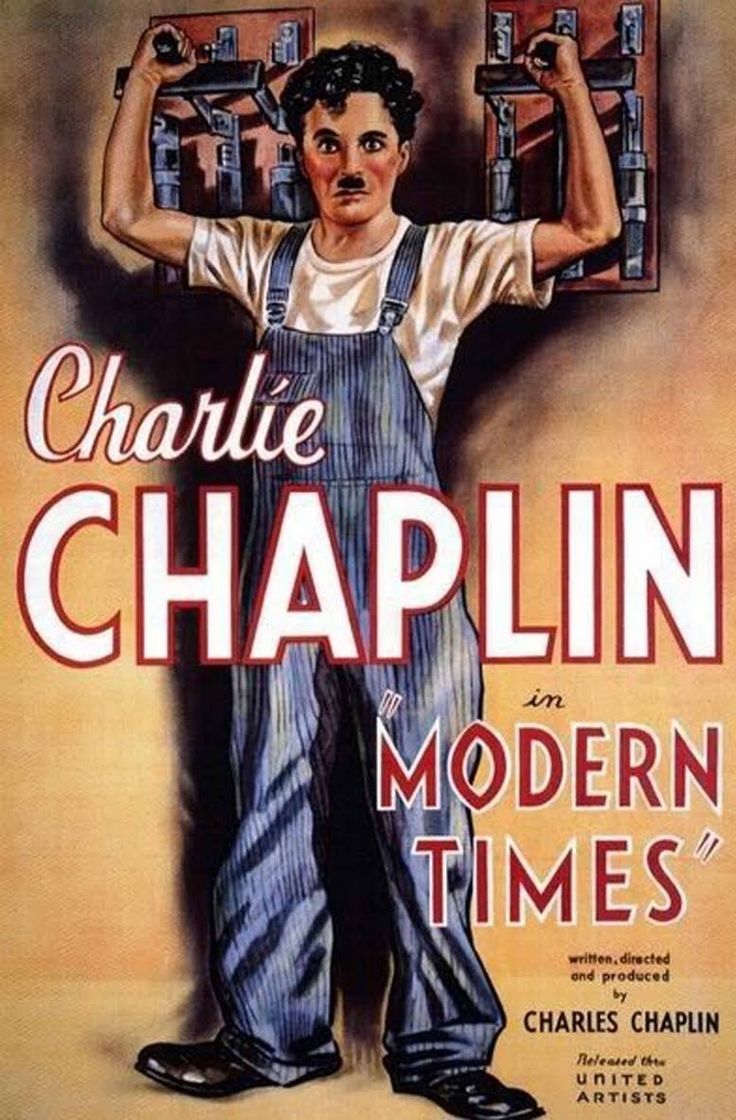
Modern Times places its little worker inside a system that has already decided how fast his body should move. On a factory assembly line, he tightens bolts while the belt carries more work toward him, leaving little room for hesitation or ordinary human needs. Charlie Chaplin builds the comedy through repeated movement: the task continues in the worker’s muscles even when the machinery no longer requires it. The opening’s images of crowds and industrial scale make the individual look small, but the precision of the performance keeps his discomfort visible. A supposedly efficient arrangement becomes absurd when its rhythm must be maintained at the expense of the person performing it.
A feeding-machine demonstration pushes the same idea further, promising to eliminate the interruption of a lunch break. The worker becomes the subject of an experiment whose claims of convenience collapse into physical chaos. His breakdown subsequently disrupts the factory, and he is sent away to recover. Those scenes turn the workplace into more than a setting for slapstick. Screens, controls and production targets allow management to appear almost everywhere while the worker has little control over his own pace. The machinery can perform impressive movements, but it cannot recognize when the person beside it has reached a limit. Chaplin’s agility makes that mismatch comic without making the exhaustion disappear.
After leaving the hospital, the worker is caught in a different kind of machinery: public events and the authorities’ assumptions. He picks up a flag that has fallen from a vehicle and inadvertently appears to be leading a demonstration, resulting in his arrest. In prison, another accidental sequence leaves him credited with preventing an escape, and the resulting comfortable treatment makes release less attractive than it ought to be. The reversal is important. A place intended as punishment can offer greater security than the outside world, where food, work and shelter remain uncertain. His search for a way back to jail therefore becomes a distorted version of a reasonable desire to know where tomorrow’s meal will come from.
Paulette Goddard’s young woman faces the same insecurity through a different history. She steals food for her family, then escapes the officials who try to take the children into custody after her father’s death. When she is caught taking bread, the worker tries to claim responsibility, and the two eventually escape together from a police vehicle. Their partnership gives the episodic story a continuing emotional center. She brings energy and initiative into his life, while he offers loyalty and an imagination capable of finding pleasure amid inadequate circumstances. Neither has the means to solve the economic crisis around them, but they can stop facing each new setback entirely alone.
A job as a department-store night watchman briefly opens an extraordinary space to the pair. Food, furniture and consumer goods surround them after closing, creating a temporary version of the comfort they have imagined. Chaplin’s roller-skating sequence turns the store into a playground while placing danger at the edge of the performance. Burglars interrupt the night, and their need complicates the ordinary distinction between respectable workers and criminals: hunger has pushed former factory men toward taking what they cannot buy. The worker again ends up in trouble. The abundance on display has not become a secure livelihood, reminding the couple how different access for one night is from having a place in the world that sells it.
The young woman finds a dilapidated shelter and presents it as their home, allowing domestic pleasure to emerge in an environment that plainly cannot offer lasting comfort. The worker returns to industrial employment when another opportunity appears, but the factory’s reopening does not end the instability. Mechanical mishaps continue, and labor conflict brings further disruption. The film makes each apparent solution temporary: a job can disappear, shelter can prove unsafe, and a helpful gesture can be read as an offense. These reversals give the comedy its recurring shape while keeping the couple’s hopes modest. They are not seeking command over the machinery or extravagant wealth, only enough continuity to live together without the next interruption swallowing everything.
A restaurant job finally seems to reward the worker’s performance rather than demand that he fit a repetitive mechanical function. Hired as a waiter who must also sing, he loses the written words prepared for him and improvises a number in comic nonsense language. The sequence lets Chaplin’s voice enter the character’s world without requiring ordinary dialogue to replace his physical expression. Gesture, rhythm and vocal invention make the act understandable to the patrons even though the words do not convey a conventional account. Success arrives through responsiveness and imagination, qualities that the assembly line had treated as obstacles. Yet officials searching for the young woman interrupt the prospect of stability again, and the pair must leave.
The final road offers no guaranteed employment or permanent home. Instead, the two continue together, with the worker encouraging his companion before they walk toward the distance. Chaplin wrote, directed, performed in and composed music for a film that uses sound selectively alongside the visual language of his earlier comedies. Mechanically transmitted speech, industrial noise and music give the modern world an audible presence, while the central relationship remains rooted in movement and expression. The ending’s hope is therefore specific rather than a claim that the social problems have been repaired. Work has failed them repeatedly and institutions have misunderstood them, but they retain someone beside them and the ability to imagine another attempt.