
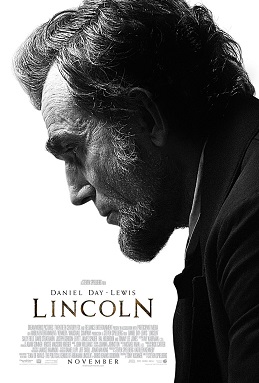
Behind the film
- Year
- 2012
- Director
- Steven Spielberg
- Writers
- Tony Kushner
- Genres
- War, Biographical, Trial, Drama
- Production
- 20th Century Studios, Imagine Entertainment, Amblin Entertainment
- Country
- United States
- Cast
- Daniel Day-Lewis, Sally Field, David Strathairn, Joseph Gordon-Levitt, James Spader, Hal Holbrook, Tommy Lee Jones, John Hawkes
About the film
Contains story spoilers.
Lincoln concentrates on the work of making a decision binding. The Civil War is approaching its end, but President Abraham Lincoln fears that military emancipation may not survive the legal and political arrangements of peace. He wants the Thirteenth Amendment passed by the House of Representatives while the opportunity remains. Steven Spielberg's film treats that objective as a struggle conducted through conversations, counts of votes and competing promises. Washington is full of people who can agree on an outcome while disagreeing about its timing, its meaning or the cost of securing it. A president's stated intention cannot by itself make any of them cooperate.
Tony Kushner's screenplay gives the arguments room to develop instead of reducing every opponent to a single obstruction. Lincoln needs conservative support as well as votes from departing Democrats. Secretary of State William Seward helps organize the practical campaign, while Francis Preston Blair presses for negotiations with the Confederacy. Offering peace could weaken the urgency of the amendment, yet refusing Blair could lose essential allies. The president therefore has to manage two processes that may undermine each other. Agents approach legislators with the prospect of government jobs, bringing political persuasion into an uncomfortable proximity to personal advantage. The film makes those dealings visible without suggesting that a worthwhile result turns every method into an uncomplicated virtue.
Thaddeus Stevens faces another kind of negotiation, this time over what he can publicly say. His commitment to racial equality runs beyond what some potential supporters will accept. During the House debate, he restricts his argument to equality before the law rather than allowing opponents to turn his broader convictions into a reason to defeat the amendment. Tommy Lee Jones lets the concession register as an effort, not a sudden change of belief. The debate becomes a contest over the consequences of language. A sentence can express a principle, expose somebody's prejudice or provide the pretext for withholding a vote; Stevens has to judge which use it will have in that room.
At home, the war has a different scale. Mary Todd Lincoln lives with bereavement and fears losing another son, while Robert wants to enter military service rather than remain protected by his father's position. Sally Field and Joseph Gordon-Levitt give these disagreements their own force. They are not simply domestic interruptions of important national work. Lincoln's decisions already reach into the family, and the family can expose the limits of his reassuring stories. Field's Mary can challenge him with an intimacy no cabinet member possesses. The scenes make it possible to see political patience and personal avoidance in the same man, without assuming that either cancels the other.
The congressional vote is staged as a sequence of individual commitments, each carrying a possibility of reversal. Rumors of Confederate representatives threaten to postpone it, and Lincoln carefully distinguishes their whereabouts from the larger question of whether negotiations exist. The amendment passes; Stevens takes the result home to Lydia Smith, making an institutional victory briefly personal. The later scenes move through failed peace talks, the end of the war and Lincoln's death. The shooting itself is not turned into an action climax. News interrupts a performance attended by Tad, and the narrative ultimately returns to the president's inaugural words. The achievement survives him, while the work still required by that achievement remains outside the film's ending.
Daniel Day-Lewis gives Lincoln a voice that can seem unexpectedly light beside the weight of his position. His conversational manner allows a story or an anecdote to delay an argument, redirect it or make somebody reconsider what they thought was settled. The apparent softness becomes another instrument of authority. When he finally insists on action, the change is noticeable because so much of the performance has depended on listening and waiting. David Strathairn's Seward supplies a different rhythm: practical concern, irritation and awareness of what a proposal will require from other people. Their exchanges make government look like continuing work between distinct temperaments rather than the automatic expression of one great individual's will.
The surrounding performances prevent Washington from becoming a backdrop populated only by solemn faces. James Spader's William Bilbo brings the hustling energy of the vote-gathering operation into rooms where lofty aims need very ordinary persuasion. Hal Holbrook's Blair represents an older political force whose support comes with conditions. Jones's Stevens can be cutting, but the effort to contain that sharpness is as revealing as an insult. The crowded scenes let reactions accumulate around the principal speaker. Somebody may be persuaded, offended, entertained or merely waiting for a chance to object. That variety is useful to the drama: the viewer can follow a contested proposal without being told that all its listeners occupy one moral or political category.
Janusz Kaminski's images often place people among doorways, desks and pools of light, so access to a room becomes part of access to power. Legislative space contrasts with the intimacy of a family argument, but both depend on who can speak and who must wait. The film is a historical dramatization, not a transcript of every meeting or a complete account of emancipation. Its chosen focus is narrow enough to show procedure in detail: securing commitments, holding allies together and deciding when compromise preserves an objective rather than destroys it. The accumulated conversations give the final vote its weight. It is an event the characters have had to make possible, with uncertainty remaining until the names are called.