
Behind the film
- Year
- 2007
- Director
- Sean Penn
- Writers
- Sean Penn
- Genres
- Docudrama, Drama, Biographical, Road movie
- Production
- Paramount Vantage
- Country
- United States
- Cast
- Emile Hirsch, Jena Malone, Marcia Gay Harden, William Hurt, Catherine Keener, Vince Vaughn, Kristen Stewart, Hal Holbrook
About the film
Contains story spoilers.
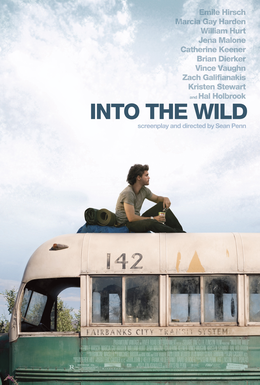
Into the Wild moves between the Alaska where Chris McCandless is trying to survive and the earlier choices that brought him there. The film opens as he reaches the country near Denali and makes a home in an abandoned bus, which he names the Magic Bus. His journal and reading give shape to his solitude, but the film does not present his arrival as a self-sufficient triumph: the driver who drops him off notices how poorly equipped he is and lends him boots. The bus becomes shelter, diary room and eventually the fixed point around which memories of his journey gather.
The flashbacks begin with Chris’s graduation from Emory. He rejects the career path his parents imagine for him, donates his savings, destroys his identification and leaves without telling them where he is going. His sister Carine’s narration gives the family’s history an intimate counterpart to his flight: she understands his anger but is hurt by his silence, while their parents search for an explanation as days turn into months. At Lake Mead, a flood disables Chris’s car; rather than repair his connection to the life he left, he burns the remaining cash and continues on foot as Alexander Supertramp.
On the road, Chris’s encounters show that independence does not mean being untouched by other people. He meets Jan and Rainey, a traveling couple whose relationship is strained, and helps them reconnect before moving on. In South Dakota he works for Wayne Westerberg’s harvesting operation, finding structure and camaraderie in a temporary job. He leaves when Wayne is arrested, then kayaks down the Colorado River despite warnings, crosses into Mexico and eventually returns north. He dislikes the machinery of modern life, but the people he meets repeatedly offer shelter, work and a sense of belonging he will later miss.
At Slab City, Chris encounters Jan and Rainey again and meets Tracy, a teenager who is interested in him. He declines to pursue her because she is underage, then continues his journey toward Alaska. Ron Franz offers a quieter kind of connection. A retired widower living alone after losing his family, Franz teaches Chris leatherworking, and Chris makes a belt that marks the places he has traveled. Franz asks to adopt him as a grandchild and gives him equipment for the trip north. Chris says they can discuss it after he returns, leaving Franz with an attachment and a promise that the film knows may never be fulfilled.
Back in Alaska, the seasons turn against Chris’s confidence. He hunts a moose but cannot preserve the meat before it spoils, and his supplies diminish. When he decides to return, the stream he crossed on the way in has swollen with thaw and becomes too dangerous to ford. He retreats to the bus and tries to live on plants, misidentifying one and becoming gravely ill. The film focuses on practical consequences rather than framing the wilderness as an enemy with intentions: food storage, seasonal water and limited knowledge determine whether his plans can work.
As he weakens, Chris’s thoughts turn toward the people he left. His journal records a growing recognition that happiness is incomplete when it cannot be shared; he imagines returning to his family and writes a final message before dying in the bus. Hunters find his body weeks later, and Carine returns home carrying his ashes. Sean Penn’s adaptation uses the road’s episodic encounters to make Chris’s charisma and stubbornness visible at once. The soundtrack and broad landscapes give movement a sense of possibility, while the recurring Alaska scenes hold the consequences in view. The film is based on a nonfiction account, but its intimate memories and dramatized scenes remain a film’s shaping of the story.
The film’s non-linear editing keeps the bus present as a destination and a warning while Chris’s earlier stops unfold. His sister’s voice gives the flashbacks a family perspective that Chris himself cannot supply, and scenes with Jan, Rainey and Franz show different versions of chosen kinship. Yet the film does not make those connections a simple cure for his restlessness: each time he accepts care, he still moves on. That tension makes his eventual wish to return feel earned by the people he met, while also underlining how difficult it is to reverse a journey once practical conditions have changed.
The family flashbacks explain why leaving matters to Chris, rather than making him an abstract figure who simply prefers scenery to employment. His discovery of his father’s earlier family and his memories of conflict at home undermine the comfortable image his parents present. William Hurt and Marcia Gay Harden play that family pressure, while Jena Malone’s Carine remains a connection he abandons alongside it. Catherine Keener’s Jan and Hal Holbrook’s Franz offer less conventional possibilities for belonging on the road. Chris can accept their affection without abandoning his chosen identity, yet he repeatedly treats staying as a surrender. Sean Penn’s screenplay adapts Jon Krakauer’s book; its private exchanges and remembered scenes are dramatization, not recorded evidence of every conversation.