
Behind the film
- Year
- 2008
- Director
- Martin McDonagh
- Writers
- Martin McDonagh
- Runtime
- 1h 47m
- Genres
- Buddy, Drama, Comedy, Crime
- Production
- Focus Features, Film4 Productions
- Country
- United Kingdom, United States
- Cast
- Colin Farrell, Brendan Gleeson, Ralph Fiennes, Clémence Poésy, Jordan Prentice, Thekla Reuten, Eric Godon, Željko Ivanek
About the film
Contains story spoilers.
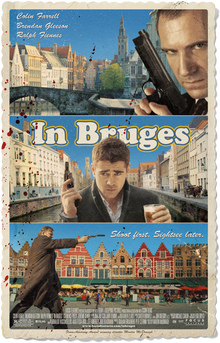
After an inexperienced hitman named Ray accidentally kills a child during his first assignment, his boss Harry sends him and mentor Ken to Bruges to wait for instructions. Ken finds the Belgian city beautiful; Ray is restless and ashamed. He meets Chloë, a local who works around a film shoot, while trying to live normally. Harry eventually orders Ken to kill Ray because a child’s death is unforgivable. Ken cannot go through with it and helps Ray leave, but Ray is returned to Bruges by police. Harry arrives, and the conflict ends with Ken dead, Ray shot, Harry killing himself after mistakenly thinking he has killed a child, and Ray carried away in an ambulance, uncertain whether he will survive.
Bruges is more than a picturesque waiting room. Ken responds to the city’s architecture and quiet as if it offers a temporary refuge, while Ray experiences the same surroundings as an unwanted pause. Their opposing reactions shape how the audience moves through the place. A canal, square, church, or tower can be a point of beauty and also a site where a decision becomes unavoidable. The film’s humour depends on Ray refusing the reverence Ken feels, but the disagreement gradually becomes a difference in how each man understands the possibility of starting over.
Ray’s guilt is the emotional center of the story, although his first instinct is to bury it under boredom, irritation, and jokes. His talk is fast and defensive; Farrell lets an apparent swagger crack when the boy’s death returns to his thoughts. The film does not treat the accidental nature of the killing as a clean excuse. Ray knows he caused it and cannot find a way to make the knowledge bearable. His hopelessness is made visible through his isolation even when he is surrounded by tourists, performers, and people attempting to enjoy themselves.
Ken’s care for Ray makes his assignment from Harry a moral test rather than a routine act of obedience. Gleeson plays him as patient and observant, someone who takes the city seriously and sees that Ray is trying to punish himself. He does not pretend the child’s death is minor; instead, he separates accountability from the idea that Ray must be killed. Their conversations reveal a hierarchy built on loyalty but not without ethical limits. Ken’s choice to help Ray leave turns mentorship into an act of defiance, and the consequences expose the cost of refusing Harry’s rules.
Harry’s code is absolute, and Ralph Fiennes performs its rigidity with an unnerving mix of courtesy and volatility. The boss regards an order as a binding moral statement until a contradiction forces him to confront his own standards. The dark comedy comes from how quickly formal politeness and extreme violence can occupy the same scene. Harry is not written as an abstract monster detached from the others; he believes in a rule and acts as though consistency can excuse anything. The story tests that belief through a mistaken perception that echoes Ray’s original accident.
McDonagh sets comic dialogue beside grief without using one to cancel the other. A complaint can have the speed and timing of a joke while carrying the defensiveness of somebody who cannot comfortably remain still. The film gives the men ways to keep speaking, then makes clear that speech cannot repair the damage they are avoiding. This produces a distinctive kind of intimacy: affection can be expressed through impatience, and a disagreement about sightseeing can reveal something more painful than taste. Humour allows these contradictory feelings to coexist without turning the characters into examples of a single moral position. Their conversations remain lively because neither the joke nor the suffering completely explains the person making it.
The film production inside the story gives Bruges another layer of performance. The city can be a real place, a picturesque image and a setting for somebody else's invented world at the same time. That layering suits characters who are accustomed to treating roles as explanations for what they do. Mentor, employee and boss each carry expectations that can sound fixed until a decision makes them untenable. McDonagh uses the contrast between those roles and the people inhabiting them to complicate responsibility. An assigned part cannot settle every obligation. The film's carefully composed surroundings make that problem more visible, because the men cannot make their private turmoil fit the attractive picture around them.
The beauty of Bruges offers no easy answer to the men's problem. A place can seem peaceful while the people inside it carry a violence that has nothing to do with the setting's appearance. McDonagh uses that mismatch to make remorse more specific than a solemn mood. Ray has to keep encountering ordinary life, including its pleasures and irritations, while knowing what he has done. The comedy makes that continued contact possible without supplying absolution. Ken's patience and Harry's rigid standards offer competing responses to the same wound, and neither can make the past reversible. The film's moral pressure comes from asking what remains possible after responsibility has been acknowledged. Its characters can name a rule or feel an emotion, but living according to either one is more difficult than talking about it.