
Behind the film
- Year
- 2008
- Director
- Clint Eastwood
- Writers
- Nick Schenk
- Genres
- Drama, Crime, White savior
- Production
- Warner Bros. Entertainment, Village Roadshow Pictures, Malpaso Productions
- Country
- United States, Australia, Germany
- Cast
- Clint Eastwood, Bee Vang, Ahney Her, Christopher Carley, John Carroll Lynch, Brian Haley, Geraldine Hughes, Dreama Walker
About the film
Contains story spoilers.
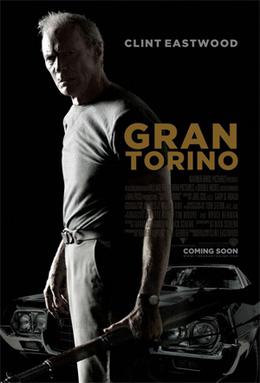
Gran Torino places an old car between a man’s idea of the past and a younger neighbour’s possible future. Walt Kowalski has preserved his Ford carefully, but his relationships are in much poorer condition. Clint Eastwood directs and plays the widowed veteran in this 2008 drama, with Nick Schenk’s screenplay following an encounter that starts as a threat to Walt’s property and becomes a challenge to the life he has built around it. The car represents work, ownership and a sense of continuity he can still control. The people living beside him do not fit his expectation of what the neighbourhood should be. That makes the first meeting with Thao an especially charged one: a young man under pressure approaches the object Walt values, and Walt initially sees an intruder rather than someone in need of help.
Thao is pushed by a gang into trying to steal Walt’s Gran Torino. After the attempt fails, work undertaken for Walt develops into an uneasy friendship, while Thao’s sister Sue helps draw the older man into her family’s life. Walt’s intervention against the gang escalates the conflict; Sue is subsequently assaulted, and Thao wants revenge. Walt prevents him from joining the final confrontation, then approaches the gang alone and unarmed. His sudden reach into his jacket makes them shoot him in view of witnesses. His death leads to their arrest. After his funeral, the will leaves the Gran Torino to Thao, who drives it with Walt’s dog beside him.
Eastwood’s Walt is deliberately difficult company. His racism, insults and suspicion are part of how he keeps other people at a distance, alongside grief and a pride that makes receiving help feel like defeat. The film allows a friendship to challenge those habits without making the habits harmless. People have to negotiate them, and their responses do not all take the same form. Ahney Her’s Sue can answer Walt and explain aspects of her family’s life without becoming intimidated by his manner. Bee Vang’s Thao is less verbally assured, with the gang placing him in situations he has not freely chosen. Their different ways of dealing with Walt keep the relationship from being a single lesson delivered to a grateful young person. They introduce needs, judgements and knowledge he does not possess.
The neighbourhood is the film’s main arena. A porch, a lawn, a garage and the distance between neighbouring homes become places where belonging is challenged or offered. Walt can observe people nearby for years without understanding them, because proximity alone does not create a relationship. Sharing food or working on a task changes the terms of contact more effectively than looking across a property line. His practical skills give him something to contribute, while the neighbours supply company he cannot obtain by keeping everything as it was. The story links that exchange to the car’s meaning. Preserving an object is only one form of continuity; passing knowledge and opportunity to another person can make the past useful without demanding that the future repeat it.
Father Janovich adds another approach to Walt’s isolation. Christopher Carley plays a young priest who continues trying to reach a man openly dismissive of him. Their conversations bring questions of confession and regret into a character who would rather discuss what other people have done wrong. Walt’s war memories complicate his instinct to treat force as an uncomplicated solution. A weapon can settle the immediate balance of power while leaving its user with a burden that lasts far longer. The film gives that history a bearing on Thao’s future, making Walt’s eventual concern about the young man’s wish for revenge more than a general warning. He recognises the desire to act and also the possibility that acting will produce something the person cannot later put down.
The escalation makes Walt’s earlier confidence in intimidation costly. Standing up to the gang may earn respect, but the consequences fall on people he cannot keep under constant protection. The film’s turn towards the final confrontation therefore concerns the limits of his familiar methods. Thao wants to join him in the kind of violent answer their situation seems to demand; Walt deliberately stops that repetition. The ending uses the expectation that Eastwood’s character will reach for a gun, then reveals a different choice. His body remains vulnerable even as he controls the circumstances of the encounter. The witnesses matter because the result must exist beyond a private exchange of threats. The story directs its conclusion towards public accountability, while leaving the loss of Walt as the price of that route.
That conclusion makes the transfer of the Gran Torino more significant than a sentimental inheritance. Thao receives something Walt had guarded against him at the beginning, and the final drive moves beyond the properties where so much of the conflict occurred. The car carries the older man’s presence without keeping Thao confined to his attitudes. Gran Torino remains a fictional story centred on Walt’s transformation, rather than a comprehensive portrait of Hmong American life or an account of an entire neighbourhood. Its racial language and violence belong to that difficult transformation, and the surrounding characters deserve to be understood as people affected by it. The film brings grief, work, prejudice and guilt into a relationship that changes what an older man is willing to leave behind, and who he is willing to trust with it.