
Behind the film
- Year
- 1972
- Director
- Gerard Damiano
- Writers
- Gerard Damiano
- Genres
- Pornographic, Comedy, Comedy porn
- Production
- Arrow Productions
- Country
- United States
- Cast
- Linda Lovelace, Harry Reems, Dolly Sharp, Carol Connors
About the film
Contains story spoilers.
Deep Throat is a film whose public meaning became much larger than the story it contained. Discussion of it can therefore go wrong by treating notoriety as though it were already an explanation. Being widely talked about establishes attention, not artistic quality, freedom within production or agreement about what a work represents. Its place in adult-film history makes those distinctions especially necessary. A title can become shorthand for an era while the people behind it remain hidden beneath that shorthand. Understanding this film requires keeping the commercial image and the performer's later account close enough to one another that neither is allowed to stand as an uncomplicated summary.
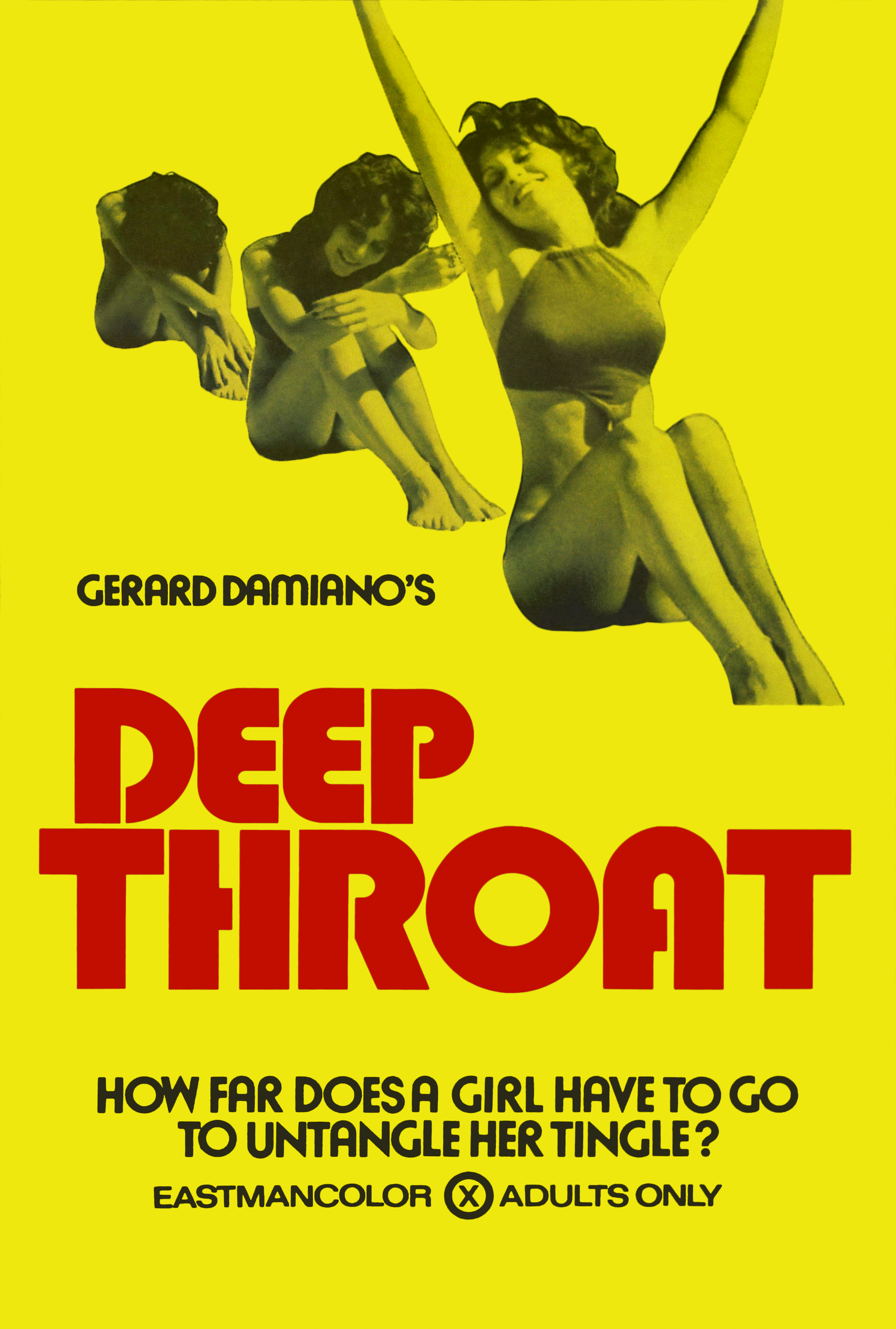
Gerard Damiano wrote and directed the 1972 film under the credit Jerry Gerard. Linda Lovelace, Harry Reems and Dolly Sharp appear in it. The work is explicit adult cinema, though its narrative can be described without reproducing its sexual material: a woman seeks help with dissatisfaction, receives an impossible anatomical explanation and follows a series of encounters towards a conventional romantic conclusion. The invented premise is a comic device, not medical information. Its story provides a connecting arrangement for material whose purpose differs from the dramatic use of intimacy in an ordinary romance, so a useful account should be clear about the kind of film under discussion.
The thin medical-comedy framework gives the central character a problem that other people claim to explain and solve. That is worth examining at the level of narrative rather than repeating the explicit scenes. A supposedly authoritative explanation turns uncertainty into a simple discovery, and the conclusion restores a familiar promise of personal fulfilment. The arrangement makes the film's transgressive identity coexist with a conventional ending. A work can challenge what is publicly shown without challenging every assumption through which its story assigns happiness, expertise or direction. Sexual visibility and narrative freedom are related questions, but they are not interchangeable measures of what a film does.
Its wider notoriety placed adult cinema inside a public conversation about liberation and permissibility. Yet those terms can conceal several different questions. What audiences may watch, what distributors can sell and what performers freely agree to do are not the same issue, even when publicity encourages them to appear as one shared cause. A defence of access does not by itself establish conditions of production, and a commercially successful image does not prove that the person made visible through it controlled that image. The film's history is useful to consider because it exposes how easily attention to public controversy can leave the more immediate circumstances of work unexamined.
Lovelace later described coercion and abuse around the production, making the triumphant account of sexual freedom impossible to treat as settled. Her account should be attributed to her rather than erased by the image attached to her screen name. It changes the relevant question from whether a film looked liberated to whether the performer had the freedom that appearance was taken to represent. A smile, a role or a promotional identity cannot establish consent on its own. This is a distinction about evidence and agency, not a claim that an audience can diagnose every production circumstance merely by watching the finished work.
The separation between a performer and a public persona is especially important here. A screen identity can become a commodity that other people continue to recognise after the person associated with it has offered a different account of their life. That recognition may feel like familiarity while actually preventing attention to what the person says. The historical discussion therefore needs more than the repetition of a famous name and an era's slogans. It needs room for a person to contradict the meaning assigned to them. Fame can amplify an account, but it can also make an existing image unusually resistant to correction because that image remains useful to others.
The film also raises a problem for retrospective writing: explanation can accidentally reproduce the promotional simplification it intends to examine. Calling something a landmark can make commercial visibility appear automatically worthy of celebration, while calling it notorious can allow scandal to replace description. Neither word settles what happened to the people involved. A careful account can identify the work, explain its narrative form and acknowledge its historical attention while remaining clear about the limits of that account. Its significance does not require explicit scene descriptions or an invitation to treat the fictional premise as sexual instruction, and its history should not be compressed into a reassuring story of inevitable progress.
Deep Throat becomes most intelligible when its public image is considered alongside the account that challenges it. The contrast does not require erasing its place in film history; it requires refusing to let that place dictate how its performer must be remembered. A work can remain culturally recognisable while the meaning of its recognition changes. This entry therefore approaches it through narrative form, publicity and agency, with the explicit material left undescribed. The lasting question is about who gets to explain a visible life: the product through which somebody became famous, or the person whose later words ask that fame to be understood differently.