
Behind the film
- Year
- 2015
- Director
- Kenneth Branagh
- Writers
- Chris Weitz
- Runtime
- 1h 45m
- Genres
- Cinematic fairy tale, Romance, Fantasy, Adventure
- Production
- Walt Disney Pictures, Allison Shearmur Productions, Beagle Pug Films
- Country
- United States, United Kingdom
- Cast
- Lily James, Cate Blanchett, Richard Madden, Helena Bonham Carter, Holliday Grainger, Sophie McShera, Stellan Skarsgård, Derek Jacobi
About the film
Contains story spoilers.
Ella’s mother asks her to remain courageous and kind. After both parents die, Lady Tremaine and her daughters make Ella a servant in her own home. She meets Kit in the woods without knowing he is the prince, then hopes to see him at the royal ball. Her stepfamily destroys her dress, but a fairy godmother provides magical transport, a gown and glass slippers. Ella leaves before midnight, losing one slipper. Tremaine discovers her identity, breaks the other slipper and confines her while bargaining with the Grand Duke. Kit’s search reaches the house, where Ella’s singing reveals her presence. The surviving slipper fits, and she leaves with him, forgiving Tremaine. Their marriage gives the familiar tale its happy conclusion, with Ella’s guiding values carried into her new position.
This version takes the fairy tale’s sincerity seriously. Rather than treating kindness as something that needs to be disguised with irony, it asks what maintaining it might require in an unkind environment. That choice gives the story a clear emotional centre. Ella’s manner is not evidence that she cannot recognise mistreatment; it is a principle she tries to preserve when other people attempt to define her through humiliation. The tension comes from whether gentleness can remain a choice under pressure. The film’s answer belongs to a deliberately idealised world, but the ideal is connected to endurance rather than to the absence of difficulty.
Lily James gives Ella an openness that keeps the romantic story close to the person at its centre. She can seem receptive without making receptiveness identical to dependence. The character’s attachment to her home and memories gives her situation an emotional geography: a familiar place can still matter after its everyday atmosphere has become hostile. That makes leaving more complicated than simply exchanging a poor room for a grand one. The story concerns the right to exist without having every part of oneself diminished by others. Its eventual change in circumstances matters because the film has given that diminishment a human weight before introducing the possibility of escape.
Cate Blanchett’s Lady Tremaine brings a carefully managed elegance to cruelty. Her appearance suggests command over presentation, which makes the contrast with her conduct especially sharp. Manners can become a way of establishing superiority rather than offering consideration. The character’s resentment also gives the domestic conflict a recognisable emotional logic without excusing it: insecurity can be turned outward and imposed on someone with less power. The film allows the viewer to look for that pressure beneath polished behaviour. This makes the antagonist more specific than a general embodiment of wickedness, while retaining the tale’s clear judgement that another person’s disappointment does not justify controlling Ella’s life.
Richard Madden’s Kit gives the royal side of the story a question of its own. A position can come with expectations that precede the individual occupying it, including assumptions about which relationships are useful and which choices are permissible. The romance works within that arrangement, asking whether recognition can survive a difference in status. Ella and Kit’s connection consequently has more meaning than an invitation into luxury. It offers the possibility of being met as a person before being treated as a role. In a setting organised around rank, that modest form of equality becomes one of the tale’s more important fantasies.
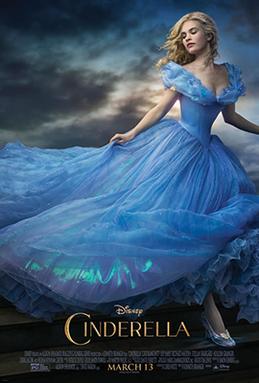
The visual world makes transformation tangible through clothes, interiors and movement. The ballroom’s abundance has force because ordinary domestic surroundings have already established a different relationship with the body: work, restricted space and practical clothing. The blue gown and glass slippers belong to a moment in which visibility changes what Ella can do. Yet the beautiful surface is not meant to create a worthwhile person from an unworthy one. It permits someone already present to be seen differently. That distinction gives the spectacle a narrative purpose, connecting its pleasure to recognition while allowing the viewer to enjoy the extravagance of a fairy-tale occasion.
Helena Bonham Carter’s fairy godmother introduces a looser comic energy into the film’s formal world. The contrast lets enchantment feel playful as well as impressive, giving the transformation sequence a personality rather than treating it solely as an exhibition of visual effects. That lightness provides space to enjoy possibility before the royal setting brings its own pressures into view. Its warmth makes magical help feel personal.
Kenneth Branagh’s film uses a screenplay by Chris Weitz to retain a straightforward story while giving relationships enough space to explain its emotional stakes. Its enchanted world is openly shaped by wish and moral pattern, so the happy ending should be understood within that form. Forgiveness does not require continued submission, and kindness does not make every arrangement acceptable. Those distinctions give Ella’s consistency a direction: preserving a value can include departing from a place where it is exploited. The film’s lasting image of change is therefore larger than an altered costume or social title. A life becomes possible in which the qualities that were mocked can be expressed without apology, and the pleasures of romance and spectacle grow from that possibility.