
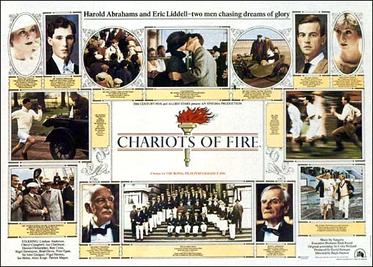
Behind the film
- Year
- 1981
- Director
- Hugh Hudson
- Writers
- Colin Welland
- Genres
- Biographical, Sport, Drama, Historical
- Production
- Allied Stars Ltd
- Country
- United Kingdom, Australia
- Cast
- Ben Cross, Ian Charleson, Nigel Havers, Nicholas Farrell, Ian Holm, John Gielgud, Cheryl Campbell, Alice Krige
About the film
Contains story spoilers.
The film opens at Harold Abrahams’s 1978 memorial service, then returns to the years before the 1924 Paris Olympics. At Cambridge, Abrahams is a gifted runner who experiences antisemitism among students and responds by turning speed into proof of his worth. He also participates in the university’s Gilbert and Sullivan society and falls for soprano Sybil Gordon. These parts of his life sit in tension: he wants love and belonging, yet treats athletic success as a contest he must win to answer every slight.
Abrahams’s style is disciplined and openly ambitious. After losing a race to Eric Liddell, he seeks professional coach Sam Mussabini, whose technical advice helps him improve his start and racing form. The decision brings criticism from Cambridge’s masters, who think a gentleman should not hire a professional. Abrahams hears class prejudice beneath the language of amateur ideals, and the film lets that argument matter as much as race times. His progress comes through deliberate training and a willingness to reject a social code that would limit him.
Liddell’s relationship to running is different. Born to Scottish missionary parents in China and raised in Scotland, he sees his speed as a gift that can honor God. His sister Jennie worries that competitive sport is pulling him away from missionary work, especially when a race causes him to miss a church prayer meeting. Liddell insists that running and faith are not rivals. He intends to return to missionary work, but believes he should not deny the ability he has been given.
The two men’s paths meet again as the British team prepares to travel to Paris. Aboard the ship, Liddell learns that the 100-metre heats are scheduled for Sunday. He refuses to run, even when the Prince of Wales and Olympic officials pressure him to reconsider. His decision threatens the team’s prospects, but teammate Lord Andrew Lindsay offers his place in the 400 metres, held on a Thursday. Liddell accepts and preaches at the Paris Church of Scotland while the 100-metre race takes place.
Abrahams faces a different pressure in the Olympic stadium. He loses the 200 metres to the favored American runners and knows the 100 metres is his remaining chance. The film brings his inner tension into the public race: years of training and resentment have narrowed his attention to this one event. Mussabini is barred from the stadium, so his coach waits outside while Abrahams runs. He wins, and the victory gives him a moment of release from social judgment while reopening the possibility of a life with Sybil.
Liddell’s 400-metre race becomes an answer to whether faith requires retreat from competition. His event is longer than his strongest distance, and his rivals expect to beat him; he nonetheless runs with confidence that his purpose is larger than medals. The paired endings do not collapse the men into a single moral. Abrahams’s triumph comes through technical preparation and ambition; Liddell’s comes through a choice that keeps his religious practice intact. Both are serious athletes rather than symbols detached from bodily effort.
Hugh Hudson directed Colin Welland’s screenplay around real Olympic athletes, while allowing chronology and supporting roles to serve the dramatic contrast. The film is therefore an interpretation of those lives rather than a literal record of every meeting or race. Its beach-running images and Vangelis’s electronic score create a reflective frame around the contests, joining the athletes before the story separates their motives. The modern sound does not try to imitate music from the period. It gives the physical effort a spacious rhythm, while uniforms, college architecture and formal dinners locate the characters within the institutions that expect them to behave in particular ways.
Ben Cross makes Abrahams’s determination both effective and exhausting. He can accept technical criticism from Mussabini because it promises improvement, yet finds social condescension much harder to absorb without turning it into another challenge. Ian Holm’s coach supplies a working relationship based on observation rather than inherited status, giving Harold someone whose approval follows effort. Ian Charleson’s Liddell speaks about his faith with a warmth that differs from Harold’s defensive intensity. His refusal to compete on Sunday is not a sudden dislike of winning: the film has already shown how much he enjoys running and how seriously he treats it. The supporting athletes create another texture of sporting life. Lord Andrew Lindsay’s relaxed confidence and willingness to offer his place contrast with the pressure Harold places on each result; Aubrey Montague’s companionship keeps ambition connected to friendship. Sybil’s frustration also makes Harold’s choices visible beyond the track, where another person cannot be expected to wait indefinitely for the next victory. The closing account of the runners’ later lives returns them to a world larger than the Olympics. For a brief time the stadium has brought their convictions into public focus, but it is not the only place those convictions must continue to be lived.