
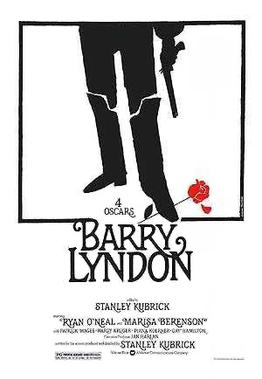
Behind the film
- Year
- 1975
- Director
- Stanley Kubrick
- Writers
- Stanley Kubrick
- Genres
- Drama, War, Period drama, Historical
- Production
- Hawk Films, Warner Bros. Entertainment
- Country
- United States, United Kingdom
- Cast
- Ryan O’Neal, Marisa Berenson, Patrick Magee, Hardy Krüger, Leon Vitali, Marie Kean, Godfrey Quigley, Michael Hordern
About the film
Contains story spoilers.
Barry Lyndon follows Redmond Barry from an impoverished Irish family into the salons and estates of eighteenth-century Europe. His father dies in a duel, and Barry becomes infatuated with his cousin Nora Brady. When Captain John Quin appears as Nora’s preferred suitor, Barry challenges him to a duel and believes he has killed him. He flees toward Dublin, is robbed by highwaymen and enlists in the British army. Captain Grogan later tells him that the duel was staged: the family had arranged it to remove Barry and secure Nora’s marriage to Quin. His first romantic ambition was already shaped by money and social maneuvering beyond his control.
Barry serves in Germany during the Seven Years’ War and deserts after Grogan dies in battle. Disguised in a lieutenant’s uniform, he tries to travel across the country but is recognized by Captain Potzdorf, who forces him into the Prussian army. Barry later saves Potzdorf’s life and receives a commendation from Frederick the Great. After the war, Potzdorf’s uncle recruits him into the Prussian Ministry of Police and assigns him to spy on the Chevalier de Balibari, an Austrian diplomat suspected of being an Irish gambler. Barry reveals his identity to the Chevalier, and they become collaborators rather than guard and prisoner.
The two men win a large sum from the Prince of Tübingen at cards, but the Prince accuses the Chevalier of cheating and refuses to pay. To avoid a public scandal, the Prussian authorities escort the Chevalier out of the country. Barry disguises himself as the older man and escapes as well. He and the Chevalier then travel through Europe, using gambling and sword duels to collect debts. At Spa, Barry meets Lady Lyndon, a wealthy and unhappy countess. He courts her and provokes her elderly husband, Sir Charles, into a fatal confrontation. Barry’s pursuit of social ascent now has a more direct target: marriage can offer him wealth and access to English high society, though a title of his own still eludes him.
Barry marries Lady Lyndon, takes her surname and settles into her estate. Their son Bryan becomes the focus of Barry’s affection, while Lord Bullingdon, Lady Lyndon’s son from her first marriage, resents Barry’s infidelity, spending and treatment of his mother. Barry’s mother warns him that Bullingdon will inherit everything if Lady Lyndon dies, so Barry courts the influential Earl of Wendover and spends even more of her money seeking a title. At a society party, Bullingdon publicly accuses Barry of abusing Lady Lyndon and squandering the family fortune. Barry attacks him, and the scandal leaves him isolated from the aristocrats whose approval he wanted.
A personal tragedy deepens that fall. Barry arranges a full-grown horse for Bryan’s birthday. The impatient boy rides it unaccompanied before he is permitted to and dies after an accident. Barry turns to drink, while Lady Lyndon seeks guidance from Reverend Samuel Runt, who had tutored both Bullingdon and Bryan. Barry’s mother dismisses Runt, and Lady Lyndon attempts suicide. Runt and the family steward contact Bullingdon, who returns to challenge Barry to a duel. When Bullingdon’s first shot misfires, Barry fires into the ground instead of exploiting the mistake. Bullingdon refuses to end the duel and shoots Barry in the leg in the next exchange.
The film’s narration holds Barry at a slight distance from the audience. Michael Hordern’s voice is not a participant; it reports outcomes with a coolness that can make a rise in fortune sound as temporary as a change in weather. Title cards divide the story into two parts, and the intermission gives the shift from social ascent to misfortune a deliberate hinge. Kubrick’s frames often keep rooms, landscapes and groups visible around Barry rather than isolating him in close-ups. Candlelit interiors reveal faces within darkness, while the costumes and formal arrangements make rank visible before a character speaks. The result is a story about one ambitious man that also observes the social machinery surrounding him: money, inheritance, military service and marriage all determine how far his adopted name can carry him. The restrained camera distance resists turning his downfall into a conventional redemption scene; the final payment is a practical settlement, not a restored place in the family.
Barry loses the lower part of his leg, and Bullingdon takes control of the Lyndon estate. Through the steward, Bullingdon offers Barry an annual payment if he will leave Lady Lyndon and England permanently. Barry accepts and resumes his earlier career as a gambler, but without his former success. The epilogue returns to Lady Lyndon signing his annuity cheque, then places the characters within the broader passage of time. Ryan O’Neal’s Barry can adapt his behavior to each new patron, but his status remains dependent on people whose position was secure before he arrived. Marisa Berenson’s Lady Lyndon often registers that dependence through quiet, contained scenes rather than a matching display of ambition. John Alcott’s photography gives their rooms and candlelit faces an elaborate beauty, while the final signature makes the settlement an ordinary administrative act inside the household Barry has lost. His payments continue; his place in the family does not.