
Behind the film
- Year
- 2004
- Director
- Mark Rosman
- Writers
- Leigh Dunlap
- Runtime
- 1h 35m
- Genres
- Romantic comedy, Teen, Children's
- Country
- United States, Canada
- Cast
- Hilary Duff, Chad Michael Murray, Dan Byrd, Julie Gonzalo, Madeline Zima, Simon Helberg, Jennifer Coolidge, Regina King
About the film
Contains story spoilers.
A Cinderella Story relocates the fairy tale's promise of being recognised to a high school where recognition is already organised by popularity. Sam's work and household position make her easy for other people to overlook, while the anonymous conversation at the centre of the romance allows a different version of her to be heard. The film's fantasy is therefore concerned with attention before it is concerned with a dance or a dress. It asks what happens when two people connect without the usual social labels, then have to decide whether that connection can survive the return of those labels in public.
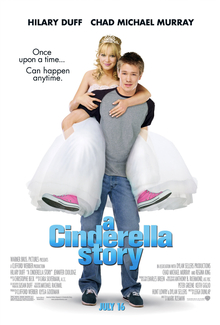
After her father's death, Sam works for stepmother Fiona and hopes to attend Princeton. Her anonymous online companion is popular quarterback Austin, who shares that ambition. A masked dance reveals him to her; she leaves behind a phone. Sam's stepsisters and Austin's former girlfriend expose her identity through a humiliating performance, and he fails to defend her. Fiona conceals Sam's university acceptance. Supported by diner manager Rhonda, Sam leaves her stepmother and challenges Austin. He apologises and chooses his own future. Sam discovers her father's will, recovers her inheritance and shares the diner with Rhonda. She and Austin head to Princeton together. Romance accompanies a wider recovery of choice.
The internet correspondence supplies a useful contemporary version of concealment. A disguise can protect Sam from the judgments attached to her place in school, but it also leaves both participants uncertain about how their private understanding will translate outside the conversation. Written messages allow a person to disclose ambitions before another person assigns them a social role. That makes the connection more than a convenient mystery. The students can find something in common that their visible positions might discourage them from noticing. The challenge comes when the relationship needs conduct rather than correspondence, and each has to decide what to do while other people are watching.
Austin's popularity is presented as an advantage with obligations attached. Being recognised does not mean he is free to decide what he wants, especially when family and peers already have a future in mind for him. Chad Michael Murray's character can appear to occupy the position Sam wishes were available to her while still lacking the courage to use it independently. Their difficulties are not equivalent, but the contrast gives them a reason to meet beyond attraction. Each has to move from a private wish to a public decision. A romantic interest is not enough if he remains unwilling to act when that decision becomes socially inconvenient.
Hilary Duff's Sam needs a form of confidence that cannot be borrowed permanently from a costume. The fairy-tale transformation provides an occasion to be seen differently, yet the story's later conflict concerns how she behaves after the special evening ends. That is a useful distinction in a modern Cinderella narrative. The right dress may open a door, but it cannot make an exploitative household fair or force someone else to be decent. Sam's ambition already exists before the romantic opportunity arrives. The relationship must make room for that ambition rather than becoming a substitute for it, giving the university plan a place within the ending instead of leaving her future entirely inside a couple.
Jennifer Coolidge's Fiona makes family authority conspicuously self-serving. A parent-like position gives her access to Sam's work, resources and information, allowing control to look like the ordinary arrangement of a household. The concealment of opportunity is as significant as the demand for labour. Someone who can decide what another person gets to know can influence what that person believes is possible. The film treats the resulting abuse broadly and comically, but the underlying mechanism is clear. Sam is not simply waiting for better luck. She needs distance from a relationship in which the person claiming authority benefits from keeping her dependent.
Rhonda provides a different model of adulthood. Regina King's character can offer support without treating Sam's future as a threat to her own position. That makes the diner more than the fairy tale's place of drudgery: it is also a setting where another kind of relationship has been present. The eventual change in ownership can therefore acknowledge care that preceded Sam's success. Friendship serves a related purpose through Carter, whose support gives the heroine someone to trust beyond the anonymous romance. The story surrounds the central couple with relationships that help make independence possible, rather than suggesting independence is achieved through a boyfriend alone.
The recovered inheritance completes the fairy-tale correction, but the emotional movement has already required Sam to refuse her assigned place. Discovering the will supplies a legal answer to a wrong that the story has made visible through daily behaviour. Austin's apology supplies another answer, concerned with how he chooses to treat her rather than what she owns. Keeping those answers separate gives the ending its broader shape. Sam gains romance, education and a more equitable working relationship, with none required to explain away the previous mistreatment. A Cinderella Story makes its familiar wish-fulfilment structure about being recognised as a person whose future was hers to pursue before anyone finally noticed her.