
What this walkthrough covers
Watch the full recorded PS5 demo without commentary. The recording includes Robert’s story scenes, the SDN training simulation and the introduction to his team.
The tutorial bookmarks explain selecting a hero and reviewing a completed call. The later team introduction contains story spoilers. This page covers the demo recording.
Video bookmarks
Choose a moment to open the recording on YouTube.
About Dispatch
After his powered suit is destroyed, former hero Robert Robertson takes a desk job with the Superhero Dispatch Network, guiding a volatile team of reformed villains through emergencies around Los Angeles. Dispatch combines an episodic workplace story with timed decisions, hero assignments, character development, and occasional hacking sequences.
Dispatch begins with Robert Robertson III, known publicly as Mecha Man, losing the mechanical suit that let him operate as a superhero. The premise shifts his role from frontline combatant to coordinator: he joins the Superhero Dispatch Network, or SDN, and is tasked with directing a group of former villains called the Z-Team. The setup places the action in a workplace built around public emergencies, where heroism involves reading reports, allocating people, and dealing with colleagues as much as dramatic confrontation. The story’s comedy and superhero spectacle sit alongside the practical question of whether this mismatched roster can become dependable.
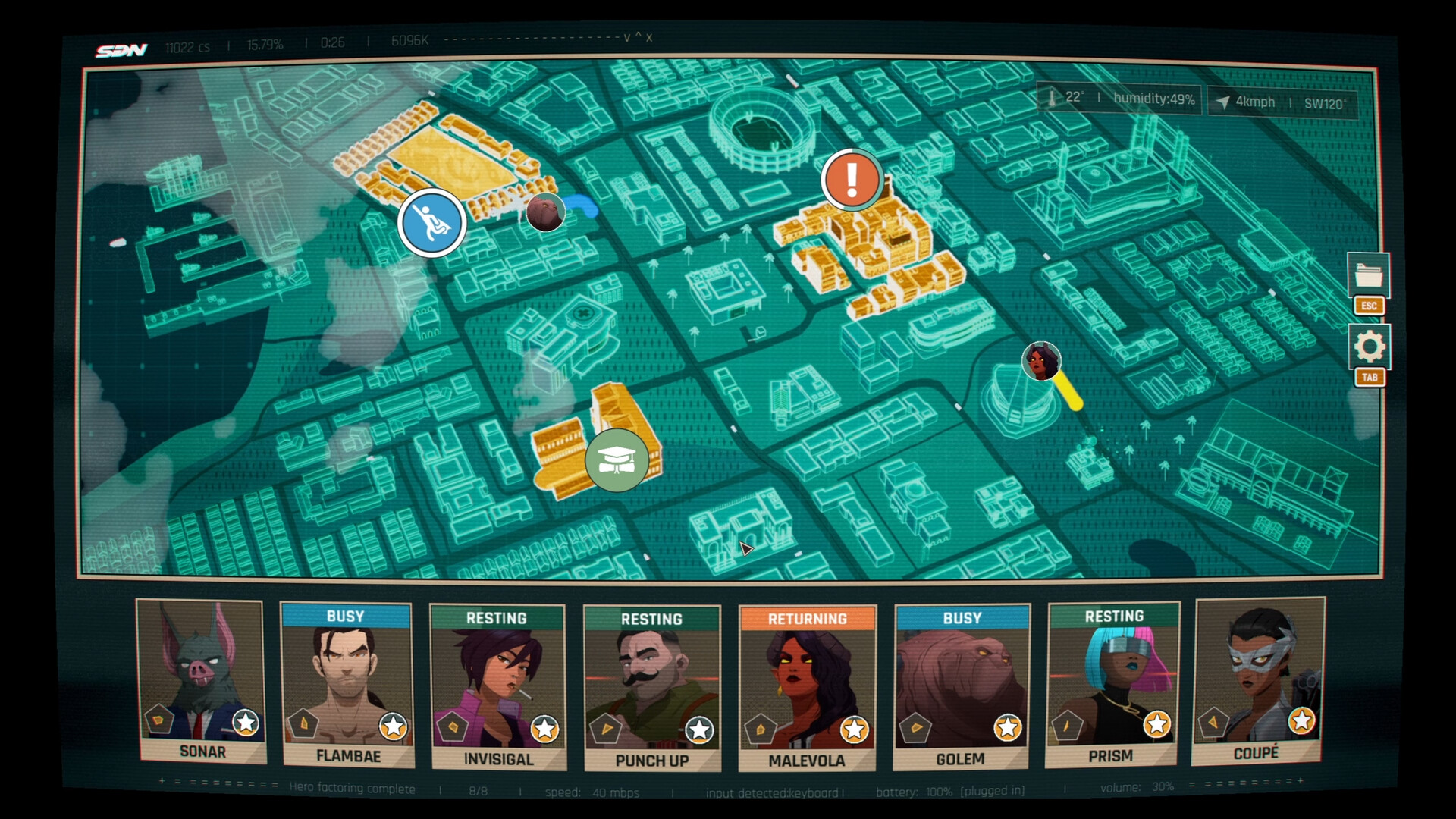
The central repeated activity is dispatching. Calls arrive on the city map with short descriptions that suggest what each incident needs: physical strength, speed, technical knowledge, persuasion, or some combination. The available heroes have five attributes—Combat, Vigor, Mobility, Charisma, and Intellect—and each assignment presents a probability of success rather than a guaranteed result. You choose one or more responders, weighing their strengths against the wording of the call and the uncertainty of the outcome. Sending a larger team can improve the odds, but it also removes more people from the roster at once.
Time and availability make those choices connect across a shift. Heroes travel to an incident, resolve it, return, and recover before they can be sent again, while new calls may appear and expire. A strong choice for one problem can therefore leave a later request uncovered. Team composition also matters: some pairings have synergies that improve their effectiveness, and individual passives add further differences beyond the visible attributes. Injuries or story events can affect who is ready, so the player is balancing immediate call quality against keeping enough varied responders available for the next wave.
The dispatch system develops as the team gains experience. Heroes who complete assignments level up, allowing an attribute to be improved, while selected training periods can develop additional passive abilities. Robert also progresses through dispatcher perks that affect roster management, including ways to restore an exhausted hero or address an injury. These systems make the early roster’s weaknesses part of the long-running management loop: assignments provide opportunities to shape individual strengths, and the player gradually learns which combinations suit the different kinds of calls.
Not every intervention is resolved by choosing a name on the roster. Some situations ask Robert to make a judgment about how a hero should proceed when an unexpected complication appears. Others use his technical background in a hacking sequence, where a moving polyhedron must be guided through a network of nodes. Depending on the puzzle, the route can require reaching an exit, entering a pattern, carrying an electrical charge between points, or avoiding a pursuing security program. Later puzzles place tighter limits on time and attempts; options can reduce that pressure for players who prefer a more relaxed interaction.
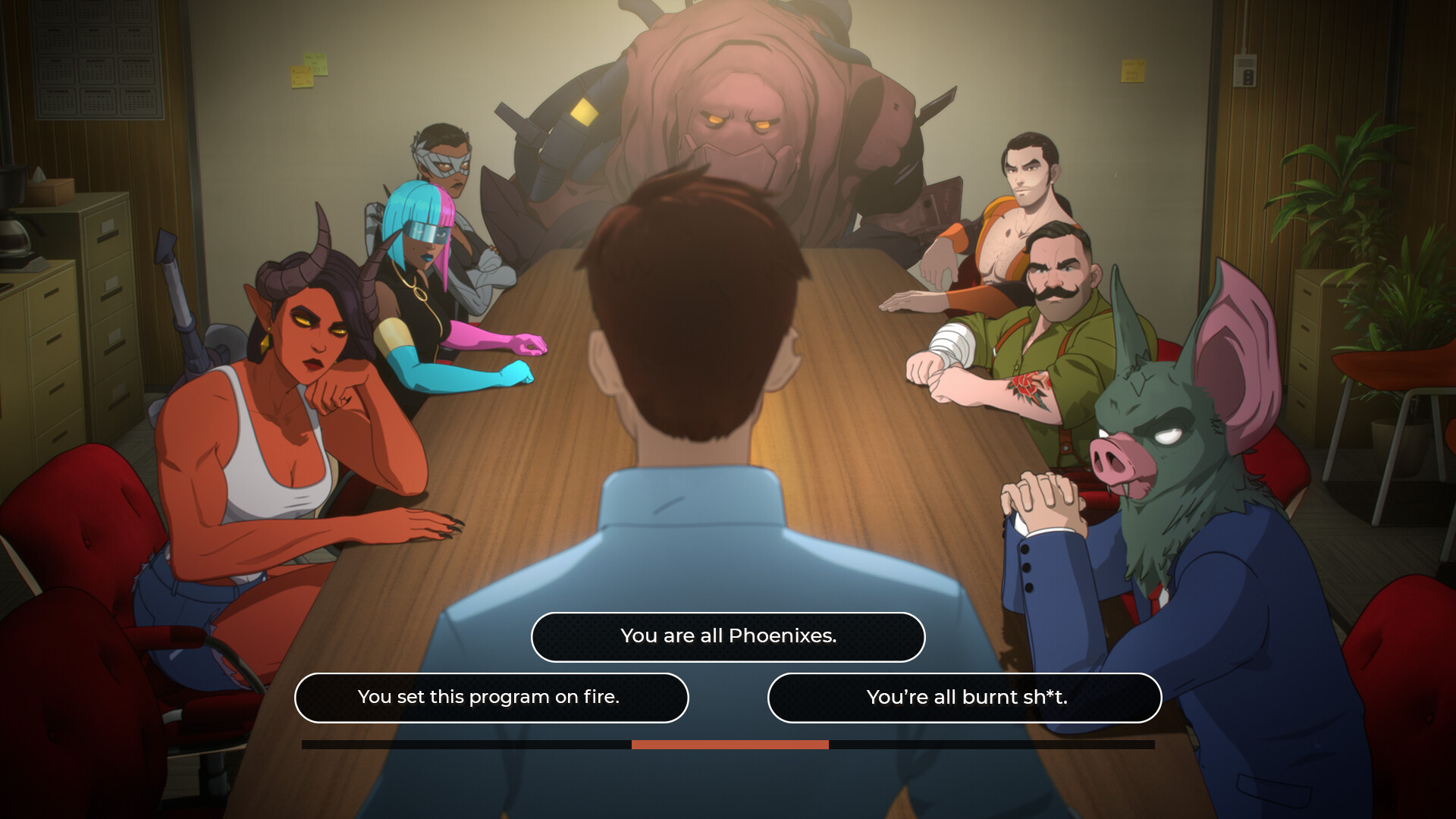
Between shifts, Dispatch follows Robert’s relationships with the Z-Team and other SDN staff through animated scenes, conversations, and timed dialogue selections. Those decisions shape how he responds to people and can affect particular character relationships, while quick-time events add interactive prompts to some action scenes. This creates a rhythm between office management and the story outside the dispatch screen: calls test how well Robert understands his roster, while conversations test the kind of mentor and coworker he wants to be. The story is delivered episodically, with workplace routines and team dynamics carrying into later scenes.
The game follows rehabilitation as an ongoing group effort. The Z-Team brings different abilities, habits and reasons for accepting SDN work, and Robert has to coordinate them while pursuing his own hopes of repairing Mecha Man's career. He cannot solve a disagreement by sending everybody to the same emergency. Dialogue and dispatching let him occupy different parts of the job: speaking to an individual, considering the team as a roster, and handling the immediate demands of the city. The video here covers the demo; the wider game develops this workplace and its characters across an episodic story.
The roster gives the superhero premise a practical scale. Malevola's sword and portals, Coupe's assassin training and Invisigal's stealth belong to quite different approaches to a problem. Golem can absorb punishment that would be a poor fit for a more fragile responder. Their visible powers may suggest a job, but the attributes and call description determine which qualities actually matter to that assignment. An emergency does not always amount to defeating the strongest opponent: getting somewhere quickly, understanding a technical problem or persuading somebody can be the relevant task. Robert's position behind the screen makes those distinctions the player's responsibility. The animated conversations then return the names on the roster to people who resent criticism, make jokes and expect to be heard. That alternation gives the desk a place within the story, rather than treating the calls as a detached game between scenes.
Robert Robertson, formerly known as Mecha Man, takes a job at a superhero dispatch centre after his mech suit is destroyed. He has to manage a team of former villains while dealing with office politics and his own hopes of becoming a hero again.
The desk job is the other half of Robert’s story. Conversations shape his relationships, while calls on the city map ask you to judge who can handle a particular emergency. A strong fighter is not automatically the right person for a job that needs another skill.
- Developer
- AdHoc Studio
- Genre
- Narrative · Strategy
Gameplay
Dispatch mixes story choices with managing emergencies across the city. You choose which heroes to send, weigh their strengths against the job and handle the relationships that develop around the office. This page covers the demo.
Playing guide
Match the call to the hero
Read the call’s requirements, then compare them with the hero’s skill graph. The training simulation explains how the match affects the chance of success. Use the tutorial bookmark to see that comparison before committing a hero.
Check returning heroes
Returning heroes need rest. Review their performance as well: the tutorial explains that they cannot be sent out again until you do. Keep that availability in mind when several calls compete for the same person.
Keep story choices separate from dispatch results
Dialogue choices and emergency assignments serve different parts of the game. The recording shows one set of decisions. It gives you a route to follow, rather than every possible response or relationship outcome.