
Choose When to Run and How to Approach a Window
On this page
Run when you need distance, and walk when stopping your trail serves a clear purpose. In Dead by Daylight’s standard 1v4 survivor matches on PC and console, choosing between those actions matters most when the Killer is approaching or has just lost sight of you.
Decide whether speed or quiet helps
Ordinary running creates scratch marks that the Killer can follow. Walking and crouching stop you creating new running marks, but the earlier trail fades over time rather than disappearing immediately. Survivors cannot normally see their own scratch marks. Scratch Marks
If the Killer can already see you and is closing, move toward useful cover. Crouching in the open does not make you harder to see just because you stop leaving marks. Choose the route that gives you somewhere to turn or an obstacle to use, then keep moving.
Walking becomes more useful after you break sight and have enough space to choose a different direction behind cover. Think about where your running trail ends. Stopping right beside it may still leave you close to the place the Killer is investigating.
Don’t carry that cautious pace through every empty stretch of the match. Once pressure passes, return to a useful job. The generator skill-check guide covers setting up that next repair with an exit already chosen.
Set up the window before you reach it
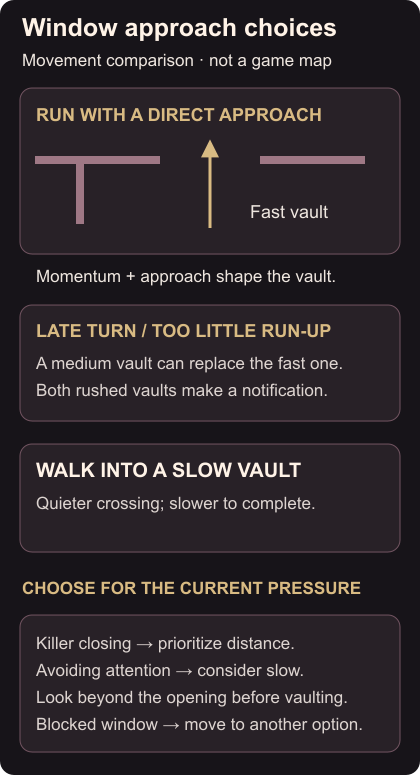
A fast window vault needs running momentum and a sufficiently direct approach. Reaching the opening at a poor angle or without enough momentum can produce a medium vault instead. Both are rushed actions that create a loud-noise notification. A walking slow vault is quieter and slower. Window vaults
Look for the opening early, then look beyond it. You need an idea of where to move after landing, especially if the Killer can take a shorter route to the other side. A window is an option to evaluate, not a promise of safety.
Steer into a straighter approach before the last moment. If you scrape around an obstacle and sharply turn into the window, you may get a slower vault than you expected. When there is a calm opportunity, compare a walking approach with a direct running approach and notice the different animation.
Match the vault to the pressure
When you are avoiding attention and no pursuit is close, a slow vault can avoid the notification of a rushed action. With the Killer nearby, the quicker crossing may matter more than keeping quiet. Decide before reaching the interaction rather than hesitating in the opening.
Repeated window use during a chase can temporarily block that window. Window blocking If it becomes blocked, move toward another visible obstacle. Repeatedly pressing the same interaction leaves you standing beside an unusable escape route.
After a chase, pick one moment to improve: a late turn, a blocked window or stopping where the Killer could still see you. Practise that decision during the next useful opportunity instead of starting an unnecessary chase just to repeat a vault.
Remember the clues walking leaves behind
An injured survivor still leaves blood and makes pain sounds. Limping also does not reduce ordinary movement speed. Injured movement Walking can change the scratch-mark trail while leaving those other clues available.
If you have reached cover but remain injured, check whether a teammate or your item can help. The healing and recovery guide explains that next decision without treating quiet movement as a cure.