
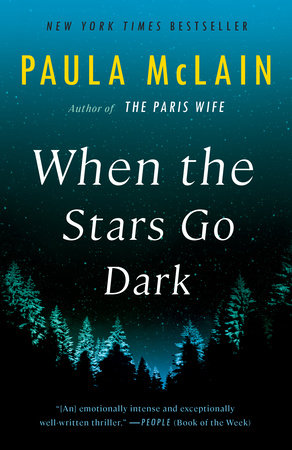
When the Stars Go Dark
After a personal tragedy, missing persons detective Anna Hart leaves San Francisco for Mendocino, the Northern California village where she lived as a child.
About
Spoiler notice: Spoilers cover Anna Hart’s return to Mendocino, the missing teenager, and the childhood case that connects the present investigation to her past. Later revelations and the ending are withheld.
When the Stars Go Dark is a suspense novel set in Northern California in 1993. Anna Hart, a San Francisco detective who specialises in missing persons, returns to Mendocino after a devastating loss in her personal life. The coastal village is not a fresh destination: she lived there as a child with foster parents she loved, and its landscape carries memories from a formative period. Her arrival coincides with the disappearance of a local teenage girl. Anna is grieving, distant from the people around her and suddenly drawn back into work that brings her close to another family’s fear. The novel begins with two kinds of absence, private and public, then sets them beside a place where Anna’s own history remains close enough to affect how she sees the new case.
The missing teenager’s case echoes an unsolved murder from Anna’s childhood, an earlier crime that marked Mendocino and altered the community. That resemblance gives the investigation a double pressure: Anna is trying to find someone in danger while confronting the atmosphere of uncertainty she remembers from years before. The story’s movement between past and present makes memory part of the mystery, but the two cases are not interchangeable. Anna brings adult experience and professional knowledge to the search, while the younger self who once lived in Mendocino remains part of her emotional response. The town holds both versions of her life. Each new detail can therefore carry investigative significance and personal weight, without making the past itself a simple answer to the present.
Anna’s work as a missing persons detective shapes the novel’s attention. Her job requires her to think about how vulnerable people can come into contact with violent predators, and her experience gives her a way to read the circumstances around a disappearance. Some of that understanding comes from difficult lessons in her own life. That combination makes her both capable and exposed: she has knowledge that may help the girl, but the case touches places in her that remain painful. As Anna becomes increasingly focused on the search, the story asks what professional skill can do when fear, grief and personal history are involved. The investigation is not only a puzzle to solve; it tests how much of herself Anna can bring to it and what that costs.
Mendocino functions as more than a picturesque backdrop. It is a small Northern California community whose collective memory was shaped by an earlier unsolved crime, and a place Anna once knew as home. Returning there puts her among familiar landscapes and people while she faces a situation that cannot be reduced to nostalgia. The village’s past is active in the present because the earlier murder still affects how residents understand danger and loss. Against that local history, the missing teenager’s case becomes communal as well as personal. The novel’s setting joins a detective story to questions of belonging: Anna comes back because she has nowhere else to turn, yet the place she seeks for refuge also makes her confront what happened when she was young.
The novel combines crime suspense with an inward story about trauma and the possibility of recovery. Its plot includes real cases of missing persons as part of its broader frame, alongside a fictional investigation and a light metaphysical element. Those strands give the mystery a focus beyond identifying what happened: the story also considers how people respond after violence, and how hope can coexist with grief. Anna’s determination to find the missing girl grows into an obsession, and she must recognise that courage involves getting out of her own way and allowing other people close. That change does not erase the losses behind her return. Instead, the search places connection among the choices still available to her when grief has made retreat feel easier.
At its centre, When the Stars Go Dark follows a detective whose professional purpose collides with the unsettled parts of her private life. The missing girl’s disappearance draws Anna toward a past she had not resolved, while her childhood understanding of Mendocino shapes how she meets the present. The mystery supplies urgency, but the emotional arc turns on whether Anna can accept help as well as offer it. The book’s concerns with fate, redemption and faith in other people grow from that tension between isolation and connection. Readers approaching it as a procedural will find a case at the heart of the story; readers drawn to character-led suspense will also find a novel interested in what it takes to begin reclaiming a life after the worst has happened. The wider frame also keeps attention on how disappearances are experienced beyond the most public cases. It gives weight to the act of looking for someone, and to the people who are left waiting for news. That perspective makes the search matter even when its outcome is uncertain, while the story’s hopeful notes remain tied to care and mutual trust rather than easy reassurance.
Book details
- Author
- Paula McLain
- First published
- 2021
- Series
- No series listed
- Subgenre
- Psychological thriller
- Primary genre
- Mystery & Thriller, Literary Fiction
- Tags
- No tags for this book.
Review
Editor profile
Baby Bat
Goodreads and social links will be added soon.
- Goodreads — link coming soon
- Social media — link coming soon