
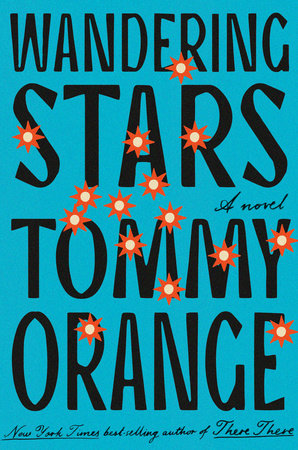
Wandering Stars
Beginning in Colorado in 1864, Wandering Stars follows Star, a young survivor of the Sand Creek Massacre, and his son Charles through the coercive world of Fort Marion and the Carlisle Indian Industrial School.
About
Spoiler notice: Spoilers for the opening historical setup, family connections, and premise, including Star’s capture after Sand Creek and the family’s later connection to There There. The later plot turns and ending are not summarized.
Wandering Stars follows the Bear Shield–Red Feather family across generations, joining the violence of nineteenth-century removal and forced assimilation to the lives of Native characters in contemporary Oakland. Its opening moves through the aftermath of the Sand Creek Massacre, then connects that history to the Carlisle Indian Industrial School and to the people whose stories readers first encountered in Tommy Orange’s There There. The novel’s long view gives family history a structure: individual choices take shape amid events and institutions that began before those characters were born. Orange returns to a family touched by the earlier novel, but enlarges the frame so the history behind its present-day characters becomes part of the narrative itself.
The first section centres on Star, a young survivor of Sand Creek who is taken to Fort Marion, a prison castle where Richard Henry Pratt forces him to learn English and practise Christianity. Pratt later founds the Carlisle Indian Industrial School, an institution intended to eradicate Native history, culture and identity. Star’s son Charles is later sent to Carlisle, where he is brutalised by the same man who had been his father’s jailer. These links make the school’s violence personal as well as institutional: the people enforcing it recur across a family’s life, while the father and son meet the school from different positions. Orange follows the consequences through relationships, memory and identity rather than treating the institution as a distant historical backdrop.
Charles’s connection with Opal Viola, a fellow student, gives the school chapters a specific relationship to hold against their institutional setting. The publisher describes Charles as clinging to moments with Opal while the two imagine a future away from the violence following their families. That future remains an idea formed under coercive conditions, not a simple escape from them. The contrast makes their shared attention to one another meaningful within a place organised to separate children from their language, clothes and cultural ties. Their story also establishes Opal as part of the family line that continues beyond Carlisle. When the novel later reaches Oakland, the present is not detached from these early chapters: the family relationships have crossed time even when the characters do not possess a complete account of what came before them.
As the timeline advances, Wandering Stars comes closer to the contemporary Oakland story connected to There There. Orvil Red Feather, whose story began in that novel, belongs to the later generations of this family. Readers returning from There There will recognise some people and circumstances, while the earlier sections change how the family’s present can be understood. The connection works in both directions: the historical narrative expands the background of characters already known, and the contemporary narrative shows the later lives of descendants shaped by the histories the book has traced. The novel can therefore be read as a continuation and an antecedent to There There, while its family saga follows its own arc and gives new readers a route into Orange’s fictional world.
In the Oakland thread, the publisher’s reading guide identifies Sean Price and Orvil Red Feather as two characters whose lives are affected by opioid addiction. It describes Sean’s use as beginning with drugs given to mitigate pain, then developing into a different relationship with them; Orvil’s earlier story in There There gives his later chapters a direct point of connection for returning readers. These details make the contemporary section more than a coda to the historical narrative. It follows particular people facing substance use in a family whose earlier generations experienced massacre and forced schooling. The characters’ circumstances are individual, and the novel follows them within a larger family history rather than treating them as interchangeable examples of it.
The novel also makes a notable formal choice in its treatment of Richard Henry Pratt. The publisher’s reading guide notes that several early chapters are told from Pratt’s perspective, giving readers access to the worldview of the man who administers the school’s assimilationist project. This shift places his point of view beside the experiences of Star, Charles and the Native children subject to that system. It lets the institution appear not only through the harm it causes, but also through the language and assumptions used to justify it. The guide points to the book’s epigraphs from Pratt and Theodore Roosevelt as part of this framing. Across these choices, historical material is not confined to background exposition; it is also a question of who gets to describe events and whose account is allowed to shape their meaning.
Orange has described the book’s development as a change in scale: he began writing a straightforward sequel to There There, then found a historical link to boarding schools and to the Bear Shield family, which led him to shape the work as a generational saga. That origin helps explain its unusual direction through time. The novel moves from Star and Charles in the nineteenth century toward descendants in Oakland, including Orvil, while keeping the family connection visible across the divide. Readers can approach it with There There already in mind, or encounter that earlier novel’s characters as part of the later stretch of a story whose opening is set generations before them. Wandering Stars is literary and historical fiction, and its structure lets one family’s changing circumstances carry the narrative between those periods.
Book details
- Author
- Tommy Orange
- First published
- 2024
- Series
- No series listed
- Subgenre
- Literary fiction, Historical fiction, Family saga
- Primary genre
- Literary Fiction, Historical Fiction
- Tags
- No tags for this book.
Review
Editor profile
Baby Bat
Goodreads and social links will be added soon.
- Goodreads — link coming soon
- Social media — link coming soon