
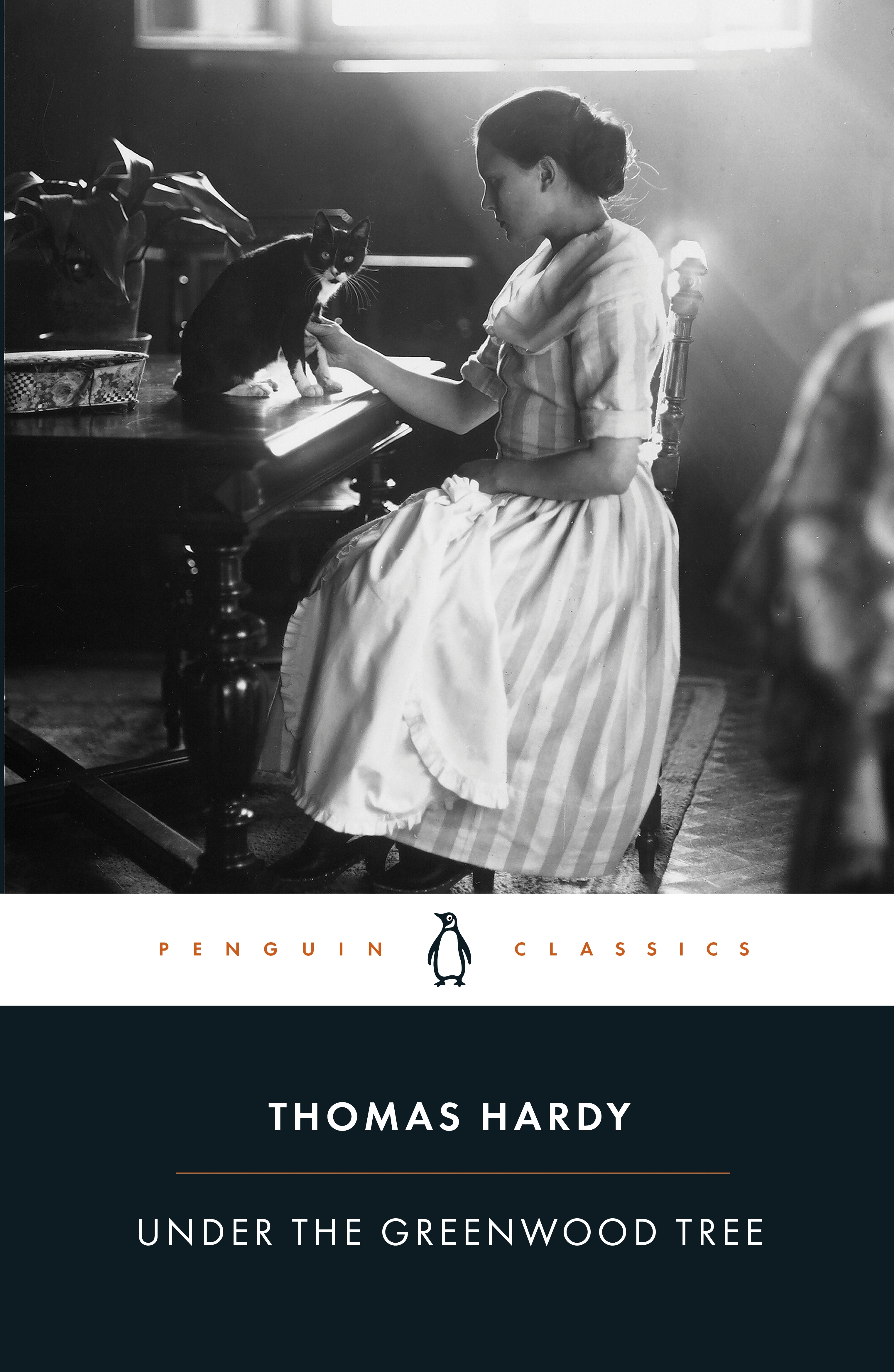
Under the Greenwood Tree
In the rural parish of Mellstock, young violinist Dick Dewy falls in love with schoolmistress Fancy Day while the church musicians face replacement by an organ.
About
Spoiler notice: Full-plot spoilers, including the choir replacement, Fancy and Maybold’s proposal and letters, and the wedding’s final secret.
On Christmas Eve, Mellstock announces itself through sound: wind in different kinds of tree, a young man's song, voices calling along a dark lane. That young man is Dick Dewy, a violinist in the parish choir and the son of Reuben, the local carrier. He joins the older musicians on their way to his father's cottage, where the evening begins with conversation and drink before the Christmas rounds. The group connects several generations, with Dick's grandfather William playing the bass viol. Their scattered parish takes effort to cover, and music gives them a reason to cross its lanes together. First published in 1872, Hardy's novel follows this community through winter, spring, summer and autumn before a concluding wedding. Its romance grows out of the same schoolrooms, working households and church customs that make the village feel inhabited.
The musicians' place in that world is about to change. Arthur Maybold, the new vicar, wants an organ to replace their instrumental playing, with the schoolmistress Fancy Day at the keyboard. Reuben leads a delegation asking that the choir be allowed a dignified final Christmas rather than disappear during an unremarkable Sunday. Maybold listens sympathetically, but settles on Michaelmas as a compromise. The meeting is funny in its physical details: Reuben presses his argument so closely that the vicar keeps retreating, while the men outside mistake the disturbance for a possible fight. Under the awkward manners sits a serious loss. These men have made music together as part of their ordinary responsibilities; a single skilled player will change who participates. Maybold's courtesy softens the transition without giving them back their former position.
Fancy is at the centre of both the musical change and Dick's private hopes. An educated young teacher, she attracts the wealthy farmer Shiner as well as the young carrier, and later the vicar's interest becomes unmistakable. Dick's courtship is full of small opportunities and anxieties, including a journey from Budmouth during which he and Fancy stop at an inn. Their shared tea becomes an occasion for a proposal, and she accepts on condition that her father agrees. Dick emerges so delighted that he assumes the innkeeper must already understand the situation. The conversation unravels when both men discover they have been laughing along without sharing the same information. That comic misunderstanding captures something of Dick's openness: once he is happy, he can scarcely imagine that his happiness is not visible to everyone.
Fancy's father, Geoffrey Day, is less easily won. A keeper and steward, he has invested in her education and saved so that she could marry a gentleman without being financially dependent on his superior position. When Dick asks for her, Geoffrey explains her accomplishments and makes him feel unequal to the match. Fancy, however, wants the marriage and seeks advice from Elizabeth Endorfield, a shrewd woman whose neighbours suspect her of witchcraft. Elizabeth's practical understanding of people proves more useful than any supernatural intervention. Following her instructions, Fancy conspicuously loses her appetite; Geoffrey hears reports, watches her barely eat and investigates her dwindling food bills. The apparent decline eventually undermines his resistance. Hardy turns a dispute about class and parental authority into a sequence of domestic observations, with bread, butter and butcher's accounts carrying the argument.
Securing her father's consent does not settle Fancy's feelings about the life she might have. After her successful first appearance as organist, Dick visits in the rain, having attended a friend's funeral. He is wet and badly presented, with a mark on his coat from carrying the coffin. Fancy loves him but notices how ordinary he looks. Maybold arrives soon afterwards under an elegant umbrella, and the contrast prepares a more consequential temptation. He asks her to marry him, offering a move to Yorkshire, further musical development, travel and comfortable surroundings. Fancy initially refuses, then accepts while distressed and unable to explain what stands in the way. The offer speaks to desires that her engagement has not removed. She can want Dick and still be powerfully attracted by a future that seems more polished and expansive.
The following morning, Maybold meets Dick on the road and learns, from his unguarded conversation, that he and Fancy are already engaged. Dick even gives him a business card, proudly describing his prospects in the family's growing carrying business. Maybold tears up the letter arranging his move and writes to Fancy, asking her to consider the man who trusts her. Meanwhile, she has independently written withdrawing her acceptance. Their messengers pass one another, so her decision is not simply a response to his reproach. She admits that praise and elegant surroundings tempted her, and asks that their meeting remain secret. His final advice is to tell Dick everything. The crossed letters let the reader see both the sincerity of her change of heart and the concealment with which she protects the relationship she chooses.
The wedding brings the families together at Geoffrey's home in Yalbury Wood, from which they walk to the ceremony. Afterwards the celebration takes place beneath an enormous spreading tree, with music, dancing and older guests exchanging stories beyond the dancers' feet. Fancy remains attentive to appearances, even asking the fathers to avoid unfashionable forms of speech. The community nevertheless supplies the noise and warmth around the new couple. As they leave in Dick's spring-cart, he explains their happiness through the complete confidence he believes they share. Fancy promises there will be no secrets from that day forward, while privately retaining the one she has never disclosed. The marriage is a real fulfilment, but the final nightingale song accompanies an unresolved difference between what Dick knows and what the reader knows. Hardy lets that uncertainty survive inside the celebration.
Book details
- Author
- Thomas Hardy
- First published
- 1872
- Series
- No series listed
- Subgenre
- Literary fiction, Modern classics
- Primary genre
- Literary Fiction
- Tags
- No tags for this book.
Review
Editor profile
Baby Bat
Goodreads and social links will be added soon.
- Goodreads — link coming soon
- Social media — link coming soon