
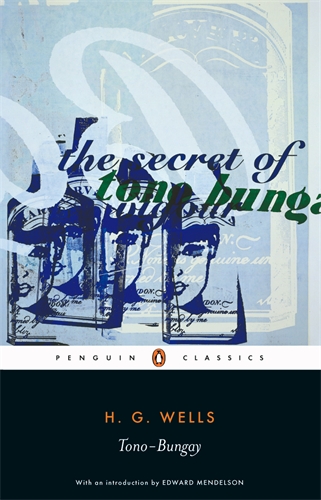
Tono-Bungay
George Ponderevo looks back on a life transformed by his uncle Edward's patent-tonic business.
About
Spoiler notice: This overview includes the Mordet Island expedition, the business collapse and the novel's ending.
George Ponderevo begins his account knowing that a successful business can produce an unsuccessful life. Looking back on the fortune made by his uncle Edward, he wants to explain the people, institutions and desires that made their extraordinary rise possible. His recollections range well beyond the advertised tonic that gives H. G. Wells's 1909 novel its title. George grew up at Bladesover, where his mother was housekeeper and the great house seemed to organize the whole surrounding world. Everyone had a place, and knowing that place was part of knowing how to behave. His later movement through different social circles exposes the limits of this childhood picture. He learns that inherited authority can lose its substance while retaining its appearance, and that money can acquire impressive surroundings without acquiring a worthwhile purpose.
Edward offers an early challenge to the apparent permanence of that order. In the Wimblehurst chemist's shop, where George becomes his apprentice, the uncle complains that nothing happens and dreams of the opportunities elsewhere. London and America represent movement, risk and possibilities that the provincial town seems determined to suppress. His talk of cornering supplies and making fortunes can sound like another entertaining performance, until George encounters the results. Later, during his student life in London, advertisements for Tono-Bungay appear on the hoardings. Edward summons him with an offer of three hundred pounds a year. The enterprise already has bottles, employees and an imposing suggestion of scientific apparatus. Behind the display, its private room is much less impressive. George has reached the point where a promising offer requires him to consider what is actually being sold.
He joins, and the novel makes his participation central to the satire. George is no innocent observer reluctantly carried along by someone else's dishonesty. Edward supplies the advertising imagination while his nephew organizes the production, packaging and distribution that turn it into money. Both work extremely hard. That effort makes their commercial achievement more troubling, because the labour is real even when the product's promise is empty. Campaigns appeal to boredom, weakness and the desire for renewed energy; geographical expansion requires different approaches to different customers. Related products follow the original tonic into the market. George's retrospective account openly calls their wares rubbish, but remembers the excitement of making sales increase. The pleasure of an absorbing game helps explain how he could recognize the deception and still devote himself to its success.
Wealth changes the scale of their surroundings without resolving their private lives. Edward and Susan move from modest rooms towards grander houses, while Susan alternates intellectual interests with the demands and pleasures of establishing a home. George marries Marion, but their relationship rests on expectations they have scarcely examined together. His account of her conventionality is also the account of a dissatisfied husband, and should not be mistaken for an impartial assessment. He admits that attraction and ignorance helped bring them together. The widening business gives him activity, influence and opportunities that domestic life does not seem to offer. Eventually his relationship with Beatrice becomes another focus of longing. Throughout these changes, material success supplies fresh possibilities while leaving the people pursuing them poorly equipped to understand one another.
Edward's growing financial difficulties reveal how dependent his standing has become on continuing to look successful. At Crest Hill, the vast house under construction must keep advancing because stopping it would advertise weakness. George questions the figures and receives impatience rather than clarity. A proposed expedition for quap, a valuable fictional radioactive material, offers a desperate commercial opening connected with a new lamp filament. He knows that taking it involves theft and an international outrage, yet goes to Mordet Island. The expedition damages more than their finances. Work among the deposits brings illness, injury and resistance from the crew, while George's determination to complete the venture hardens into aggression. Encountering a man in the forest, he shoots him as he runs away. George explicitly calls the act murder; nothing in the search for a business rescue makes it an innocent accident.
Even the stolen cargo cannot save the enterprise. The ship deteriorates on the return voyage and sinks, leaving the survivors to be picked up elsewhere. George believes the quap has damaged its timber, but that is his explanation within the novel, not an established scientific account. Back in England, news of Edward's bankruptcy replaces any remaining expectation of triumph. George helps his frightened uncle escape across the Channel in an airship, only to watch him decline and die abroad. His own hope of beginning again with Beatrice also fails: she refuses marriage and chooses to return to her existing life. These losses give the narrative its emotional weight. George can describe financial mechanisms and social absurdities with confidence, yet he cannot organize another person's feelings as he once organized shipments of bottles.
The final chapter places him among machines again, now building destroyers. Taking the completed X2 down the Thames, he passes a succession of English landscapes and institutions: Parliament, fashionable residences, slums, churches, warehouses and the crowded port. The journey turns his earlier experiences into a view of a country whose inherited forms coexist uneasily with relentless commercial activity. His hope in science and the patient making of something exact remains complicated by the vessel carrying him, which is itself a weapon. Journalists later convert the voyage into a complacent imperial story that misses his unease. George sees waste and confusion, but also believes people can draw something enduring from their work. The open sea provides an image of possibility rather than a guaranteed destination. He ends still trying to understand what all that movement is for.
Book details
- Author
- H. G. Wells
- First published
- 1909
- Series
- No series listed
- Subgenre
- Literary fiction, Modern classics
- Primary genre
- Literary Fiction
- Tags
- No tags for this book.
Review
Editor profile
Baby Bat
Goodreads and social links will be added soon.
- Goodreads — link coming soon
- Social media — link coming soon