
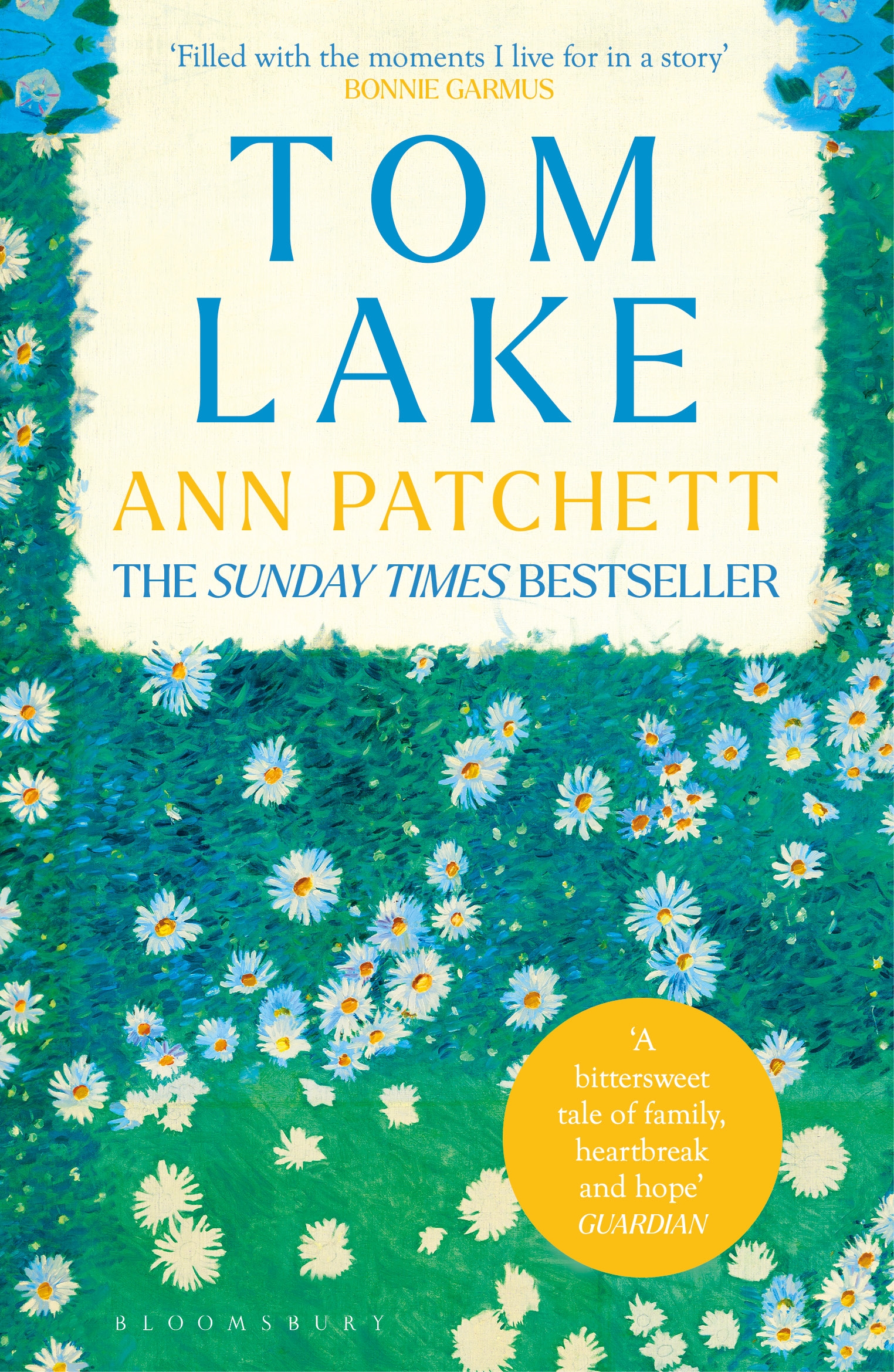
Tom Lake
In spring 2020, Lara's three grown daughters return to their family's northern Michigan cherry farm and ask about her summer at a theatre company called Tom Lake.
About
Spoiler notice: Mild spoilers for Lara's early acting history, the parts of her past she shares with her daughters, and the relationships that shape her life. Later revelations and the ending are not described.
In spring 2020, Lara Nelson is living with her husband, Joe, and their three grown daughters on the family's cherry farm in northern Michigan. The pandemic has brought Emily, Maisie, and Nell back home, where the seasonal work gives the family long days together among the trees. During the harvest, the daughters press Lara to tell them about Tom Lake, the theatre company where she spent a summer as a young actress, and Peter Duke, the actor with whom she shared a stage and a romance. What begins as a request for an old story becomes a way for the adult children to ask who their mother was before she became the person they know. The farm is both a workplace and a gathering place, keeping the conversation rooted in present family life even as Lara's account reaches decades into the past.
Lara's path toward the stage begins in a New Hampshire town, where she goes to a community-theatre audition for Thornton Wilder's Our Town in an administrative role. She and her friend Veronica are there to register the hopefuls, not to compete for parts. As the day goes on and she watches the auditions, Lara decides to read for Emily herself. Around her is the business of a local production: forms, headshots, assigned scenes, and a crowded gym where townspeople of different ages arrive hoping to be cast. The novel lets a young woman's unplanned decision emerge from this ordinary work rather than from a grand entrance. The play matters to Lara well beyond that first audition; the role of Emily becomes a point of connection between her younger acting life and the daughter who later bears the same name.
The memories then move from New Hampshire toward summer theatre in Michigan. At Tom Lake, Lara joins a company performing Our Town, and the play's small-town world provides a structure for her own experience of work, friendship, and attraction. The company is a temporary community: actors gather around a shared production, then return to lives elsewhere when the season ends. Lara's recollection centres on Peter Duke, whose career will grow far beyond the summer stage. The story is not told as a detached account of celebrity. It arrives through a mother speaking to daughters who already know Duke's name and have asked about the part of Lara's past that includes him. Moving between the farm and the theatre, the book places public performance alongside the private meanings Lara assigns to a younger version of herself.
At the centre of the remembered summer is Lara's relationship with Peter, but her account is shaped by the limits of what she wants her daughters to know. They are adults, and still they are her children; she does not hand them an unfiltered record of her romantic life or every confusion she felt at the time. The novel makes that distinction part of the family conversation. Lara can be frank about the broad outline while retaining privacy around particular experiences, and the daughters' questions show that they are listening for more than a famous actor's story. Their interest also brings the past into the present: Emily, Maisie, and Nell are not simply an audience for a finished memory, but three people forming their own lives while hearing how their mother once imagined hers. The exchange leaves room for affection, curiosity, and boundaries to coexist.
The novel's title names both the theatre company in Lara's recollection and the place around which that summer's story gathers. Theatre gives the book a vocabulary of roles and scenes, but Lara's family is not arranged like a cast with fixed parts. She shapes her account for the people listening, but they have already imagined versions of it themselves. Her daughters sometimes correct her, sure that their understanding of her youth must be the right one. That idea extends to the book's form: the present-day harvest conversation and the earlier acting years illuminate one another. The remembered romance matters, but it sits beside the life Lara built afterward with Joe and her daughters. The contrast lets the story consider how a person can value a past possibility while remaining attached to the ordinary, chosen life that followed.
Our Town links the two timelines through its attention to the small moments that make up a life. On the farm, the harvest is made of repeated tasks: picking fruit, working alongside family, and talking in intervals. On stage, Lara learns how a play can give shape to ordinary people and moments. When she tells her daughters what happened, memory becomes another kind of performance, selected and paced for a particular audience. The daughters, in turn, bring their own hopes and uncertainties into the listening. Tom Lake follows this exchange between then and now, parent and child, actress and mother. It stays with a family gathered in one place long enough to discover that the past is neither a sealed story nor a script that dictates what comes next.
Book details
- Author
- Ann Patchett
- First published
- 2023
- Series
- No series listed
- Subgenre
- Literary fiction, Family novel
- Primary genre
- Literary Fiction
- Tags
- No tags for this book.
Review
Editor profile
Baby Bat
Goodreads and social links will be added soon.
- Goodreads — link coming soon
- Social media — link coming soon