
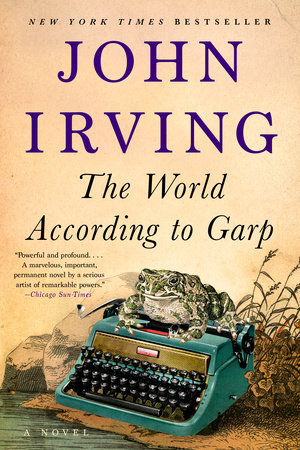
The World According to Garp
Jenny Fields wants a child without a husband, and the son she raises, T.
About
Spoiler notice: Spoilers cover Jenny and Garp’s parentage, careers, central relationships and the novel’s political conflicts; major later outcomes and the ending are withheld.
The World According to Garp takes its title from the perspective of T. S. Garp, but its first defining figure is his mother, Jenny Fields. Jenny is a nurse who wants a child without wanting a husband, and her decision sets her apart from the assumptions surrounding women’s private lives. Her son’s unusual origin becomes the beginning of a public identity she did not initially seek: Jenny is eventually known as a feminist leader, author and figure of intense interest. Irving gives mother and son connected but distinct lives. Jenny’s independence is not simply a preface to Garp’s story; the novel treats her choices, public voice and effect on others as central in their own right.
Garp grows up beside his mother’s fiercely independent life and develops commitments of his own. He is a wrestler and a writer, and the book follows him into marriage, fatherhood and the uneven work of making fiction. These roles make him more than a reaction to Jenny. His mother’s later public arguments and his own private imagination can intersect, but they are not interchangeable: Jenny speaks through the life she has chosen and the writing she produces, while Garp tries to shape experience into stories. Both resist being reduced to a symbol for someone else’s cause. That friction supplies a durable tension between personal freedom and the labels other people attach to it.
The book is attentive to the ways a writer’s life enters a writer’s work. Garp’s fiction appears inside Irving’s novel, including the story “The Pension Grillparzer” and material associated with The World According to Bensenhaver. Those insertions create a second track: readers see the events in Garp’s life and also see how he transforms experience into invented narrative. The fictional pieces have their own purpose inside the larger book, exploring how imaginative work uses, reshapes and departs from personal events. Their presence asks the reader to notice a difference between what happens to Garp and what he chooses to put on a page. A story may carry a trace of its maker’s life without being a disguised diary. The device makes authorship part of the plot rather than a subject discussed from outside it.
Garp’s family life gives that question emotional stakes. His marriage and parenthood bring affection and ordinary loyalties into the same story as professional ambition, sexual conflict and public controversy. The household does not function as a refuge sealed off from the rest of the novel. Instead, intimate choices sit alongside the unpredictable events that can change a family’s sense of what is safe or lasting. The relationships are not brief episodes but bonds tested across changing circumstances. Keeping the family in view also prevents its violent turns from becoming only abstract arguments about politics or society.
The novel’s social world is deliberately difficult to reduce to a simple contest between sides. Jenny becomes a feminist leader, while Garp is less comfortable with the symbols and movements that gather around his mother. Public identities bring people together and can also turn into rigid tests of belonging. Roberta Muldoon, Garp’s close friend and a former professional football player, unsettles expectations about gender and masculinity. She also matters as a friend within the family’s daily life, rather than only as an emblem of a public debate. That distinction is crucial to a book concerned with the gulf between knowing a person and reacting to an identity. Sexual hatred, violence and intolerance of sexual difference are part of the story’s social pressure, not detachable background to the Fields-Garp family history.
Irving places absurdity and pain close together. The novel’s comedy responds to what cannot be made harmless, and the extremes of joy, fondness, pain and horror do not cancel one another out. That approach helps explain why its jokes can sit beside scenes of danger and grief without turning the novel into either a light comedy or a solemn tract. The comic energy belongs to how people keep acting, loving, writing and trying to understand one another when events exceed their control. Forebodings of doom remain even in its funniest moments, giving the book its unsettled balance.
First published in 1978, The World According to Garp became Irving’s breakthrough novel and later received the National Book Award for paperback fiction in 1980. The selected Dutton paperback, published on August 31, 2021, runs 544 pages and carries ISBN 9780593186879. Its chapter sequence includes pieces attributed within the story to Garp, so the book’s form echoes its attention to the making of stories. Its breadth comes from the way a private family history keeps encountering public ideas about feminism, sex, identity and violence. Jenny and Garp remain particular people even as others try to make them stand for a cause. The result is a family novel whose comedy, formal play and grief all grow from the same crowded account of living.
Book details
- Author
- John Irving
- First published
- 1978
- Series
- No series listed
- Subgenre
- Family novel, Coming-of-age, Literary fiction
- Primary genre
- Literary Fiction
- Tags
- No tags for this book.
Review
Editor profile
Baby Bat
Goodreads and social links will be added soon.
- Goodreads — link coming soon
- Social media — link coming soon