
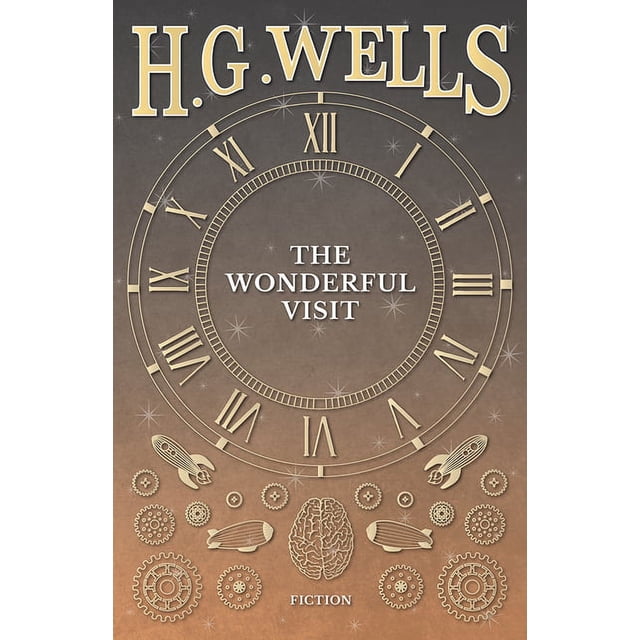
The Wonderful Visit
A winged stranger is shot by the Vicar of Siddermorton and brought to the vicarage to recover.
About
Spoiler notice: This overview includes the Angel's encounter with Gotch, the vicarage fire and the epilogue.
An unexplained light and a brief passage of music disturb the night around Sidderford Moor. The people who notice them do not all see or hear the same things, and the narrator of The Wonderful Visit hesitates to establish a definite connection between those phenomena and the strange winged figure reported afterward. A frightened traveller, a solicitor's clerk and a ploughman bring different observations to a village already prepared to turn them into conversation. H. G. Wells begins with the uneven passage from experience to explanation. Something extraordinary has appeared, but its meaning will be shaped by the habits of the people encountering it. Their ordinary expectations become part of the difficulty before anyone has understood what the visitor is or why he has arrived.
The Reverend K. Hilyer, Vicar of Siddermorton, approaches the reports through his interest in birds. The possibility of securing another rare specimen, before a rival collector finds it, sends him out with his gun. When the figure rises from the bracken, he fires through surprise and habit, then discovers that he has wounded a beautiful youth with brilliantly coloured wings. The injury makes a practical claim upon him before he can settle the question of whether such a being ought to exist. His apology and efforts to bind the wing begin an acquaintance founded upon an uncomfortable fact: the man's first response to the marvellous has been to shoot it. Wells's nearby satire of collecting gives that response a wider setting, questioning a form of appreciation that preserves rarity by destroying it.
The Angel finds the human world as strange as the Vicar finds him. Each can regard the other's existence as something previously encountered only in dreams, and the Vicar's speculations about dimensions offer a possible way of imagining their relation without supplying a final explanation. The visitor's dependence soon becomes more immediate than that intellectual puzzle. He needs shelter, assistance and clothes that will accommodate his wings. Wearing the Vicar's garments makes him look less radiant and more easily classified as an unusual human being. Learning to eat and take tea reveals how much of everyday life must be acquired rather than assumed. His curiosity gives familiar necessities a grotesque appearance, allowing the reader to see them briefly from outside the customs that normally make them seem unremarkable.
The attempt to place him within those customs creates difficulties that kindness alone cannot solve. His host worries about explanations, appearances and the opinions of neighbours who are certain they know the limits of respectable behaviour. Other people can interpret unfamiliar dress, an unusual body or unconventional conduct as evidence of deficiency. The visitor's musical ability seems to offer a more attractive classification. Lady Hammergallow arranges a gathering at which he can appear as a discovery, and her interest in patronizing talent places his gift within another social system. The Vicar prepares anxiously, trying to explain the small rules governing introductions and objects as ordinary as a hat. A performance of art is surrounded by a second performance: the demonstration that its practitioner knows how to belong in the room.
That second performance fails when the Angel cannot understand written musical notation. Having delighted listeners, he encounters disbelief and anger because he cannot collaborate in the expected way. His ignorance is treated as a refusal or an intolerable joke, and Lady Hammergallow withdraws her invitation to play again. The scene makes acceptance conditional upon more than the beauty of what anyone has heard. Elsewhere, distinctions between servants and ladies, property boundaries and the authority of local figures present further rules whose consequences the visitor has not learned to anticipate. Barbed wire brings his response to suffering into conflict with Sir John Gotch's interests. Gradually, the world that initially seemed a curious dream reveals the force behind its ordinary arrangements and the hostility directed toward someone unable to accommodate them.
The Angel's own response becomes part of that discovery. Believing that he has killed Gotch, he wanders in remorse, horrified by the anger and violence that have entered his experience. Becoming human no longer means merely acquiring practical knowledge; it means finding impulses within himself that his earlier innocence could not comprehend. His thoughts describe a life of hunger, fear, struggle and compromised intentions closing around him. Returning toward the vicarage, he sees it burning and learns that Delia has gone inside to retrieve his violin. Her action transforms his perception of the same world. Love and self-sacrifice appear within the place he has judged through its cruelty, and he runs into the flames before the watching villagers can stop him.
A burst of light and music follows, while a child believes she sees two winged figures rise and disappear. The epilogue then sets that glimpse beside the village's settled version. Two crosses commemorate Thomas Angel and Delia Hardy, but the narrator reveals that the graves contain only ashes from the Vicar's stuffed ostrich. Mrs. Mendham explains the visitor as an ignorant, deceptive musician and the fire as a romantic attempt at rescue. Her certainty excludes much of what the reader has encountered. She also reports the Vicar's decline and death within a year, dismissing the music and angels that continued to occupy his thoughts. The ending leaves a gap between memorial, gossip and possible wonder, preserving what the village's confident explanations cannot fully contain.
Book details
- Author
- H. G. Wells
- First published
- 1895
- Series
- No series listed
- Subgenre
- Literary fiction, Modern classics
- Primary genre
- Fantasy, Literary Fiction
- Tags
- No tags for this book.
Review
Editor profile
Baby Bat
Goodreads and social links will be added soon.
- Goodreads — link coming soon
- Social media — link coming soon