
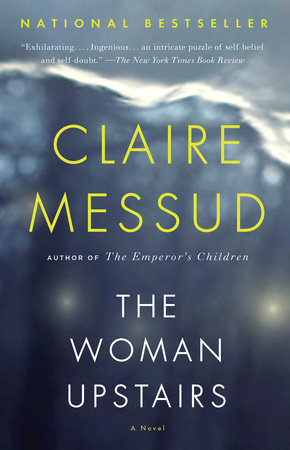
The Woman Upstairs
Nora Eldridge, a third-grade teacher in Cambridge, feels that her artistic ambitions have remained at the edge of a life built around other people.
About
Spoiler notice: Spoilers cover Nora’s role as a Cambridge teacher, her friendship with the Shahid family, artistic ambitions and the novel’s central betrayal premise. The circumstances and consequences of the betrayal and the ending are not disclosed.
Forty-two-year-old Nora Eldridge tells her story from Cambridge, where she teaches third grade and has come to occupy the dependable edges of other people’s lives. She is a good teacher, friend and neighbour, the person others can count on; privately, she is impatient with the smallness of that role and with the art she has not managed to make. Nora’s voice opens in anger, but anger is only one part of the picture. She describes herself as someone who has spent years behaving well, meeting expectations and allowing other people’s plans to take precedence. Her account invites us into the difference between the life she presents and the ambitions that continue to press beneath it.
Nora has not abandoned her artistic desire. She makes small dioramas devoted to women whose work and lives fascinate her, including Emily Dickinson, Alice Neel and Edie Sedgwick. These private constructions give her a space for attention and imagination, though they do not yet make her the artist she hopes to become. The tension between making art and imagining a different artistic life becomes part of how she understands herself. Nora’s ambitions are not simply a hobby set against her teaching job: they shape how she reads her choices, her compromises and the versions of herself she has shown to others. From the outset, the novel makes aspiration inseparable from self-image.
A change begins when Reza Shahid, a boy in Nora’s class, brings his family into her daily world. His father, Skandar, is a Lebanese scholar, and his mother, Sirena, is an Italian artist whose work and confidence catch Nora’s attention. Their household seems to offer an alternative to the quiet routines in which Nora feels contained. The connection develops through friendship and proximity, but Nora experiences it with an intensity that exceeds an ordinary professional relationship with a pupil’s family. Reza’s arrival gives her access to the Shahids’ orbit, and she starts to imagine that their lives might open a door to the creative and emotional possibility she has long wanted.
Sirena becomes especially important to Nora. As an established artist, wife and mother, she appears to embody several forms of fulfilment Nora desires at once. Nora is drawn to her work and to the energy surrounding the Shahid household, and she increasingly invests their friendship with hopes about her own future. The novel follows how this attachment alters Nora’s sense of what is possible. Her excitement is real, but so is the uncertainty in her reading of events: she is telling the story after the fact, selecting and interpreting what mattered to her. That distance makes the account psychologically charged. The reader has to consider not only what Nora sees, but also how longing may shape the meaning she gives it.
The book’s central movement is inward as much as outward. Nora’s first-person narration lets her articulate thoughts and frustrations that sit beneath the calm, helpful identity others recognise. Her voice can be sharp, funny and self-questioning, and it does not settle into a simple verdict on whether she is right about the people around her. As her relationship with the Shahids grows more consequential, self-belief and self-doubt travel together. She wants to be seen as an artist and as a person with desires of her own, yet she is also vulnerable to the stories she tells herself about what another person’s attention might mean. Messud builds tension through this unstable boundary between perception and interpretation.
Art is not just Nora’s private ambition; it is also a way the characters measure recognition, success and independence. Sirena’s public achievement stands beside Nora’s unfinished work, while the differences between their lives sharpen Nora’s hopes and insecurities. The novel considers the costs women may face as they construct identities within roles such as teacher, friend, partner, mother or artist. It also asks how much of a life can remain unseen when someone is praised for being accommodating. Nora’s frustration pushes against the expectation that she should be satisfied with being reliable and unobtrusive. Her anger gives the story force, while the intimate scale keeps attention on the changing meanings she attaches to ordinary encounters.
The title’s “woman upstairs” suggests a figure at a remove, present in the building yet not central to its activity. Nora’s sense of being adjacent to other people’s achievements gives that image an emotional meaning, though the novel does not reduce her to a single symbol. She is both an observer of others and an ambitious person trying to claim space for herself. The Shahids’ arrival unsettles the arrangement she has accepted, but the novel remains interested in the gap between a hoped-for transformation and the life that actually follows. Readers looking for a simple account of a woman finding inspiration will find a more complicated study of desire, artistic identity and self-understanding.
As Nora looks back, her account becomes a close study of how a person can be both lucid and mistaken about her own attachments. The emotional suspense comes from following her confidence, uncertainty and changing interpretations as they gather around the Shahid family. Messud keeps the focus on Nora’s inner life and on the ways aspiration can intensify friendship, envy and the search for recognition. The story does not require the reader to endorse every judgment Nora makes; its interest lies partly in letting those judgments remain visible and open to reconsideration. This is a novel about a woman who wants more than the agreeable place she has been assigned, and about the risks of imagining that someone else’s world will provide it.
Book details
- Author
- Claire Messud
- First published
- 2013
- Series
- No series listed
- Subgenre
- Literary fiction
- Primary genre
- Literary Fiction
- Tags
- No tags for this book.
Review
Editor profile
Baby Bat
Goodreads and social links will be added soon.
- Goodreads — link coming soon
- Social media — link coming soon